We can't find the internet
Attempting to reconnect
Something went wrong
Hang in there while we get back on track
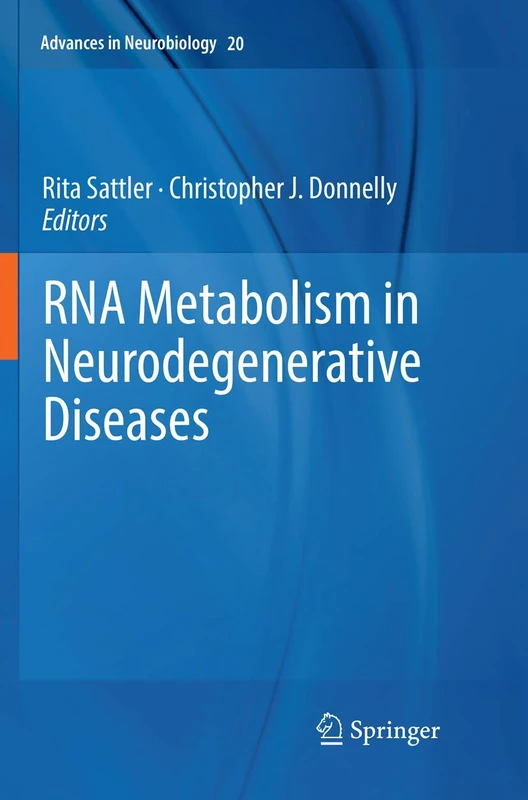
£76.42
Springer RNA Metabolism in Neurodegenerative Diseases: 20 (Advances in Neurobiology, 20)
Price data last checked 25 day(s) ago - will refresh soon
We'll watch every seller, every day. One email when your price arrives.
This is the most expensive it has ever been. Walk away.
£76 today · previous high £76 · all-time low £76
NEW HERE?
Amazon shows you one price. We show you all of them.
Tosheroon watches Amazon prices so you don't have to. Every product on Amazon has a price history — we make it visible. Set the price you'd actually pay, and we'll email you the second it gets there. No app, no account, one email.
WHAT'S ON THIS PAGE
when this has been cheap or pricey
where the price is heading next
all-time high & low, recent range
name your number, we'll email you
Price History & Forecast
Grey patches = out of stock. Cheaper = lower on the chart. Hover for exact prices.
Last 66 days · 66 data points (no recent data)
Price Distribution
Price distribution over 66 days • 1 price levels
Price Analysis
Most common price: £76 (66 days, 100.0%)
Price range: £76 - £76
Price levels: 1 different prices over 66 days
Description
Product Specifications
- Brand
- Springer
- Format
- paperback
- ASIN
- 3030078329
- Domain
- Amazon UK
- Release Date
- 19 January 2019
- Listed Since
- 19 January 2019
Barcode
No barcode data available
Similar Products You Might Like

Neurodegenerative Diseases: Clinical Aspects, Molecular Genetics and Biomarkers
Springer
Epigenetics and miRNA in Neurodegenerative Diseases: From Molecular Mechanisms to Clinical Applications
Elsevier
Pathogenesis of Neurodegenerative Disorders (Contemporary Neuroscience)
Humana

Neurodegenerative Disorders: Loss of Function Through Gain of Function (Research and Perspectives in Alzheimer's Disease)
Springer

Mitochondrial Dynamics and Neurodegeneration
Springer

RNA Editing: 20 (Nucleic Acids and Molecular Biology, 20)
Springer
Polyglutamine Disorders: 1049 (Advances in Experimental Medicine and Biology, 1049)
Springer
The Proteasome in Neurodegeneration
Springer

Protein Misfolding and Human Diseases: Deciphering the Central Role of Pathological Aggregation
Elsevier

Stem Cell-based Therapy for Neurodegenerative Diseases: 1266 (Advances in Experimental Medicine and Biology, 1266)
Springer

Neuroprotection Methods and Protocols: 399 (Methods in Molecular Biology, 399)
Humana

Protein Degradation in Health and Disease: 29 (Progress in Molecular and Subcellular Biology, 29)
Springer
Neurodegenerative Diseases: Integrative PPPM Approach as the Medicine of the Future: 2 (Advances in Predictive, Preventive and Personalised Medicine, 2)
Springer
Neurodegenerative Diseases: Integrative PPPM Approach as the Medicine of the Future: 2 (Advances in Predictive, Preventive and Personalised Medicine, 2)
Springer

RNA Technologies and Their Applications
Springer

Neurodegenerative Disorders: A Clinical Guide
Springer
DNA and RNA Nanobiotechnologies in Medicine: Diagnosis and Treatment of Diseases (RNA Technologies)
Springer

Molecular and Cellular Mechanisms of Neuronal Plasticity: Basic and Clinical Implications: 446 (Advances in Experimental Medicine and Biology, 446)
Springer
RNA Therapeutics: Function, Design, and Delivery: 629 (Methods in Molecular Biology, 629)
Humana

Alzheimer's Disease: Advances in Genetics, Molecular and Cellular Biology
Springer

Advances in Genomics and Neurosciences for Neurologic and Behavioral Disorders
Academic Press
Neurodegenerative Diseases: 6 (Topics in Medicinal Chemistry, 6)
Springer

Brain Iron Metabolism and CNS Diseases: 1173 (Advances in Experimental Medicine and Biology, 1173)
Springer

Programmed Cells from Basic Neuroscience to Therapy: 20 (Research and Perspectives in Neurosciences, 20)
Springer