£88.00

This is the most expensive it has ever been. Walk away.

£88 today · previous high £88 · all-time low £86

Delve Publishing Enzyme Engineering

Amazon

Price History & Forecast

Grey patches = out of stock. Cheaper = lower on the chart. Hover for exact prices.

Last 68 days · 68 data points (no recent data)

Historical
Generating forecast…
£88.00 £85.63 £86.15 £86.67 £87.18 £87.70 £88.22 25 July 2026 10 August 2026 27 August 2026 13 September 2026 30 September 2026
View at Amazon ↗

Price data last checked 23 day(s) ago - will refresh soon

NEW HERE?

Amazon shows you one price. We show you all of them.

Tosheroon watches Amazon prices so you don't have to. Every product on Amazon has a price history — we make it visible. Set the price you'd actually pay, and we'll email you the second it gets there. No app, no account, one email.

WHAT'S ON THIS PAGE

↑ Price chart
when this has been cheap or pricey
↑ Forecast
where the price is heading next
↓ Statistics
all-time high & low, recent range
↑ Price alert
name your number, we'll email you

Price Distribution

Price distribution over 68 days • 3 price levels

Days at Price
Current Price
12 days 44 days 12 days · current 0 11 22 33 44 £86 £87 £88 Days at Price

Price Analysis

Most common price: £87 (44 days, 64.7%)

Price range: £86 - £88

Price levels: 3 different prices over 68 days

Description

Enzymes can be regarded as the catalysts of nature that controls the rate of a wide range of biochemical reaction often with perfection. The agriculture, chemical, food and pharmaceutical industries have been immensely benefited by applying enzymes in their production processes due to the non-toxic nature, low energy input, reduced processing time, economic viability and eco-friendly attributes of enzymes. For centuries, the common commodities like vinegar, wine, bread, etc. have been manufactured using microorganism with tremendous biocatalytic potential. However, a better understanding of the biochemical basis was still lacking. Mobilizing enzymes for various purposes generally necessitate engineering them for enhanced activity and improved stability. In this regard introduction of genetic engineering techniques in enzyme technology have been one of the most exhilarating developments in the last few decades. Enzyme engineering is nothing but the amendment of an enzyme structure, thereby modifying its functions and catalytic activities to form novel metabolites. This further allows conversion of biotransformation processes and catalyzing reactions to develop some of the unexplored biochemical pathways. Genetic engineering technique aims to improve or modify enzyme properties such as the kinetics or the yield and effortless downstream processing. It can also enhance a range of issues related to safety and enables cloning of enzymes that are extracted from harmful or pathogenic microbial sources or from limited animal or plant tissues into safe and stable microbes. The engineering technique may also lead to redesign the enzymes for enhancing its potential for industrial application. Enzymes are usually large molecules (molecular mass ranging from kilodalton for insulin to megadalton for ribosomes), comprising of amino acid polymers connected by amide bonds. The substrate specificity is determined by the catalytic site of the macromolecules, which are often hidden within hydrophobic pockets. The classification and nomenclature of an enzyme are generally based on its specificity to catalyze various chemical and biochemical reactions. In the 1940s, the field of biochemistry flourished immensely with many distinguished achievements that led to the isolation and characterization of several enzymes. This necessitated the standardization of the enzyme nomenclature. Consequently, the International Union for Pure and Applied Chemistry (IUPAC) along with the International Union of Biochemistry and Molecular Biology (IUBMB) came forward to set up an Enzyme Commission (EC) to conduct the systematic classification and naming of enzymes (Liese, Seelbach, & Wandrey, 2006). The enzymes were classified into six main classes by the Enzyme Commission, purely on the basis of the type of reaction catalyzed (Table 1). With the advancement in protein engineering and recombinant technology, enzymes have gained immense importance as a molecule being applied extensively over a range of pharmaceutical and other industrial purposes. With prompt progress in enzyme technology, much attention has been diverted towards extraction of enzymes from microbial sources. Some of the characteristics of microbial enzymes such as stability, regular availability due to the rapid growth of microorganisms and absence of seasonal fluctuation, greater catalytic activity, economic feasibility, consistency and effortless optimization made them quite preferable over other sources. Owing to their catalytic activity, ease of production, stability and broad-spectrum application, enzymes derived from microbial source have earned huge interest in pharmaceutics and other industries. Several dreaded diseases are now diagnosed, treated and monitored using microbial enzymes. Two of the most significant enzymes, lipase, and amylase have been studied extensively and have gained huge importance in various industrial applications. Enzymes produced by microorganisms are also used in wastewater treatment, remediation and degradation of heavy metals and other toxic compounds (nitriles, amines, phenols) from industrial as well as domestic effluents. In this chapter, an approach has been made to highlight the different processes and evolved techniques of enzyme engineering to improve their feasibility in different industrial and medical fields.

Product Specifications

Format
hardcover
Domain
Amazon UK
Release Date
30 January 2018
Listed Since
03 November 2017

Barcode

No barcode data available

Similar Products You Might Like

Commercially Important Enzymes
98% match

Commercially Important Enzymes

Delve Publishing

£88.00 24 Sep 2026
Enzymes Used in Food and Textile Technologies
98% match

Enzymes Used in Food and Textile Technologies

Delve Publishing

£166.00 19 Sep 2026
98% match

Computational Enzyme Engineering

Wiley

£99.00 19 Sep 2026
Enzyme Engineering: Methods and Protocols: 2397 (Methods in Molecular Biology, 2397)
97% match

Enzyme Engineering: Methods and Protocols: 2397 (Methods in Molecular Biology, 2397)

Humana

£88.21 05 Sep 2026
Enzyme Biotechnology
97% match

Enzyme Biotechnology

Larsen and Keller Education

£64.98 24 Sep 2026
Enzymes Biotechnology - CRC Press Industrial Guide
97% match

Enzymes Biotechnology - CRC Press Industrial Guide

CRC Press

£165.91 19 Sep 2026
Enzyme Technology for Environmental Sustainability, Waste to Wealth, and Circular Economy (Progress in Biochemistry and Biotechnology)
97% match

Enzyme Technology for Environmental Sustainability, Waste to Wealth, and Circular Economy (Progress in Biochemistry and Biotechnology)

Elsevier

£137.99 08 Sep 2026
New Experimental Probes for Enzyme Specificity and Mechanism (Volume 685) (Methods in Enzymology, Volume 685)
97% match

New Experimental Probes for Enzyme Specificity and Mechanism (Volume 685) (Methods in Enzymology, Volume 685)

Elsevier

£136.44 01 Oct 2026
Computational methods for screening and engineering enzyme properties
97% match

Computational methods for screening and engineering enzyme properties

LAP Lambert Academic Publishing

£59.00 01 Oct 2026
97% match

Cold-Adapted Enzymes: Biochemistry and Biotechnology (Foundations and Frontiers in Enzymology)

Elsevier

£142.00 24 Sep 2026
Enzymes in RNA Science and Biotechnology Volume 691
97% match

Enzymes in RNA Science and Biotechnology Volume 691

Elsevier

£137.99 02 Oct 2026
Recent Trends in Enzyme Immobilization - Academic Press
97% match

Recent Trends in Enzyme Immobilization - Academic Press

Elsevier

£121.19 02 Oct 2026
Environment and Technology
97% match

Environment and Technology

Delve Publishing

£78.30 05 Sep 2026
G4 biology (Volume 695) (Methods in Enzymology, Volume 695)
97% match

G4 biology (Volume 695) (Methods in Enzymology, Volume 695)

Elsevier

£133.00 01 Oct 2026
Biotechnology of Microbial Enzymes - Production & Applications
96% match

Biotechnology of Microbial Enzymes - Production & Applications

Elsevier

£117.78 02 Oct 2026
Enzyme Handbook
96% match

Enzyme Handbook

Springer

£72.69 19 Sep 2026
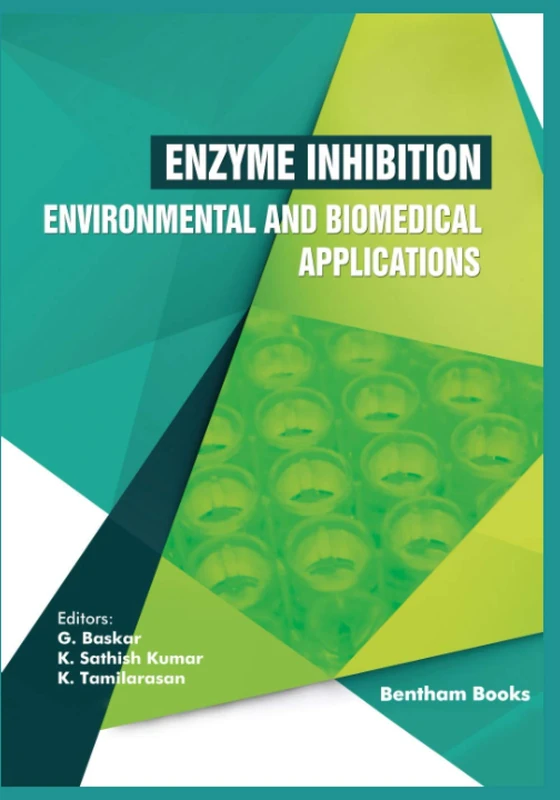
Enzyme Inhibition - Environmental and Biomedical Applications
96% match

Enzyme Inhibition - Environmental and Biomedical Applications

Bentham Science Publishers
£83.86 18 Sep 2026
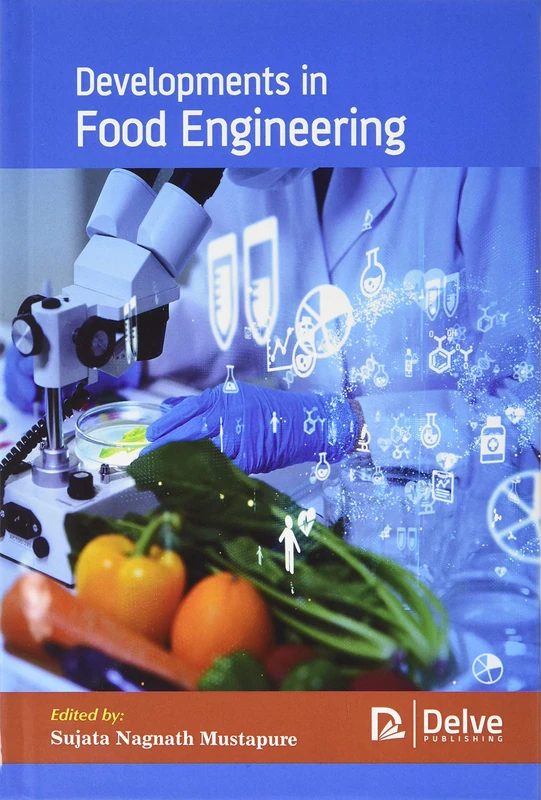
Developments in Food Engineering
96% match

Developments in Food Engineering

Delve Publishing

£77.68 25 Sep 2026
Viral Proteases: Volume 58 (The Enzymes, Volume 58)
96% match

Viral Proteases: Volume 58 (The Enzymes, Volume 58)

Elsevier

£108.99 24 Sep 2026
Elsevier Lanthanides in Enzymology and Microbiology Book
96% match

Elsevier Lanthanides in Enzymology and Microbiology Book

Elsevier

£109.17 19 Sep 2026
Wiley Enzymes and Drugs - Biochemistry Science Book
96% match

Wiley Enzymes and Drugs - Biochemistry Science Book

Wiley

£121.00 02 Oct 2026
High-Pressure Technologies on Enzymes - Science & Applications
96% match

High-Pressure Technologies on Enzymes - Science & Applications

Elsevier

£121.69 02 Oct 2026
Advances in Enzymology: v. 50
96% match

Advances in Enzymology: v. 50

Wiley

Price unavailable

Extracellular Enzymes in Environments: Responses to Collaborative Remediation of Contaminated Soil and Groundwater
96% match

Extracellular Enzymes in Environments: Responses to Collaborative Remediation of Contaminated Soil and Groundwater

Elsevier

£161.99 23 Sep 2026