£101.07

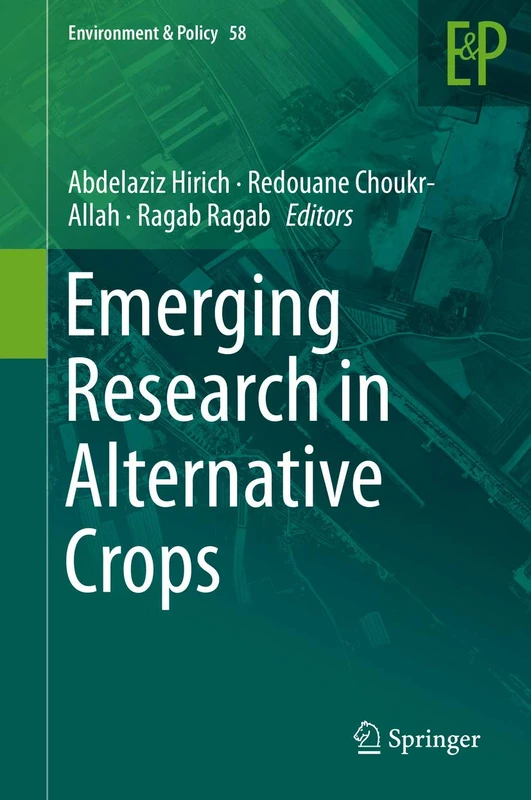
Springer Emerging Research in Alternative Crops: 58 (Environment & Policy, 58)

Price data last checked 13 day(s) ago - will refresh soon

View at Amazon

We'll watch every seller, every day. One email when your price arrives.

It has never been this cheap. We have no record of a lower price.

£101 today · cheaper than every other day in the last 3 months

NEW HERE?

Amazon shows you one price. We show you all of them.

Tosheroon watches Amazon prices so you don't have to. Every product on Amazon has a price history — we make it visible. Set the price you'd actually pay, and we'll email you the second it gets there. No app, no account, one email.

WHAT'S ON THIS PAGE

↓ Price chart
when this has been cheap or pricey
↓ Forecast
where the price is heading next
↓ Statistics
all-time high & low, recent range
↑ Price alert
name your number, we'll email you

Price History & Forecast

Grey patches = out of stock. Cheaper = lower on the chart. Hover for exact prices.

Last 78 days · 78 data points (no recent data)

Historical
Generating forecast…
£103.35 £100.84 £101.39 £101.94 £102.48 £103.03 £103.58 29 April 2026 18 May 2026 06 June 2026 25 June 2026 15 July 2026

Price Distribution

Price distribution over 78 days • 2 price levels

Days at Price
Current Price
16 days · current 62 days 0 16 31 47 62 £101 £103 Days at Price

Price Analysis

Most common price: £103 (62 days, 79.5%)

Price range: £101 - £103

Price levels: 2 different prices over 78 days

Description

This book provides case studies on cultivating alternative crops and presents new cropping systems in many regions of the world. It focusses on new emerging research topics aiming to study all aspects of adaptation under several stresses including agricultural, environmental, biological and socioeconomic issues. The book also provides operational and practical solutions for scientists, producers, technology developers and managers to succeed the cultivation of new alternative crops and, consequently, to achieve food security. Many regions in the world are suffering from water scarcity, soil and water salinization and climate change. These conditions make it difficult to achieve food security by cultivating conventional crops. A renaissance of interest for producing alternative crops under water scarcity and water salinization has been, therefore, implemented primarily among small-scale producers, researchers and academics. The use of alternative crops (quinoa, amaranth, legume crops, halophytes, …etc.) may provide some environmental benefits such as valorization of salt-affected soils, reduced pesticide application, enhanced soil and water quality and promotion of wildlife diversity. This also may provide some economic benefits such as providing the opportunity for producers to take advantage of new markets and premium prices, spreading the economic risk and strengthening local economies and communities. Furthermore, alternative crops are often rich in proteins and minerals, and even some of them are Gluten free (quinoa). This reflects their importance to achieve food security in quantity and quality scale. The year 2013 was exceptional for alternative crops as it was the international year of quinoa celebrated by Food and Agriculture Organization (FAO). This reflects the importance of research conducted on quinoa and other alternative crops in many regions of the world. From the Back Cover This book provides case studies on cultivating alternative crops and presents new cropping systems in many regions of the world. It focusses on new emerging research topics aiming to study all aspects of adaptation under several stresses including agricultural, environmental, biological and socioeconomic issues. The book also provides operational and practical solutions for scientists, producers, technology developers and managers to succeed the cultivation of new alternative crops and, consequently, to achieve food security. Many regions in the world are suffering from water scarcity, soil and water salinization and climate change. These conditions make it difficult to achieve food security by cultivating conventional crops. A renaissance of interest for producing alternative crops under water scarcity and water salinization has been, therefore, implemented primarily among small-scale producers, researchers and academics. The use of alternative crops (quinoa, amaranth, legume crops, halophytes, …etc.) may provide some environmental benefits such as valorization of salt-affected soils, reduced pesticide application, enhanced soil and water quality and promotion of wildlife diversity. This also may provide some economic benefits such as providing the opportunity for producers to take advantage of new markets and premium prices, spreading the economic risk and strengthening local economies and communities.Furthermore, alternative crops are often rich in proteins and minerals, and even some of them are Gluten free (quinoa). This reflects their importance to achieve food security in quantity and quality scale. The year 2013 was exceptional for alternative crops as it was the international year of quinoa celebrated by Food and Agriculture Organization (FAO). This reflects the importance of research conducted on quinoa and other alternative crops in many regions of the world. About the Author Abdelaziz Hirich is a research scientist at ICBA center in UAE. He received his PhD in Agronomi

Product Specifications

Format
hardcover
Domain
Amazon UK
Release Date
16 September 2020
Listed Since
22 March 2018

Barcode

No barcode data available