£103.81

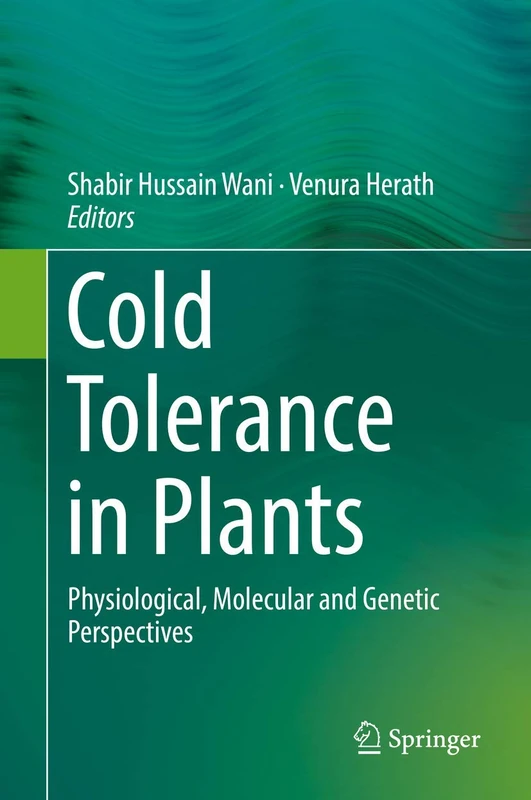
Springer Cold Tolerance in Plants: Physiological, Molecular and Genetic Perspectives

Price data last checked 9 day(s) ago - will refresh soon

View at Amazon

We'll watch every seller, every day. One email when your price arrives.

It has never been this cheap. We have no record of a lower price.

£104 today · cheaper than every other day in the last 3 months

NEW HERE?

Amazon shows you one price. We show you all of them.

Tosheroon watches Amazon prices so you don't have to. Every product on Amazon has a price history — we make it visible. Set the price you'd actually pay, and we'll email you the second it gets there. No app, no account, one email.

WHAT'S ON THIS PAGE

↓ Price chart
when this has been cheap or pricey
↓ Forecast
where the price is heading next
↓ Statistics
all-time high & low, recent range
↑ Price alert
name your number, we'll email you

Price History & Forecast

Grey patches = out of stock. Cheaper = lower on the chart. Hover for exact prices.

Last 82 days · 82 data points (no recent data)

Historical
Generating forecast…
£103.81 £98.62 £100.70 £102.77 £104.85 £106.92 £109.00 25 April 2026 15 May 2026 04 June 2026 24 June 2026 15 July 2026

Price Distribution

Price distribution over 82 days • 1 price levels

Days at Price
82 days 0 21 41 62 82 £104 Days at Price

Price Analysis

Most common price: £104 (82 days, 100.0%)

Price range: £104 - £104

Price levels: 1 different prices over 82 days

Description

Cold stress is one of the prevalent environmental stresses affecting crop productivity, particularly in temperate regions. Numerous plant types of tropical or subtropical origin are injured or killed by non-freezing low temperature, and display a range of symptoms of chilling injury such as chlorosis, necrosis, or growth retardation. In contrast, chilling tolerant species thrive well at such temperatures. To thrive under cold stress conditions, plants have evolved complex mechanisms to identify peripheral signals that allow them to counter varying environmental conditions. These mechanisms include stress perception, signal transduction, transcriptional activation of stress-responsive target genes, and synthesis of stress-related proteins and other molecules, which help plants to strive through adverse environmental conditions. Conventional breeding methods have met with limited success in improving the cold tolerance of important crop plants through inter-specific or inter-generic hybridization. A better understanding of physiological, biochemical and molecular responses and tolerance mechanisms, and discovery of novel stress-responsive pathways and genes may contribute to efficient engineering strategies that enhance cold stress tolerance. It is therefore imperative to accelerate the efforts to unravel the biochemical, physiological and molecular mechanisms underlying cold stress tolerance in plants. Through this new book, we intend to integrate the contributions from plant scientists targeting cold stress tolerance mechanisms using physiological, biochemical, molecular, structural and systems biology approaches. It is hoped that this collection will serve as a reference source for those who are interested in or are actively engaged in cold stress research. From the Back Cover Cold stress is one of the prevalent environmental stresses affecting crop productivity, particularly in temperate regions. Numerous plant types of tropical or subtropical origin are injured or killed by non-freezing low temperature, and display a range of symptoms of chilling injury such as chlorosis, necrosis, or growth retardation. In contrast, chilling tolerant species thrive well at such temperatures. To thrive under cold stress conditions, plants have evolved complex mechanisms to identify peripheral signals that allow them to counter varying environmental conditions. These mechanisms include stress perception, signal transduction, transcriptional activation of stress-responsive target genes, and synthesis of stress-related proteins and other molecules, which help plants to strive through adverse environmental conditions. Conventional breeding methods have met with limited success in improving the cold tolerance of important crop plants through inter-specific or inter-generic hybridization. A better understanding of physiological, biochemical and molecular responses and tolerance mechanisms, and discovery of novel stress-responsive pathways and genes may contribute to efficient engineering strategies that enhance cold stress tolerance. It is therefore imperative to accelerate the efforts to unravel the biochemical, physiological and molecular mechanisms underlying cold stress tolerance in plants. Through this new book, we intend to integrate the contributions from plant scientists targeting cold stress tolerance mechanisms using physiological, biochemical, molecular, structural and systems biology approaches. It is hoped that this collection will serve as a reference source for those who are interested in or are actively engaged in cold stress research. About the Author Dr. Shabir Hussain Wani is senior assistant professor at Mountain Research Centre for Field Crops, Khudwani –192101, Sher-e-Kashmir University  of Agricultural Sciences and Technology of Kashmir, J&K, India . He received his B.Sc. in agriculture from BhimRao Agricultural University Agra, India, and M.Sc. in genetics and plant bre

Product Specifications

Format
hardcover
Domain
Amazon UK
Release Date
05 December 2018
Listed Since
22 August 2018

Barcode

No barcode data available