Out of stock

This item is currently unavailable

Out of stock for 21 days. Get on the list — one email the moment it's back.

Out of stock 21 days · last price £204

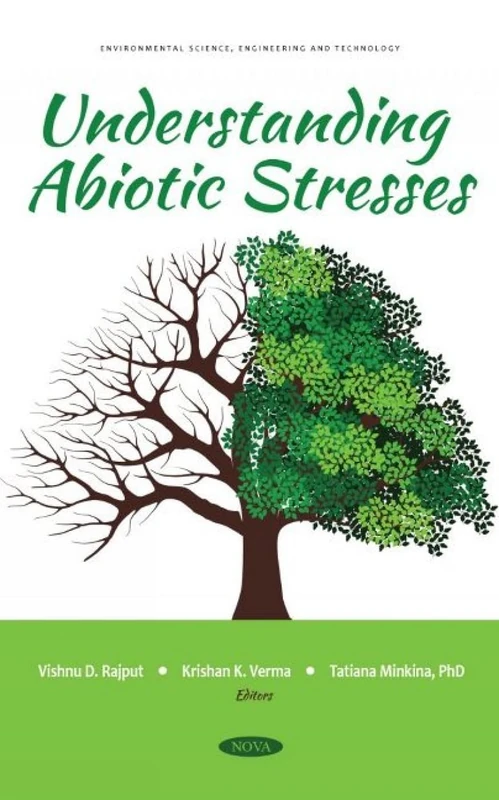
Understanding Abiotic Stresses (Environmental Science, Engineering and Technology)

Amazon

Price History & Forecast

Grey patches = out of stock. Cheaper = lower on the chart. Hover for exact prices.

Last 710 days · 632 data points (no recent data)

Historical
Generating forecast…
£203.99 £145.10 £157.95 £170.80 £183.64 £196.49 £209.34 24 October 2024 19 April 2025 13 October 2025 08 April 2026 03 October 2026
View at Amazon ↗
Out of stock

Price data last checked 21 day(s) ago - will refresh soon

NEW HERE?

Amazon shows you one price. We show you all of them.

Tosheroon watches Amazon prices so you don't have to. Every product on Amazon has a price history — we make it visible. Set the price you'd actually pay, and we'll email you the second it gets there. No app, no account, one email.

WHAT'S ON THIS PAGE

↑ Price chart
when this has been cheap or pricey
↑ Forecast
where the price is heading next
↓ Statistics
all-time high & low, recent range
↑ Price alert
name your number, we'll email you

Price Distribution

Price distribution over 710 days • 6 price levels

Days at Price
Current Price
40 days 30 days 225 days 140 days 70 days 127 days · current 0 56 113 169 225 £150 £152 £153 £155 £156 £204 Days at Price

Price Analysis

Most common price: £153 (225 days, 35.6%)

Price range: £150 - £204

Price levels: 6 different prices over 632 days

Description

In the current scenario, frequently changing environmental variables such as salinity, excess or insufficient water availability, cold or high-temperature extremes, heavy metal toxicity, and nutrient imbalance have become an unpredictable and severe menace to the worldwide agricultural output. The abiotic stress factors restrict crop plants from reaching their full genetic potential and cause significant loss to agricultural productivity across the globe. In general, the stress factors are complex and multigenic features, affecting plant performance by severely reducing plant growth, development, and ultimately the produce. Plants have evolved efficient defense mechanisms in response to the onset of unfavorable environmental conditions to tolerate stresses through physical adaptation and/or integrated molecular and cellular responses. The detection of stress signals and their transmission is a critical stage in triggering adaptive responses and ensuring plant life. According to transcriptomic and genomic research, abiotic stresses induce many genes with varied functions, and various transcription factors are involved in regulating stress-inducible genes. Abiotic stressors are predicted to exacerbate the severity of plant problems in the coming years. In this book, "Understanding Abiotic Stresses," the editors compiled nine chapters written by subject experts in the field of abiotic stress and plant resistance. This book provides an up-to-date summary of current research on plant abiotic stress signaling. The various chapters in the book provide a state-of-the-art account of the information available. This book also explores how the resulting increase in abiotic stress factors can be dealt with. The result is a must-have hands-on handbook for agricultural biotechnology, abiotic stress tolerance/resistance, academia, and researchers. For the convenience of readers, the whole book is divided into ten chapters. Chapter 1 deals with an overview of the understanding of abiotic stresses responses in plants. Chapter 2 focuses on the new insights on plants against salt resistance strategies. Chapter 3 covers physiological and molecular adaptation strategies on plants during salinity stress. Chapter 4 discusses the role of temperature on physiological responses and adaptation mechanisms in plants. Chapter 5 summarizes the impact of abiotic stress on the nutritional quality of germinated cereal grains. Chapter 6 covers the function of agronomic interventions to combat abiotic stresses in field crops. Chapter 7 mainly covers the role of hydrophilins (boiling-soluble proteins) in abiotic stress resistance capacity in plants. Chapter 8 deals with the influence of waterlogging on the physiology and molecular biology of plants. Chapter 9 discusses the adaptive mechanisms of plants during water-deficit conditions, and Chapter 10 summarizes the impact of plant growth hormones on plants during environmental stresses.

Product Specifications

Format
hardcover
Domain
Amazon UK
Release Date
20 January 2022
Listed Since
14 January 2022

Barcode

No barcode data available