£161.28

About as cheap as it gets — within 5% of the all-time low it hit 3 months ago.

£161 today · all-time low £155 (Jul 2026) · usually £161

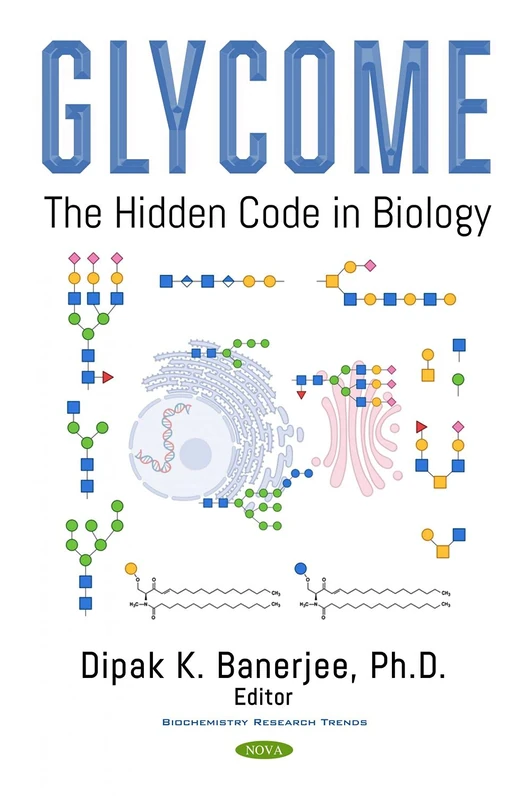
Glycome: The Hidden Code in Biology

View at Amazon

Price History & Forecast

Grey patches = out of stock. Cheaper = lower on the chart. Hover for exact prices.

Last 61 days · 61 data points (no recent data)

Historical
Generating forecast…
£170.00 £153.02 £156.72 £160.43 £164.13 £167.84 £171.54 26 July 2026 10 August 2026 25 August 2026 09 September 2026 24 September 2026
View at Amazon ↗

Price data last checked 30 day(s) ago - will refresh soon

NEW HERE?

Amazon shows you one price. We show you all of them.

Tosheroon watches Amazon prices so you don't have to. Every product on Amazon has a price history — we make it visible. Set the price you'd actually pay, and we'll email you the second it gets there. No app, no account, one email.

WHAT'S ON THIS PAGE

↑ Price chart
when this has been cheap or pricey
↑ Forecast
where the price is heading next
↓ Statistics
all-time high & low, recent range
↑ Price alert
name your number, we'll email you

Price Distribution

Price distribution over 61 days • 3 price levels

Days at Price
Current Price
2 days 1 day · current 58 days 0 15 29 44 58 £155 £161 £170 Days at Price

Price Analysis

Most common price: £170 (58 days, 95.1%)

Price range: £155 - £170

Price levels: 3 different prices over 61 days

Description

Glycome: The Hidden Code in Biology Description: "Glycome: The Hidden Code in Biology" addresses one of the most fundamental questions in biology today. The book targets readers with little expertise as well as the experts in Glycoscience. Sugars are electroneutral. However, linking sugars to sugars, or attaching sugars to proteins or lipids changes the structural and functional identities of the glycoconjugate, and enables to form cellular networks of 4Gs [i.e., glycoproteins (N-linked or O-linked), glycosphingolipids, proteoglycans and glycosaminoglycans (GAGs)]. These glycans (i) support growth, proliferation and differentiation of cells and tissues; (ii) protect cells from foreign invasions including bacteria, viruses, parasites as well as from changes in the extracellular environment; (iii) act as biomarkers and participate in transmembrane signaling. The glycans are not ubiquitous but they are tissue/species specific. Structurally, the glycans are diverse, and form linear to highly branched structures. This diversity is present not only across the species but also within cells of the same species, i.e., the glycoforms. Nuclear magnetic resonance (NMR) and mass spectrometric (MS) studies (i.e., Glycomics) have evaluated and contributed significantly in delineating the structural diversity of glycans. Glycomics, in fact, has helped in overcoming many earlier technological barriers which were otherwise very laborious and time consuming. Plant lectins being carbohydrate binding proteins with a high degree of sugar specificity have been useful tools to characterize the carbohydrate structures they recognize. The glycan structures complement their biosynthetic processes. Because of the highly compartmentalized nature of the process, the glycans move between compartments during their assembly. This is believed to be mediated by vesicular structures but the participation of exosomes cannot be ruled out. A large number of genetic disorders [gangliosidosis, mucopolysaccharidoses, congenital disorders of glycosylation (CDG)] are due to abnormal glycan synthesis or degradation. Disproportionate expression of glycans is also found in diseases like cancer, neurological disorders, diabetes, metabolic syndromes, and infection. This raises questions about the regulatory principle(s) in glycan biosynthesis. There is no template for glycan chain synthesis, elongation, processing or termination. The cells/tissues follow a highly conserved mechanism. The assumption is glycosylation uses donor and acceptor interactions as the driving force. Increased or decreased synthesis of glycans in response to the environmental change influence cell function, i.e., growth, survival or death favor of a "push-pull" hypothesis. In the absence of a genetic code for sugars, the assembly as well as the processing of glycan chains are controlled by the Glycome. Unlike the genome, the Glycome is hidden for the normal eye but its communication skills with the cellular microenvironment and genome for glycan synthesis and degradation are enormous. Seventeen chapters in the book are dedicated to walk the readers through the diversities of the Glycome. The authors have used mammalian, microbial and plant systems to achieve the desired goal.

Product Specifications

Format
hardcover
Domain
Amazon UK
Release Date
27 August 2021
Listed Since
23 March 2021

Barcode

No barcode data available