£322.50

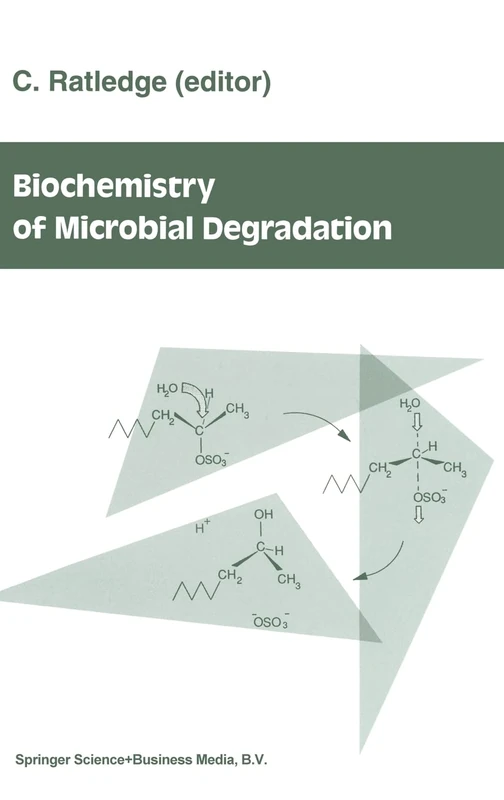
Springer Biochemistry of Microbial Degradation

Price data last checked 11 day(s) ago - will refresh soon

View at Amazon

We'll watch every seller, every day. One email when your price arrives.

This is the most expensive it has ever been. Walk away.

£323 today · previous high £323 · all-time low £67

NEW HERE?

Amazon shows you one price. We show you all of them.

Tosheroon watches Amazon prices so you don't have to. Every product on Amazon has a price history — we make it visible. Set the price you'd actually pay, and we'll email you the second it gets there. No app, no account, one email.

WHAT'S ON THIS PAGE

↓ Price chart
when this has been cheap or pricey
↓ Forecast
where the price is heading next
↓ Statistics
all-time high & low, recent range
↑ Price alert
name your number, we'll email you

Price History & Forecast

Grey patches = out of stock. Cheaper = lower on the chart. Hover for exact prices.

Last 80 days · 80 data points (no recent data)

Historical
Generating forecast…
£322.50 £41.45 £102.77 £164.09 £225.41 £286.73 £348.05 25 April 2026 14 May 2026 03 June 2026 23 June 2026 13 July 2026

Price Distribution

Price distribution over 80 days • 2 price levels

Days at Price
Current Price
50 days 30 days · current 0 13 25 38 50 £67 £323 Days at Price

Price Analysis

Most common price: £67 (50 days, 62.5%)

Price range: £67 - £323

Price levels: 2 different prices over 80 days

Description

This book brings together a number of comprehensive accounts of the mechanisms whereby microorganisms are able to degrade a wide variety of compounds. These compounds range from petroleum-derived materials, which continue to predominate in questions of environmental contamination and pollution, to the degradation of the major natural materials that microorganisms may encounter in all types of habitat. Both aerobic and anaerobic modes of attack are covered. The emphasis in all the chapters is upon the underlying biochemical pathways that microorganisms use: differences between bacteria, yeasts and moulds are highlighted whenever opportune and uses of microbial consortia for attack on the most recalcitrant molecules is also well documented. Activity of microorganisms in the soil, groundwater and marine environments are all dealt with here. The book will be of value and interest to all whose work brings them into direct or even indirect contact with the results of microbial degradations. The consequences of microbial degradations may be beneficial as well as deletrious: an advantage with some compounds, a decided disadvantage with others. The basis by which microorganisms achieve these attacks then provides the vital knowledge that will accelerate the former and, hopefully, retard the latter. For the first time the pathways of microbial degradations of all major classes of compounds are covered in a single volume. The diversity of microbial activities are clearly described and current advances in the applications of biochemistry, molecular biology, genetics, enzyme chemistry and engineering feature in almost every chapter. Synopsis This work brings together a number of accounts of the mechanisms whereby microorganisms are able to degrade a wide variety of compounds. These compounds range from petroleum-derived materials, which continue to predominate in questions of environmental contamination and pollution, to the degradation of the major natural materials that microorganisms may encounter in all types of habitat. Both aerobic and anaerobic modes of attack are covered. The emphasis in all the chapters is upon the underlying biochemical pathways that microorganisms use: differences between bacteria, yeasts and moulds are highlighted whenever opportune and uses of microbial consortia for attack on the most recalcitrant molecules is also documented. Activity of microorganisms in the soil, groundwater and marine environments are all considered. The book should be of interest to all whose work brings them into contact with the results of microbial degradations. The consequences of microbial degradations may be beneficial as well as deleterious: an advantage with some compounds, a decided disadvantage with others. The basis by which microorganisms achieve these attacks then provides the vital knowledge that will accelerate the former and, hopefully, retard the latter. The pathways of microbial degradations of all major classes of compounds are covered in a single volume. The diversity of microbial activities are clearly described and current advances in the applications of biochemistry, molecular biology, genetics, enzyme chemistry and engineering feature in almost every chapter.

Product Specifications

Format
hardcover
Domain
Amazon UK
Release Date
31 December 1993
Listed Since
16 November 2006

Barcode

No barcode data available

Similar Products You Might Like
Academic Press - Extremozymes and their Industrial Applications
97% match

Academic Press - Extremozymes and their Industrial Applications

Academic Press

£115.27 15 Jul 2026
Advances in Microbiology, Infectious Diseases and Public Health: Volume 1: 897 (Advances in Experimental Medicine and Biology, 897)
97% match

Advances in Microbiology, Infectious Diseases and Public Health: Volume 1: 897 (Advances in Experimental Medicine and Biology, 897)

Springer
£76.39 08 Jul 2026
Microbial Bioremediation & Biodegradation
97% match

Microbial Bioremediation & Biodegradation

Springer
£166.42 08 Jul 2026
CRC Press Biocontrol of Plant Diseases by Bacillus subtilis
97% match

CRC Press Biocontrol of Plant Diseases by Bacillus subtilis

CRC Press

£101.61 13 Jul 2026
Microbial Ecology
97% match

Microbial Ecology

Wiley

£84.65 11 Jul 2026
The Structure and Function of Aquatic Microbial Communities: 7 (Advances in Environmental Microbiology, 7)
97% match

The Structure and Function of Aquatic Microbial Communities: 7 (Advances in Environmental Microbiology, 7)

Springer

£128.45 09 Jul 2026
Microbial Biotechnology: Principles and Applications: Principles and Applications (3rd Edition)
97% match

Microbial Biotechnology: Principles and Applications: Principles and Applications (3rd Edition)

World Scientific Publishing Company
£90.47 06 Jul 2026
Type IV Secretion in Gram-Negative and Gram-Positive Bacteria: 413 (Current Topics in Microbiology and Immunology, 413)
97% match

Type IV Secretion in Gram-Negative and Gram-Positive Bacteria: 413 (Current Topics in Microbiology and Immunology, 413)

Springer
£101.76 09 Jul 2026
Methanogenesis: Ecology, Physiology, Biochemistry & Genetics (Chapman & Hall Microbiology Series)
96% match

Methanogenesis: Ecology, Physiology, Biochemistry & Genetics (Chapman & Hall Microbiology Series)

Springer
£147.56 12 Jul 2026
Potential Microorganisms For Sustainable Agriculture: A Techno-Commercial Perspective
96% match

Potential Microorganisms For Sustainable Agriculture: A Techno-Commercial Perspective

£43.40 08 Jul 2026
Removal of Toxic Pollutants through Microbiological and Tertiary Treatment: New Perspectives
96% match

Removal of Toxic Pollutants through Microbiological and Tertiary Treatment: New Perspectives

Elsevier
£140.79 14 Jul 2026
Microbial Environmental Genomics (MEG): 1399 (Methods in Molecular Biology, 1399)
96% match

Microbial Environmental Genomics (MEG): 1399 (Methods in Molecular Biology, 1399)

Humana
£80.66 09 Jul 2026
Management of Microbial Resources in the Environment
96% match

Management of Microbial Resources in the Environment

Springer
£147.67 14 Jul 2026
New and Future Developments in Microbial Biotechnology and Bioengineering: Microbial Biotechnology in Agro-environmental Sustainability
96% match

New and Future Developments in Microbial Biotechnology and Bioengineering: Microbial Biotechnology in Agro-environmental Sustainability

Elsevier

£145.49 10 Jul 2026