Out of stock

This item is currently unavailable

Gone for 113 days. Could come back at any time — we're watching for you.

Out of stock 113 days · last price £58

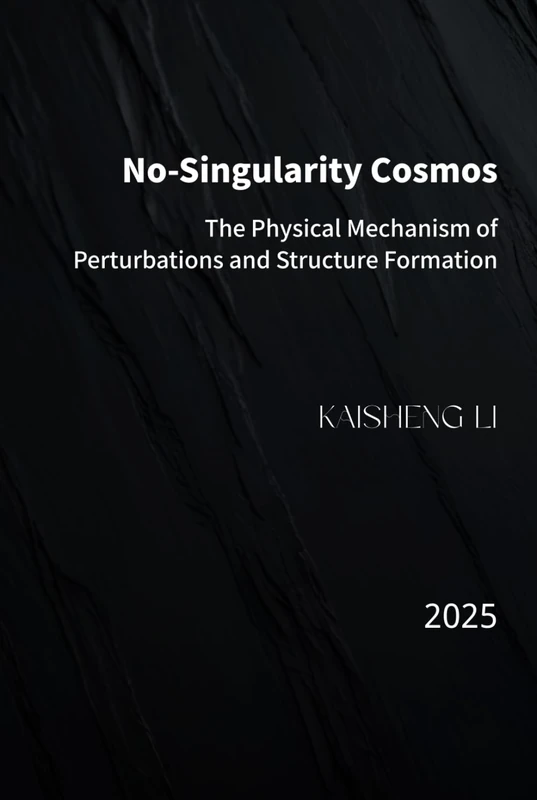
No-Singularity Cosmos: The Physical Mechanism of Perturbations and Structure Formation

Amazon

Price History & Forecast

Grey patches = out of stock. Cheaper = lower on the chart. Hover for exact prices.

Last 386 days · 256 data points (no recent data)

Historical
Generating forecast…
£58.09 £55.19 £56.35 £57.51 £58.67 £59.83 £60.99 22 August 2025 26 November 2025 02 March 2026 06 June 2026 11 September 2026
View at Amazon ↗
Out of stock

Price data last checked 42 day(s) ago - refreshing...

NEW HERE?

Amazon shows you one price. We show you all of them.

Tosheroon watches Amazon prices so you don't have to. Every product on Amazon has a price history — we make it visible. Set the price you'd actually pay, and we'll email you the second it gets there. No app, no account, one email.

WHAT'S ON THIS PAGE

↑ Price chart
when this has been cheap or pricey
↑ Forecast
where the price is heading next
↓ Statistics
all-time high & low, recent range
↑ Price alert
name your number, we'll email you

Price Distribution

Price distribution over 386 days • 1 price levels

Days at Price
256 days 0 64 128 192 256 £58 Days at Price

Price Analysis

Most common price: £58 (256 days, 100.0%)

Price range: £58 - £58

Price levels: 1 different prices over 256 days

Description

This book proposes a bold challenge: the infinite temperature and density of the singularity may be a mathematical artifact of general relativity rather than a physical reality. Instead, we argue that high density arises spontaneously from perturbations, not from the extreme conditions of a singularity, and that high-temperature conditions result from the rapid motion and high-density collisions of particles. This perspective inverts the traditional causal sequence, emphasizing the self-organizing capacity of microscopic particles, where perturbations from eccentric collisions drive the formation of high-density regions, ultimately evolving into celestial bodies and cosmic structures. The singularity hypothesis of the Big Bang Theory stems from solutions to Einstein’s field equations. The Friedmann equations describe the universe’s expansion with a scale factor, which, when extrapolated backward to ( t = 0 ), suggests a collapse to a single point with infinite density and temperature. This mathematical singularity resembles the central singularity of a black hole but poses significant physical challenges. The uncertainty principle in quantum mechanics implies that infinite density and temperature violate fundamental physical laws, and modern theories such as inflation or quantum gravity suggest the universe may have originated from a finite high-density state rather than a mathematical singularity. Furthermore, the Big Bang Theory treats high temperature as the cause of particle motion, with cooling leading to particle aggregation, implying a linear causal chain: high temperature (cause) drives particle motion, resulting in celestial formation. However, this sequence may overlook the spontaneous role of microscopic perturbations. We propose that high particle velocities (approaching the speed of light) and high-density collisions generate high temperatures, with high density being the critical factor and perturbations as the physical source of high density. This causal inversion aligns more closely with physical intuition and is consistent with observations in non-equilibrium thermodynamics and astrophysics. The central thesis of this book is that perturbations, not a singularity, drive the formation of cosmic structures. Eccentric collisions of microscopic particles induce spin and helical motion, forming localized vortices or density concentrations. These perturbations amplify in high-density gases, evolving through gravitational collapse into stars, planets, and galaxies. Angular momentum conservation results in randomly distributed spin directions, leading to the diversity of celestial bodies. Aggregated particles forming celestial bodies constitute only a small fraction of the universe’s total particles, while unaggregated interstellar gas and dark matter continue to form new bodies through ongoing perturbations, influencing galaxy evolution and potentially playing a critical role in the universe’s future. We further propose that same-direction rotations may repel, while opposite-direction rotations may attract—a hypothesis constrained by gravity’s dominance but offering insights into local dynamics through fluid dynamics analogies. The objective of this book is to reexamine the origin and evolution of the universe through a cross-scale physical framework. Starting with microscopic particle collisions, we analyze how perturbations spontaneously form high-density regions, driving celestial formation, and explore the future role of unaggregated particles. This framework challenges the singularity hypothesis of the Big Bang Theory, emphasizing the universality of self-organization and perturbations, consistent with observations of star formation in molecular clouds and the random distribution of galaxy spin directions. Our aim is to provide a new perspective for cosmology, astrophysics, and non-equilibrium thermodynamics, stimulating deeper reflection on the universe’s initial conditions and future destiny.

Product Specifications

Format
hardcover
Domain
Amazon UK
Release Date
15 August 2025
Listed Since
16 August 2025

Barcode

No barcode data available

Similar Products You Might Like
Marvels Of The Cosmos
97% match

Marvels Of The Cosmos

£70.76 17 Sep 2026
The Physics of Cosmology
97% match

The Physics of Cosmology

Elsevier

£87.20 18 Sep 2026
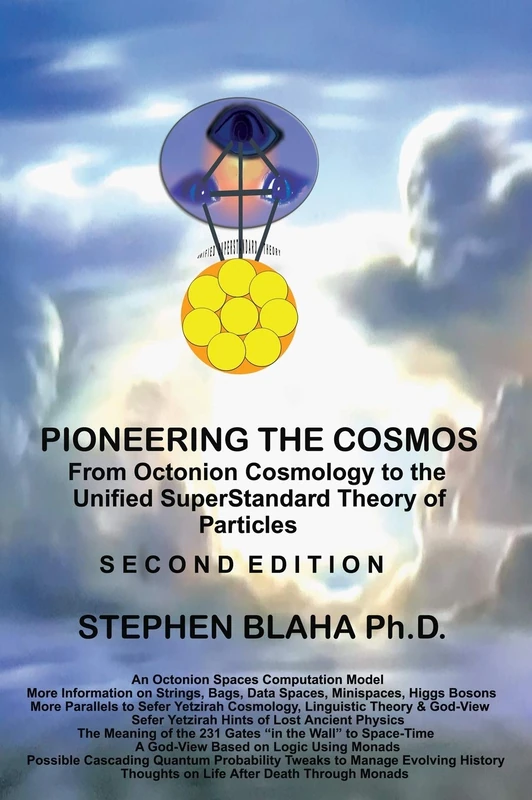
Pioneering The Cosmos: Second Edition of From Octonion Cosmology to the Unified SuperStandard Theory of Particles: Second Edition of From Octonion Cosmology to: Second Edition of
97% match

Pioneering The Cosmos: Second Edition of From Octonion Cosmology to the Unified SuperStandard Theory of Particles: Second Edition of From Octonion Cosmology to: Second Edition of

£68.99 21 Sep 2026
Cosmos Revealed: The Science and Ethics of Life Beyond Earth
97% match

Cosmos Revealed: The Science and Ethics of Life Beyond Earth
£151.02 01 Oct 2026
Cosmos Revealed: The Science and Ethics of Life Beyond Earth
97% match

Cosmos Revealed: The Science and Ethics of Life Beyond Earth

£188.78 01 Oct 2026
Cosmic Emergence: The Power of Random Collisions
97% match

Cosmic Emergence: The Power of Random Collisions

Price unavailable
Cosmism: A Worldview for a Cosmic Civilization
97% match

Cosmism: A Worldview for a Cosmic Civilization

£197.82 24 Sep 2026
97% match

Cosmology for Physicists

CRC Press

£98.79 22 Sep 2026
Key concept in cosmology
97% match

Key concept in cosmology

£153.24 27 Jun 2026
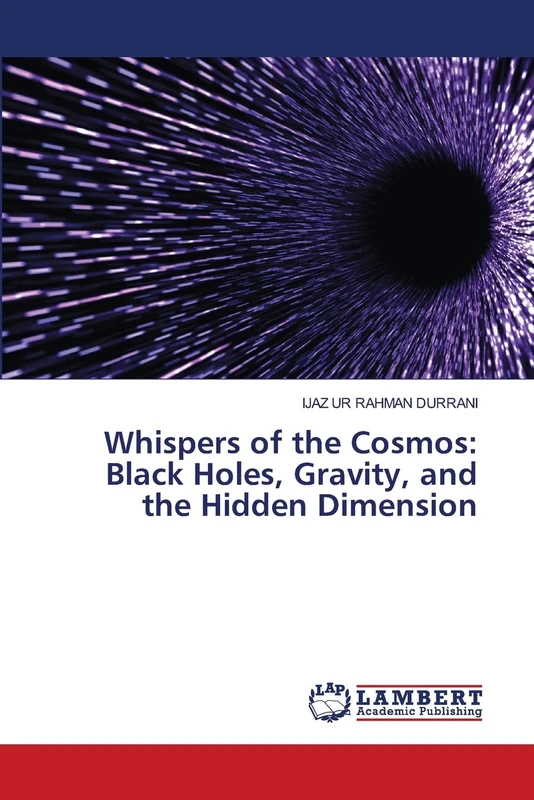
Whispers of the Cosmos: Black Holes, Gravity, and the Hidden Dimension
97% match

Whispers of the Cosmos: Black Holes, Gravity, and the Hidden Dimension

LAP Lambert Academic Publishing
£93.99 17 Sep 2026
Complex Systems and Cosmic Evolution: Entropy Reduction and Functional Emergence
97% match

Complex Systems and Cosmic Evolution: Entropy Reduction and Functional Emergence

Price unavailable
Cosmology Research - Addressing Current Problems with Astrophysics
97% match

Cosmology Research - Addressing Current Problems with Astrophysics

IntechOpen
£119.00 26 Sep 2026
Universe: Feature Papers 2023-Cosmology
97% match

Universe: Feature Papers 2023-Cosmology

£93.96 30 Sep 2026
Cosmology - The Past, Present and Future of the Universe
97% match

Cosmology - The Past, Present and Future of the Universe

IntechOpen
£119.00 17 Sep 2026
Accelerating Contraction of the Universe – the Reasonable Alternative (On the True Nature of Things in Physics)
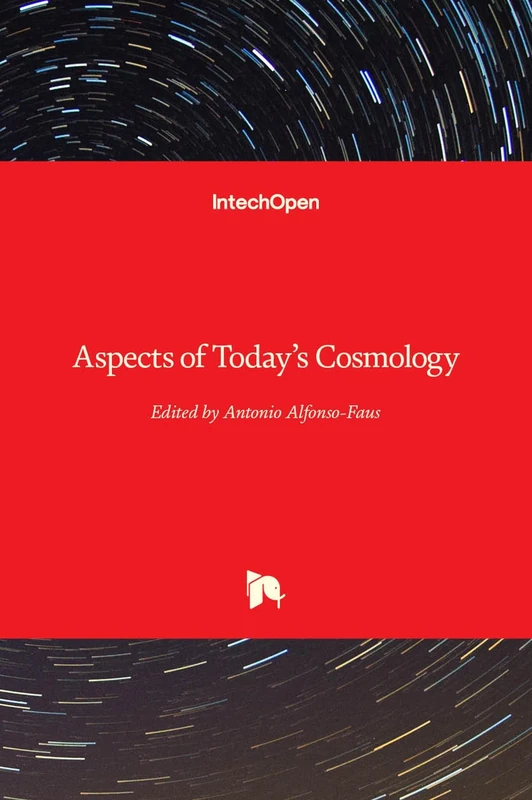
97% match

Accelerating Contraction of the Universe – the Reasonable Alternative (On the True Nature of Things in Physics)

£72.23 11 Sep 2026
Aspects of Today's Cosmology
97% match

Aspects of Today's Cosmology

IntechOpen
£139.00 09 Sep 2026
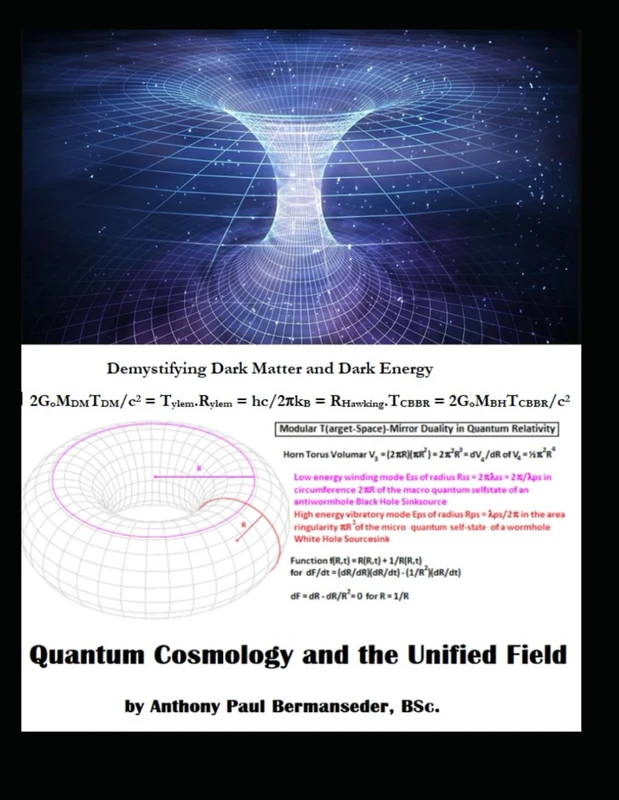
Quantum Cosmology in the Unified Field
96% match

Quantum Cosmology in the Unified Field

£56.28 11 Sep 2026
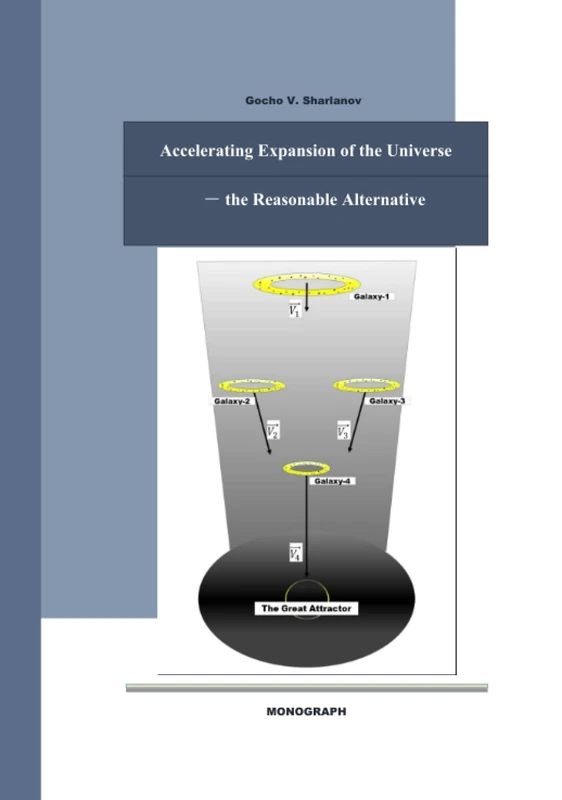
Accelerating Expansion of the Universe – the Reasonable Alternative: Analysis Based on the Logic of Astronomical Observations, Astronomical ... (On the True Nature of Things in Physics)
96% match

Accelerating Expansion of the Universe – the Reasonable Alternative: Analysis Based on the Logic of Astronomical Observations, Astronomical ... (On the True Nature of Things in Physics)
£70.36 26 Sep 2026
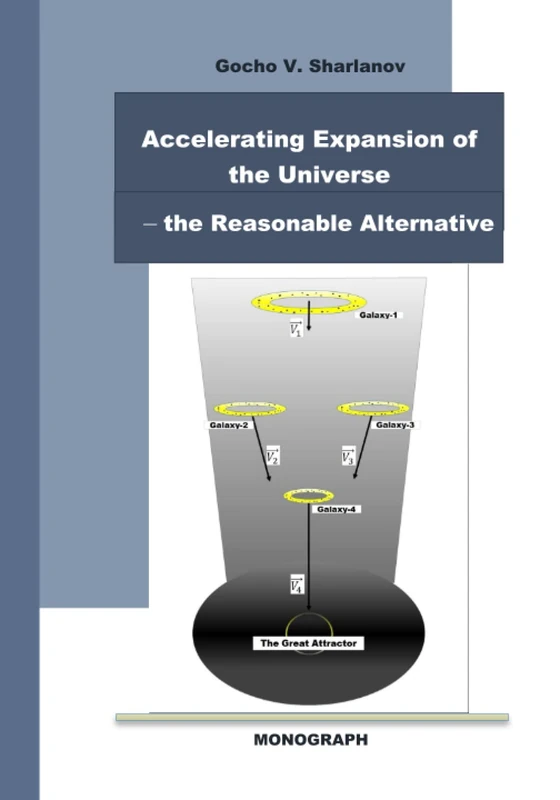
Accelerating Expansion of the Universe – the Reasonable Alternative: Analysis Based on the Logic of Astronomical Observations, Astronomical ... (On the True Nature of Things in Physics)
96% match

Accelerating Expansion of the Universe – the Reasonable Alternative: Analysis Based on the Logic of Astronomical Observations, Astronomical ... (On the True Nature of Things in Physics)

£52.53 08 Sep 2026
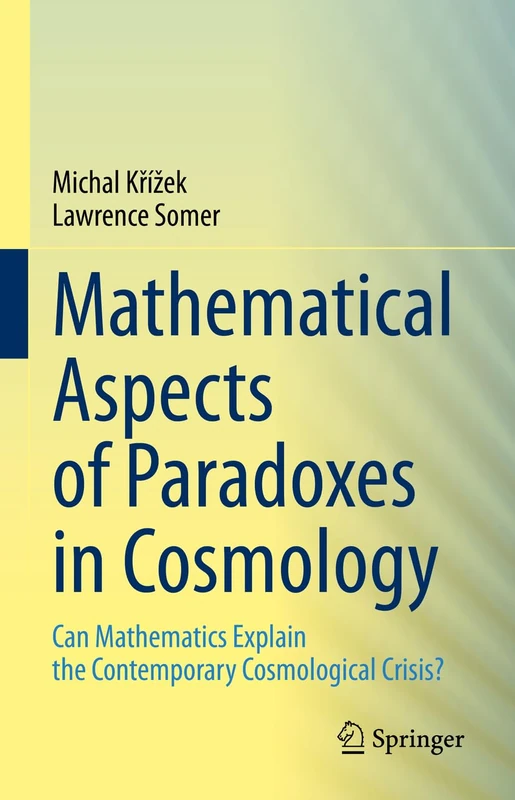
Mathematical Aspects of Paradoxes in Cosmology: Can Mathematics Explain the Contemporary Cosmological Crisis?
96% match

Mathematical Aspects of Paradoxes in Cosmology: Can Mathematics Explain the Contemporary Cosmological Crisis?

Springer
£97.00 02 Oct 2026
3-6-9 Digital Model of the Universe: A Unified Framework for Quantum, Biological, and Cosmological Patterns
96% match

3-6-9 Digital Model of the Universe: A Unified Framework for Quantum, Biological, and Cosmological Patterns

Price unavailable
Cosmology of the Big Bang: From Myths to Model
96% match

Cosmology of the Big Bang: From Myths to Model

Cognella Academic Publishing
£83.54 25 Sep 2026
QUANTUM FLUCTUATIONS AND DARK MATTER: THE RESEARCHER
96% match

QUANTUM FLUCTUATIONS AND DARK MATTER: THE RESEARCHER

£156.20 01 Sep 2026
Cosmology 2020: The Current State
96% match

Cosmology 2020: The Current State

IntechOpen

£118.98 19 Sep 2026