£158.25

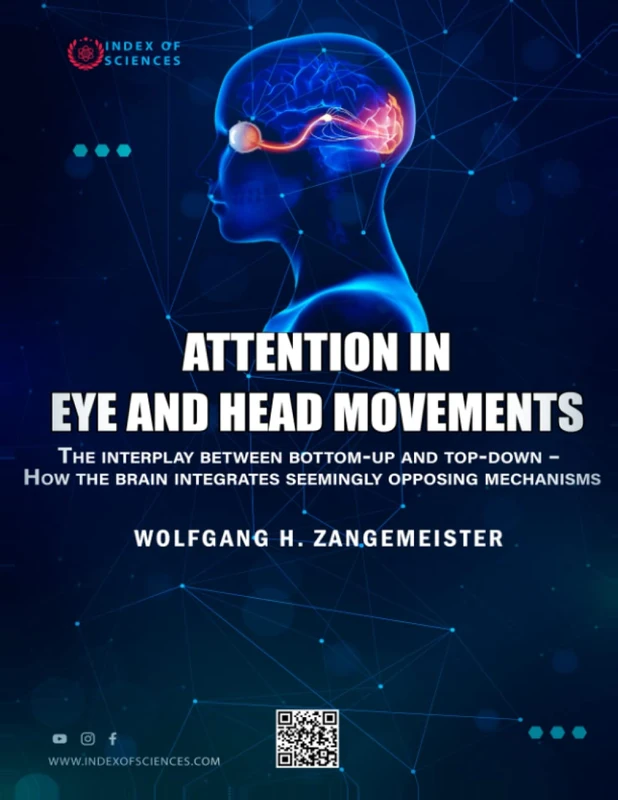
Attention In Eye And Head Movements

Price data checked 5 days ago

View at Amazon

We'll watch every seller, every day. One email when your price arrives.

It has never been this cheap. We have no record of a lower price.

£158 today · cheaper than every other day in the last 3 months

NEW HERE?

Amazon shows you one price. We show you all of them.

Tosheroon watches Amazon prices so you don't have to. Every product on Amazon has a price history — we make it visible. Set the price you'd actually pay, and we'll email you the second it gets there. No app, no account, one email.

WHAT'S ON THIS PAGE

↓ Price chart
when this has been cheap or pricey
↓ Forecast
where the price is heading next
↓ Statistics
all-time high & low, recent range
↑ Price alert
name your number, we'll email you

Price History & Forecast

Grey patches = out of stock. Cheaper = lower on the chart. Hover for exact prices.

Last 86 days · 86 data points (no recent data)

Historical
Generating forecast…
£158.25 £150.34 £153.50 £156.67 £159.83 £163.00 £166.16 08 July 2026 29 July 2026 19 August 2026 09 September 2026 01 October 2026

Price Distribution

Price distribution over 86 days • 1 price levels

Days at Price
86 days 0 22 43 65 86 £158 Days at Price

Price Analysis

Most common price: £158 (86 days, 100.0%)

Price range: £158 - £158

Price levels: 1 different prices over 86 days

Description

What is the function of the visual brain? Of course, it is to see, but perhaps an adequate definition would be to say that it is an apparatus for acquiring knowledge about the world. There are other ways of achieving that knowledge, and those who are blind are forced to use the sense of touch, smell, and hearing. But for the sighted, the visual brain is the most efficient way of acquiring knowledge, as a large part of our brain is dedicated to the optical system. Studying the visual brain becomes a philosophical pursuit through scientific thinking, experimental, and practical means when cast in these terms. The problem of knowledge, how we acquire it and how to ensure what we know is central to philosophical enquiry. Two main themes form the book's backbone, and both are critical to understanding the visual brain in a more profound sense. The first is communication through the visual brain. Suppose the visual brain is about the acquisition of knowledge. In that case, it must be an essential vehicle for communication in diverse ways. For example, communication between individuals, emotions such as joy or pathos, and communication of fear are all achieved seemingly effortlessly and without the written or spoken word. Indeed, language, a relatively late evolutionary development, is a poor cousin to vision in communication. For example, it may take many pages to convey an emotion through body language, which the visual system can categorize and communicate in seconds. Hence, a high level of emphasis on communication must be welcomed. The other central theme that of ambiguity is of equal importance. A neurobiological definition of ambiguity is the exact opposite of dictionary definitions, usually called “vagueness” or “uncertainty”. For a neurobiologist, ambiguity is the certainty of many different interpretations, each sovereign at any given moment, none of which is superior and therefore constitutes the definitive interpretation. Hence there is no correct solution, and all answers are equally valid. Ambiguity is, therefore, a pointer to another characteristic of the brain in its role of acquiring knowledge, namely the projection of brain concepts onto the incoming visual signals so that what is finally seen at any given moment is shaped as much by the concepts (top-down) of the brain, both inherited and acquired, as the nature of the physical stimulus (bottom-up). Artists do not invent ambiguity; instead, they use the brain´s capacity to project multiple concepts to create their works. The neurobiological study of ambiguity is thus critical for understanding brain function. We acquire knowledge through our visual brain using eye and head movements. We communicate with the world and with ourselves while projecting multiple brain concepts onto our surroundings. And we use ambiguity as key part of this function when we do this. In the last two decades we have observed a continuous interest in eye and head movement research. According to a recent investigation 1 , eye movements are discussed in over one million publications. The number of publications with eye movement in the title or abstract has steadily 4 increased. These decades have also witnessed the emergence of many new sub-disciplines in neuroscience and attention – one of the most important is visual attention and eye movements, which refers to the functional neuroscience of bottom-up and top-down perception.

Product Specifications

Format
paperback
Domain
Amazon UK
Release Date
09 February 2023
Listed Since
21 February 2023

Barcode

No barcode data available