£76.14

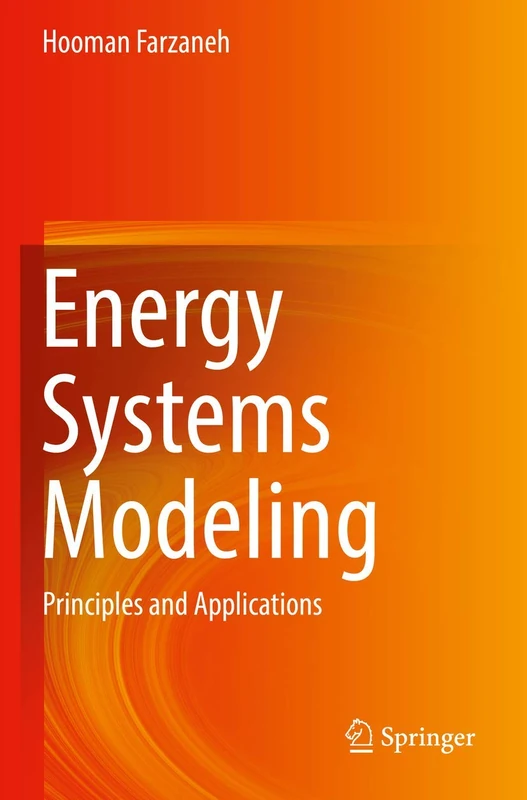
Springer Energy Systems Modeling: Principles and Applications

Price data last checked 80 day(s) ago - refreshing...

View at Amazon

We'll watch every seller, every day. One email when your price arrives.

This is the most expensive it has ever been. Walk away.

£76 today · previous high £76 · all-time low £76

NEW HERE?

Amazon shows you one price. We show you all of them.

Tosheroon watches Amazon prices so you don't have to. Every product on Amazon has a price history — we make it visible. Set the price you'd actually pay, and we'll email you the second it gets there. No app, no account, one email.

WHAT'S ON THIS PAGE

↓ Price chart
when this has been cheap or pricey
↓ Forecast
where the price is heading next
↓ Statistics
all-time high & low, recent range
↑ Price alert
name your number, we'll email you

Price History & Forecast

Grey patches = out of stock. Cheaper = lower on the chart. Hover for exact prices.

Last 11 days • 11 data points (No recent data available)

Historical
Generating forecast...
£76.14 £75.81 £75.88 £75.95 £76.03 £76.10 £76.17 08 April 2026 10 April 2026 13 April 2026 15 April 2026 18 April 2026

Price Distribution

Price distribution over 11 days • 1 price levels

Days at Price
11 days 0 3 6 8 11 £76 Days at Price

Price Analysis

Most common price: £76 (11 days, 100.0%)

Price range: £76 - £76

Price levels: 1 different prices over 11 days

Description

This book serves as an introductory reference guide for those studying the application of models in energy systems. The book opens with a taxonomy of energy models and treatment of descriptive and analytical models, providing the reader with a foundation of the basic principles underlying the energy models and positioning these principles in the context of energy system studies.  In turn, the book provides valuable insights into the varied applications of different energy models to answer complex questions, including those concerning specific aspects of energy policy measures dealing with issues of supply and demand. Case studies are provided in all of the chapters, offering real-world examples of how existing models fit the classification methods outlined here. The book’s remaining chapters address a broad range of principles and applications, taking the reader from the basic principles involved, to state-of-the-art energy production and consumption processes, using modeling and validation/illustration in case studies to do so. With its in-depth mathematical foundation, this book serves as a comprehensive collection of work on modeling energy systems and processes, taking inexperienced graduate students from the basics through to a high-level understanding of the modeling processes in question, while also providing professionals and academic researchers in the field of energy planning with an up-to-date reference guide covering the latest works. From the Back Cover This book serves as an introductory reference guide for those studying the application of models in energy systems. The book opens with a taxonomy of energy models and treatment of descriptive and analytical models, providing the reader with a foundation of the basic principles underlying the energy models and positioning these principles in the context of energy system studies.  In turn, the book provides valuable insights into the varied applications of different energy models to answer complex questions, including those concerning specific aspects of energy policy measures dealing with issues of supply and demand. Case studies are provided in all of the chapters, offering real-world examples of how existing models fit the classification methods outlined here.  The book’s remaining chapters address a broad range of principles and applications, taking the reader from the basic principles involved, to state-of-the-art energy production and consumption processes, using modeling and validation/illustration in case studies to do so. With its in-depth mathematical foundation, this book serves as a comprehensive collection of work on modeling energy systems and processes, taking inexperienced graduate students from the basics through to a high-level understanding of the modeling processes in question, while also providing professionals and academic researchers in the field of energy planning with an up-to-date reference guide covering the latest works. About the Author Hooman Farzaneh is an associate professor at Kyushu University, Japan. He is particularly interested in issues related to quantitative and qualitative analysis and focusing on policy implementations designed to tackle air pollution problems at both regional and local scales. Prior to joining Kyushu University, Hooman worked at the Institute of Advanced Energy, Kyoto University and the United Nations University. Dr. Farzaneh has more than ten years’ experience teaching energy-science-related subjects at various universities in Iran and Japan, and is currently the principle investigator of a funded research project entitled “Clean Energy Development in Asia-Pacific Cities” at the Kyushu University Platform of Inter/Transdisciplinary Energy Research.

Product Specifications

Format
paperback
Domain
Amazon UK
Release Date
15 August 2020
Listed Since
16 July 2020

Barcode

No barcode data available