We can't find the internet
Attempting to reconnect
Something went wrong
Hang in there while we get back on track

£76.42
This is the most expensive it has ever been. Walk away.
£76 today · previous high £76 · all-time low £76
Springer Nonlinear Optical Properties of Materials: 174 (Springer Series in Optical Sciences, 174)
We'll watch every seller, every day. One email when your price arrives.
Price History & Forecast
Grey patches = out of stock. Cheaper = lower on the chart. Hover for exact prices.
Last 63 days · 63 data points (no recent data)
NEW HERE?
Amazon shows you one price. We show you all of them.
Tosheroon watches Amazon prices so you don't have to. Every product on Amazon has a price history — we make it visible. Set the price you'd actually pay, and we'll email you the second it gets there. No app, no account, one email.
WHAT'S ON THIS PAGE
when this has been cheap or pricey
where the price is heading next
all-time high & low, recent range
name your number, we'll email you
Price Distribution
Price distribution over 63 days • 1 price levels
Price Analysis
Most common price: £76 (63 days, 100.0%)
Price range: £76 - £76
Price levels: 1 different prices over 63 days
Description
Product Specifications
- Brand
- Springer
- Format
- paperback
- ASIN
- 9401783608
- Domain
- Amazon UK
- Release Date
- 18 June 2015
- Listed Since
- 20 June 2015
Barcode
No barcode data available
Similar Products You Might Like

Progress in Nonlinear Nano-Optics (Nano-Optics and Nanophotonics)
Springer

Self-focusing: Past and Present: Fundamentals and Prospects: 114 (Topics in Applied Physics, 114)
Springer

Diffraction Optics of Complex-Structured Periodic Media: Localized Optical Modes of Spiral Media: 203 (Springer Series in Optical Sciences, 203)
Springer

Progress in Photon Science: Emerging New Directions: 125 (Springer Series in Chemical Physics, 125)
Springer

Diffraction Optics of Complex-Structured Periodic Media: Localized Optical Modes of Spiral Media: 203 (Springer Series in Optical Sciences)
Springer

Nonlinear Optics and Solid-State Lasers: Advanced Concepts, Tuning-Fundamentals and Applications: 164 (Springer Series in Optical Sciences, 164)
Springer

Quantum Plasmonics: 185 (Springer Series in Solid-State Sciences, 185)
Springer
HIGH-ORDER HARMONIC GENERATION IN LASER PLASMA PLUMES
Imperial College Press

Extreme Photonics & Applications (NATO Science for Peace and Security Series B: Physics and Biophysics)
Springer
Laser Beam Propagation in Nonlinear Optical Media
CRC Press
Laser Beam Propagation in Nonlinear Optical Media
CRC Press
Spectroscopic Properties of an Nd: YAG Laser Pumped by a Flashlamp at Various Temperatures and Input Energies (Materials Science and Technologies)
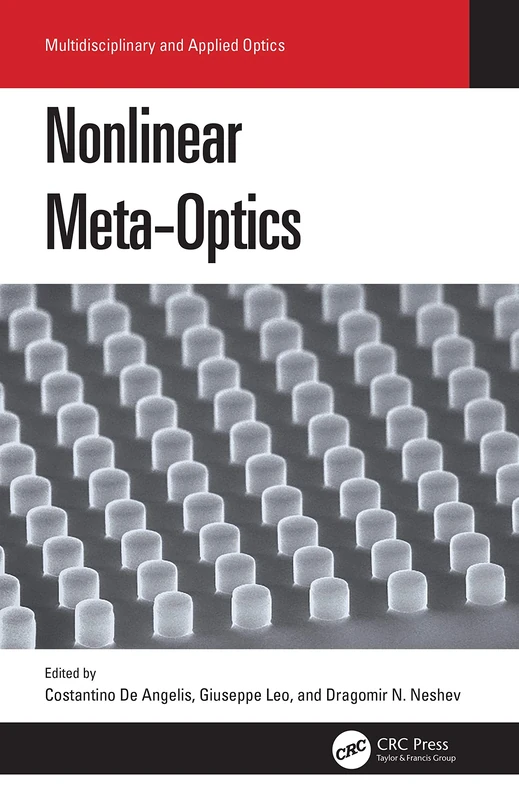
Nonlinear Meta-Optics: Semiconductor Nanostructures & Applications
CRC Press
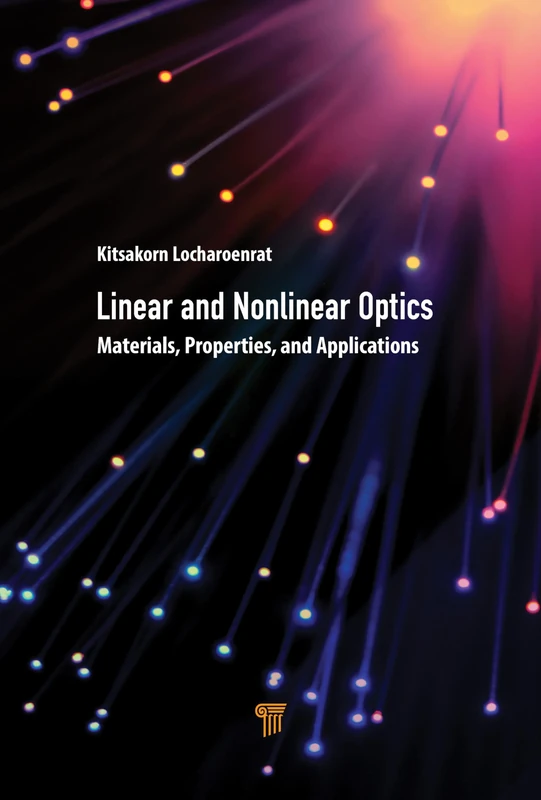
Linear and Nonlinear Optics: Materials, Properties, and Applications
Taylor & Francis

Femtosecond Laser Micromachining: Photonic and Microfluidic Devices in Transparent Materials: 123 (Topics in Applied Physics, 123)
Springer

Plasmonics and Light–Matter Interactions in Two-Dimensional Materials and in Metal Nanostructures: Classical and Quantum Considerations (Springer Theses)
Springer
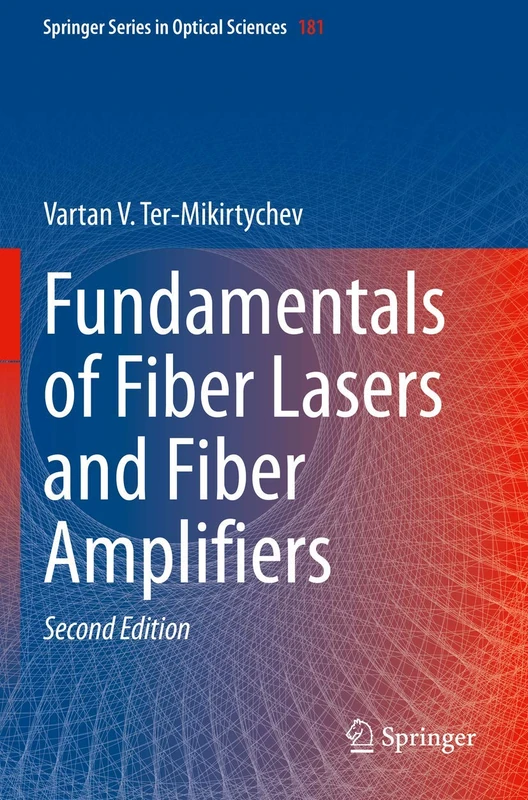
Fundamentals of Fiber Lasers and Fiber Amplifiers: 181 (Springer Series in Optical Sciences, 181)
Springer

Laser Growth and Processing of Photonic Devices (Woodhead Publishing Series in Electronic and Optical Materials)
Elsevier

Generation and Parametric Amplification of Few‐Cycle Light Pulses at Relativistic Intensities (Springer Theses)
Springer

Elsevier Nanocomposites for Photonic and Electronic Applications
Elsevier
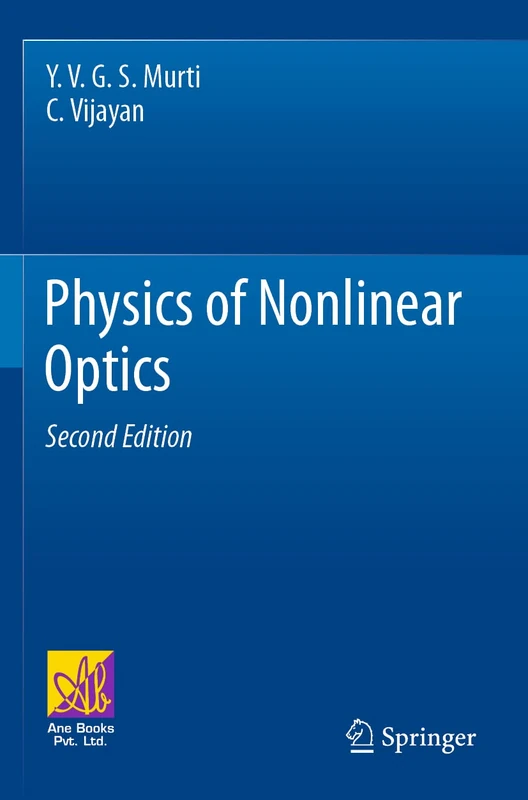
Physics of Nonlinear Optics
Springer
Odyssey of Light in Nonlinear Optical Fibers: Theory and Applications
CRC Press

Principles of Lasers
Springer

Polymer and Photonic Materials Towards Biomedical Breakthroughs (Micro- and Opto-Electronic Materials, Structures, and Systems)
Springer