£132.55

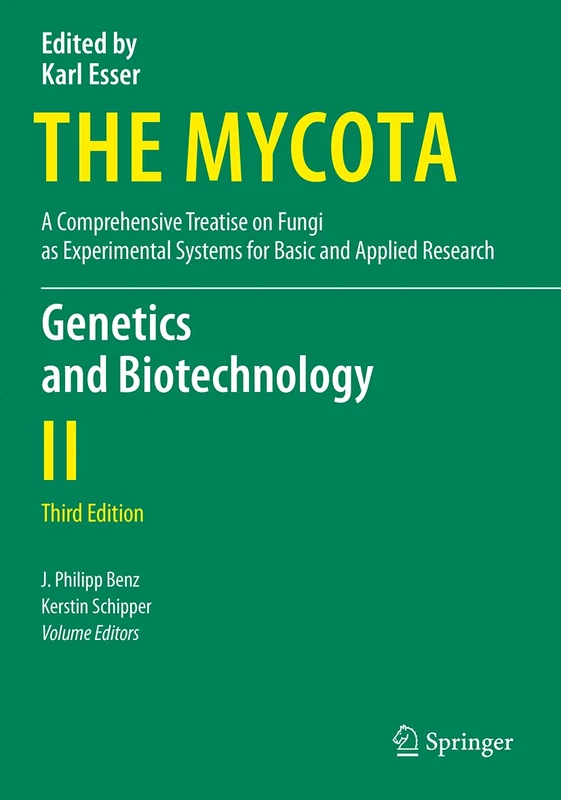
Springer Genetics and Biotechnology: 2 (The Mycota, 2)

Price data last checked 39 day(s) ago - refreshing...

View at Amazon

We'll watch every seller, every day. One email when your price arrives.

This is the most expensive it has ever been. Walk away.

£133 today · previous high £133 · all-time low £132

NEW HERE?

Amazon shows you one price. We show you all of them.

Tosheroon watches Amazon prices so you don't have to. Every product on Amazon has a price history — we make it visible. Set the price you'd actually pay, and we'll email you the second it gets there. No app, no account, one email.

WHAT'S ON THIS PAGE

↓ Price chart
when this has been cheap or pricey
↓ Forecast
where the price is heading next
↓ Statistics
all-time high & low, recent range
↑ Price alert
name your number, we'll email you

Price History & Forecast

Grey patches = out of stock. Cheaper = lower on the chart. Hover for exact prices.

Last 52 days · 52 data points (no recent data)

Historical
Generating forecast…
£132.55 £132.28 £132.34 £132.40 £132.46 £132.52 £132.58 25 May 2026 06 June 2026 19 June 2026 02 July 2026 15 July 2026

Price Distribution

Price distribution over 52 days • 1 price levels

Days at Price
52 days 0 13 26 39 52 £132 Days at Price

Price Analysis

Most common price: £132 (52 days, 100.0%)

Price range: £132 - £132

Price levels: 1 different prices over 52 days

Description

This fully revised third edition includes up-to-date topics and developments in the field, which has made tremendous strides since the publication of the second edition in 2004. Many novel techniques based on Next Generation Sequencing have sped up the analysis of fungi and major advances have been made in genome editing, leading to a deeper understanding of the genetics underlying cellular processes as well as their applicability. At the same time, the relevance of fungi is unbroken, both due to the serious threats to human health and welfare posed by fungal pests and pathogens, and to the many benefits that fungal biotechnology can offer for diverse emerging markets and processes that form the basis of the modern bioeconomy. With regard to these advances, the first section of this volume, Genetics, illustrates the basic genetic processes underlying inheritance, cell biology, metabolism and “lifestyles” of fungi. The second section, Biotechnology, addresses the applied side of fungal genetics, ranging from new tools for synthetic biology to the biotechnological potential of fungi from diverse environments. Gathering chapters written by reputed scientists, the book represents an invaluable reference guide for fungal biologists, geneticists and biotechnologists alike. Review “In such a rapidly moving area of mycology, it is not surprising that there is much new to report 16 years on. While badged as a third edition, it is more a collection of in-depth review articles, many on topics which have largely emerged in the years since the second. … a particularly valuable synopsis of the current state of fungal genomics. … and an especially exciting overview of the potential of anaerobic gut fungi.” (IMA Fungus, December 31, 2021) From the Back Cover The Series The fungi represent a heterogenous assemblage of eukaryotic microorganisms and have become favored organisms for research at the cellular and molecular level. Such research involvement has been stimulated by interest in the biotechnological application of fungi in processes related to industry, agriculture and ecology. Considering both yeasts and mycelial fungi, The Mycota highlights developments in both basic and applied research and presents an overview of fungal systematics and cell structure. Foremost authorities in research on mycology have been assembled to edit and contribute to the volumes.   This Volume The first section of this volume, Genetics, illustrates the basic genetic processes underlying inheritance, cell biology, metabolism and “lifestyles” of fungi. The second section, Biotechnology, addresses the applied side of fungal genetics, ranging from new tools for synthetic biology to the biotechnological potential of fungi from diverse environments. Gathering chapters written by reputed scientists, the book represents an invaluable reference guide for fungal biologists, geneticists and biotechnologists alike. About the Author J. Philipp Benz (born 1977) studied biology at the TU Braunschweig (2003). The research work for his thesis was done in the laboratory of Nigel Crawford at UC San Diego (CA, USA). He subsequently performed his dissertation at the LMU Munich, working in the research group of Jürgen Soll (Department of Biochemistry and Physiology of Plants) (2009). He then returned to the USA to become a postdoctoral fellow in the laboratory of Chris Somerville at the Energy Biosciences Institute (UC Berkeley, CA, USA) where he started to work on filamentous fungi. In 2014, he was appointed assistant professor for Wood Bioprocesses at the Technical University of Munich (TUM School of Life Sciences Weihenstephan, Holzforschung München). His research group is studying the processes used by filamentous fungi to degrade lignocellulosic biomass. Central questions are how fungi perceive the composition of the plant biomass on a molecular level and how they adapt their metabolism to effectively degrad

Product Specifications

Format
paperback
Domain
Amazon UK
Release Date
29 October 2021
Listed Since
02 October 2021

Barcode

No barcode data available