£252.51

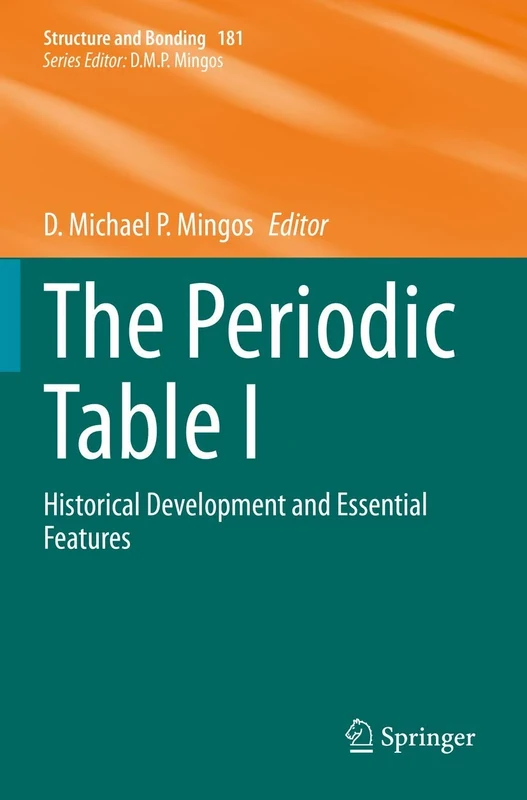
Springer The Periodic Table I: Historical Development and Essential Features: 181 (Structure and Bonding, 181)

Price data last checked 47 day(s) ago - refreshing...

View at Amazon

Price History & Forecast

Last 44 days • 44 data points (No recent data available)

Historical
Generating forecast...
£252.58 £252.50 £252.52 £252.54 £252.55 £252.57 £252.59 25 January 2026 04 February 2026 15 February 2026 26 February 2026 09 March 2026

Price Distribution

Price distribution over 44 days • 1 price levels

Days at Price
44 days 0 11 22 33 44 £253 Days at Price

Price Analysis

Most common price: £253 (44 days, 100.0%)

Price range: £253 - £253

Price levels: 1 different prices over 44 days

Description

Product Description As 2019 has been declared the International Year of the Periodic Table, it is appropriate that Structure and Bonding marks this anniversary with two special volumes. In 1869 Dmitri Ivanovitch Mendeleev first proposed his periodic table of the elements. He is given the major credit for proposing the conceptual framework used by chemists to systematically inter-relate the chemical properties of the elements. However, the concept of periodicity evolved in distinct stages and was the culmination of work by other chemists over several decades. For example, Newland’s Law of Octaves marked an important step in the evolution of the periodic system since it represented the first clear statement that the properties of the elements repeated after intervals of 8. Mendeleev’s predictions demonstrated in an impressive manner how the periodic table could be used to predict the occurrence and properties of new elements. Not all of his many predictions proved to be valid, but the discovery of scandium, gallium and germanium represented sufficient vindication of its utility and they cemented its enduring influence. Mendeleev’s periodic table was based on the atomic weights of the elements and it was another 50 years before Moseley established that it was the atomic number of the elements, that was the fundamental parameter and this led to the prediction of further elements.  Some have suggested that the periodic table is one of the most fruitful ideas in modern science and that it is comparable to Darwin’s theory of evolution by natural selection, proposed at approximately the same time. There is no doubt that the periodic table occupies a central position in chemistry. In its modern form it is reproduced in most undergraduate inorganic textbooks and is present in almost every chemistry lecture room and classroom.  This first volume provides chemists with an account of the historical development of the Periodic Table  and  an overview of how the Periodic Table has evolved over the last 150 years. It also illustrates how it has guided the research programmes of some distinguished chemists. From the Back Cover As 2019 has been declared the International Year of the Periodic Table, it is appropriate that Structure and Bonding marks this anniversary with two special volumes. In 1869 Dmitri Ivanovitch Mendeleev first proposed his periodic table of the elements. He is given the major credit for proposing the conceptual framework used by chemists to systematically inter-relate the chemical properties of the elements. However, the concept of periodicity evolved in distinct stages and was the culmination of work by other chemists over several decades. For example, Newland’s Law of Octaves marked an important step in the evolution of the periodic system since it represented the first clear statement that the properties of the elements repeated after intervals of 8. Mendeleev’s predictions demonstrated in an impressive manner how the periodic table could be used to predict the occurrence and properties of new elements. Not all of his many predictions proved to be valid, but the discovery of scandium, gallium and germanium represented sufficient vindication of its utility and they cemented its enduring influence. Mendeleev’s periodic table was based on the atomic weights of the elements and it was another 50 years before Moseley established that it was the atomic number of the elements, that was the fundamental parameter and this led to the prediction of further elements.  Some have suggested that the periodic table is one of the most fruitful ideas in modern science and that it is comparable to Darwin’s theory of evolution by natural selection, proposed at approximately the same time. There is no doubt that the periodic table occupies a central position in chemistry. In its modern form it is reproduced in most undergraduate inorganic textbooks and is present in almost every chemistry lecture room and classroom.  Th

Product Specifications

Format
paperback
Domain
Amazon UK
Release Date
06 February 2021
Listed Since
10 January 2021

Barcode

No barcode data available

Similar Products You Might Like
The Periodic Table I: Historical Development and Essential Features: 181 (Structure and Bonding, 181)
99% match

The Periodic Table I: Historical Development and Essential Features: 181 (Structure and Bonding, 181)

Springer

£243.89 25 Jan 2026
The Periodic Table II: Catalytic, Materials, Biological and Medical Applications: 182 (Structure and Bonding, 182)
98% match

The Periodic Table II: Catalytic, Materials, Biological and Medical Applications: 182 (Structure and Bonding, 182)

£245.59 22 Jan 2026
The Periodic Table II: Catalytic, Materials, Biological and Medical Applications: 182 (Structure and Bonding, 182)
98% match

The Periodic Table II: Catalytic, Materials, Biological and Medical Applications: 182 (Structure and Bonding, 182)

Springer
£180.00 25 Jan 2026
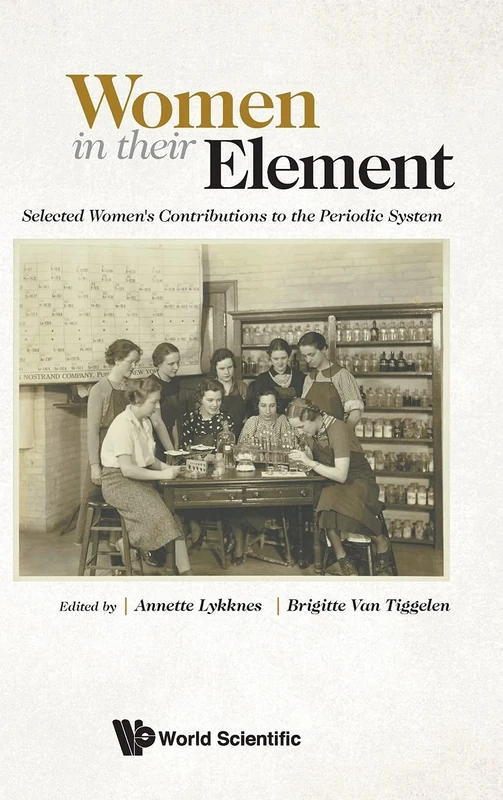
Women In Their Element: Selected Women's Contributions to the Periodic System
94% match

Women In Their Element: Selected Women's Contributions to the Periodic System

Scientific Publishing

£77.00 26 Feb 2026
The Chemical Bond I: 100 Years Old and Getting Stronger: 169 (Structure and Bonding)
93% match

The Chemical Bond I: 100 Years Old and Getting Stronger: 169 (Structure and Bonding)

Springer

£179.99 30 Mar 2026
The Chemical Bond I: 100 Years Old and Getting Stronger: 169 (Structure and Bonding, 169)
93% match

The Chemical Bond I: 100 Years Old and Getting Stronger: 169 (Structure and Bonding, 169)

Springer

£137.68 14 Jan 2026
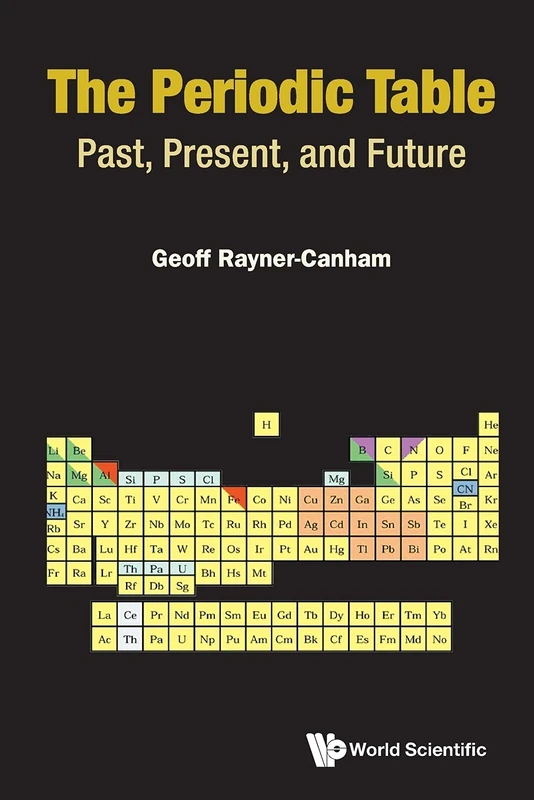
The Periodic Table: Past, Present, and Future: Past, Present, Future
93% match

The Periodic Table: Past, Present, and Future: Past, Present, Future

World Scientific Publishing Company

£65.27 13 Jan 2026
Lothar Meyer: Modern Theories and Pathways to Periodicity (Classic Texts in the Sciences)
93% match

Lothar Meyer: Modern Theories and Pathways to Periodicity (Classic Texts in the Sciences)

Birkhauser

£78.86 08 Jan 2026
The Elements: A Complete Story: Premium and complete reference/information on the elements of the Periodic Table
93% match

The Elements: A Complete Story: Premium and complete reference/information on the elements of the Periodic Table

£95.81 25 Mar 2026
Gold Clusters, Colloids and Nanoparticles I: 161 (Structure and Bonding)
93% match

Gold Clusters, Colloids and Nanoparticles I: 161 (Structure and Bonding)

Springer

£249.99 04 Apr 2026
Gold Clusters, Colloids and Nanoparticles I: 161 (Structure and Bonding, 161)
93% match

Gold Clusters, Colloids and Nanoparticles I: 161 (Structure and Bonding, 161)

Springer

£144.00 23 Jan 2026
Computational Studies in Organometallic Chemistry: 167 (Structure and Bonding)
92% match

Computational Studies in Organometallic Chemistry: 167 (Structure and Bonding)

Springer

£143.46 10 Mar 2026
Bond Valences: 158 (Structure and Bonding, 158)
92% match

Bond Valences: 158 (Structure and Bonding, 158)

Springer

£150.44 02 Mar 2026
The Periodic Table: Past, Present, and Future: PAST, PRESENT, AND FUTURE : THE: PAST
92% match

The Periodic Table: Past, Present, and Future: PAST, PRESENT, AND FUTURE : THE: PAST

World Scientific Publishing Company
£38.08 04 Mar 2026
Luminescent and Photoactive Transition Metal Complexes as Biomolecular Probes and Cellular Reagents: 165 (Structure and Bonding, 165)
92% match

Luminescent and Photoactive Transition Metal Complexes as Biomolecular Probes and Cellular Reagents: 165 (Structure and Bonding, 165)

Springer

£144.89 10 Mar 2026
Luminescent and Photoactive Transition Metal Complexes as Biomolecular Probes and Cellular Reagents: 165 (Structure and Bonding, 165)
92% match

Luminescent and Photoactive Transition Metal Complexes as Biomolecular Probes and Cellular Reagents: 165 (Structure and Bonding, 165)

Springer

£143.57 13 Jan 2026
Photofunctional Layered Materials: 166 (Structure and Bonding, 166)
92% match

Photofunctional Layered Materials: 166 (Structure and Bonding, 166)

Springer
£143.76 23 Jan 2026
The Chemical Bond II: 100 Years Old and Getting Stronger: 170 (Structure and Bonding)
92% match

The Chemical Bond II: 100 Years Old and Getting Stronger: 170 (Structure and Bonding)

Springer

£245.52 09 Mar 2026
Gold Clusters, Colloids and Nanoparticles II: 162 (Structure and Bonding, 162)
92% match

Gold Clusters, Colloids and Nanoparticles II: 162 (Structure and Bonding, 162)

Springer

£201.60 21 Jan 2026
The Chemical Bond II: 100 Years Old and Getting Stronger: 170 (Structure and Bonding, 170)
92% match

The Chemical Bond II: 100 Years Old and Getting Stronger: 170 (Structure and Bonding, 170)

Springer

£136.84 12 Apr 2026
Chemistry of the Elements
92% match

Chemistry of the Elements

Butterworth-Heinemann

£49.99 07 Jan 2026
Electronic Structure and Number Theory: Bohr’s Boldest Dream: 148 (Structure and Bonding, 148)
92% match

Electronic Structure and Number Theory: Bohr’s Boldest Dream: 148 (Structure and Bonding, 148)

Springer

£143.52 10 Mar 2026
Electronic Structure and Number Theory: Bohr’s Boldest Dream: 148 (Structure and Bonding, 148)
92% match

Electronic Structure and Number Theory: Bohr’s Boldest Dream: 148 (Structure and Bonding, 148)

Springer

£144.01 03 Feb 2026
Essential Trends in Inorganic Chemistry
92% match

Essential Trends in Inorganic Chemistry

Oxford University Press

£47.63 08 Feb 2026