We can't find the internet
Attempting to reconnect
Something went wrong
Hang in there while we get back on track
£87.68
It has never been this cheap. We have no record of a lower price.
£88 today · cheaper than every other day in the last 3 months
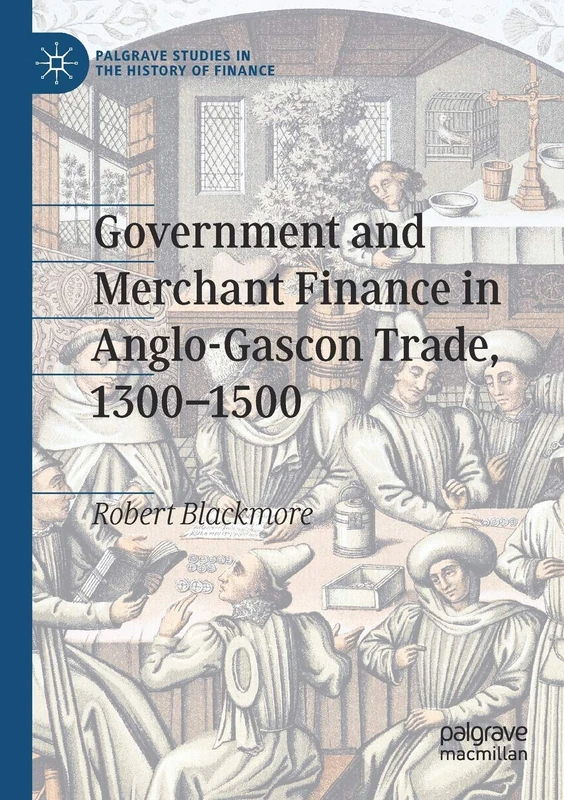
MACMILLAN Government and Merchant Finance in Anglo-Gascon Trade, 1300–1500 (Palgrave Studies in the History of Finance)
Price data last checked 30 day(s) ago - will refresh soon
We'll watch every seller, every day. One email when your price arrives.
Price History & Forecast
Grey patches = out of stock. Cheaper = lower on the chart. Hover for exact prices.
Last 61 days · 61 data points (no recent data)
Price data last checked 30 day(s) ago - will refresh soon
NEW HERE?
Amazon shows you one price. We show you all of them.
Tosheroon watches Amazon prices so you don't have to. Every product on Amazon has a price history — we make it visible. Set the price you'd actually pay, and we'll email you the second it gets there. No app, no account, one email.
WHAT'S ON THIS PAGE
when this has been cheap or pricey
where the price is heading next
all-time high & low, recent range
name your number, we'll email you
Price Distribution
Price distribution over 61 days • 3 price levels
Price Analysis
Most common price: £89 (32 days, 52.5%)
Price range: £88 - £90
Price levels: 3 different prices over 61 days
Description
Product Specifications
- Brand
- MACMILLAN
- Format
- paperback
- ASIN
- 3030345386
- Category
- Books > Subjects > Business, Finance & Law > Biographies & Histories > Business & Economic History
- Domain
- Amazon UK
- Release Date
- 23 February 2021
- Listed Since
- 27 January 2021
Barcode
No barcode data available
Similar Products You Might Like
Essays in Later Medieval French Literature: The Legacy of Jane H. M. Taylor (Durham Modern Languages Series)
Manchester University Press

The States of the Manors of Westminster Abbey c.1300 to 1422 Part 1: 57 (Records of Social and Economic History)
Oxford University Press
Chaucer, Gower, Hoccleve - Medieval London Commerce History
Routledge

Charles V: Le Sage
FAYARD
Three Medieval Queens: Queenship and the Crown in Fourteenth-Century England (Queenship and Power)
MACMILLAN
Conflict in Medieval Europe - Changing Perspectives
Routledge
Women’s Work and Rights in Early Modern Urban Europe
Palgrave
Premodern Rulership and Contemporary Political Power - Medieval Studies
Amsterdam University Press

L'Ibérie Chrétienne et le Maghreb (XIIe - XVe siècles) (Variorum Collected Studies)
Routledge

Paris Et Vienne: 38 (Textes Litteraires Du Moyen Age)
Classiques Garnier
Early Modern Europe: Issues and Interpretations
Wiley
The London Chronicles of the Fifteenth Century: A Revolution in English Writing. with an Annotated Edition of Bradford, West Yorkshire Archives MS 32d
Boydell Press
Credit and Trade in Later Medieval England, 1353-1532 (Palgrave Studies in the History of Finance)
MACMILLAN
Crime, Law and Society in the Later Middle Ages (Manchester Medieval Sources)
Manchester University Press
Serve the Power(s), Serve the State: America and Eurasia
Cambridge Scholars Publishing
Medieval Literature: Criticism and Debates (Routledge Criticism and Debates in Literature)
Routledge
Crown and Nobility: England 1272-1461 (Blackwell Classic Histories of England)
Wiley
From Al-Andalus to the Americas (13th-17th Centuries): Destruction and Construction of Societies: 65 (The Medieval and Early Modern Iberian World, 65)
Brill
Monks Eleigh Manorial Records, 1210-1683: 65 (Suffolk Records Society)
Boydell Press

Royal Taxation in Fourteenth-Century France: The Development of War Financing, 1322-1359: 1443 (Princeton Legacy Library)
Princeton University Press
Women, Wealth, and Community in Perpignan c. 1250-1300
Routledge
Haughmond Abbey: Excavation of a 12th-century cloister in its historical and landscape context (English Heritage)
Liverpool University Press
Philippe Auguste et son gouvernement: Les fondations du pouvoir royal en France au Moyen Age
FAYARD
Mortality, Trade, Money and Credit in Late Medieval England (1285-1531) (Variorum Collected Studies)
Routledge