£122.24

Springer Insect Conservation and Australia’s Grasslands

Price data last checked 12 day(s) ago - will refresh soon

View at Amazon

We'll watch every seller, every day. One email when your price arrives.

About as cheap as it gets. The only time it was cheaper was 2 months ago.

£122 today · all-time low £121 (May 2026) · usually £124

NEW HERE?

Amazon shows you one price. We show you all of them.

Tosheroon watches Amazon prices so you don't have to. Every product on Amazon has a price history — we make it visible. Set the price you'd actually pay, and we'll email you the second it gets there. No app, no account, one email.

WHAT'S ON THIS PAGE

↓ Price chart
when this has been cheap or pricey
↓ Forecast
where the price is heading next
↓ Statistics
all-time high & low, recent range
↑ Price alert
name your number, we'll email you

Price History & Forecast

Grey patches = out of stock. Cheaper = lower on the chart. Hover for exact prices.

Last 79 days · 79 data points (no recent data)

Historical
Generating forecast…
£124.20 £120.48 £121.29 £122.10 £122.92 £123.73 £124.54 26 April 2026 15 May 2026 04 June 2026 23 June 2026 13 July 2026

Price Distribution

Price distribution over 79 days • 4 price levels

Days at Price
Current Price
8 days 30 days · current 18 days 23 days 0 8 15 23 30 £121 £122 £123 £124 Days at Price

Price Analysis

Most common price: £122 (30 days, 38.0%)

Price range: £121 - £124

Price levels: 4 different prices over 79 days

Description

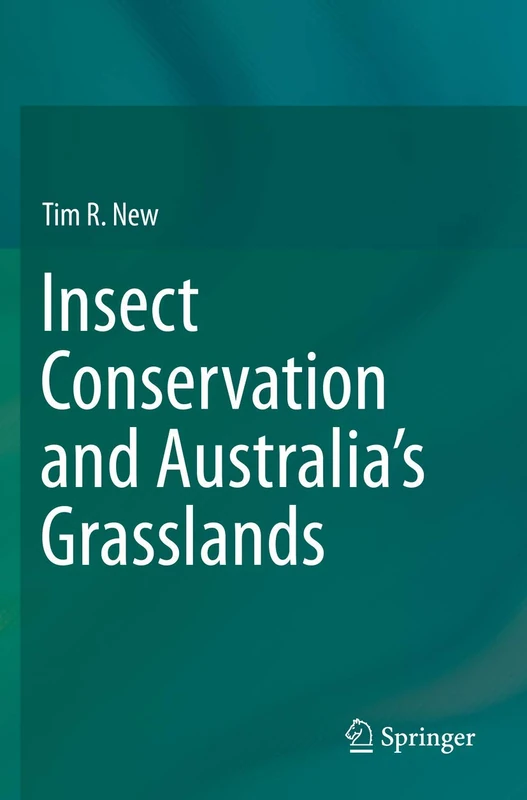
Australia’s varied grasslands have suffered massive losses and changes since European settlement, and those changes continue under increasingly intensive human pressures for development and agricultural production. The values of native grasslands for conservation of endemic native biodiversity, both flora and fauna, have led to strong interests in the protection of remaining fragments, especially near urban centres, and documentation of the insects and other inhabitants of grasslands spanning tropical to cool temperate parts of the country. Attention to conservation of grassland insects in Australia is relatively recent, but it is increasingly apparent that grasslands harbour many localised and ecologically specialised endemic species.  Their conservation necessarily advances from very incomplete documentation, and draws heavily on lessons from the far better-documented grasslands elsewhere, most notably in the northern hemisphere, and undertaken over far longer periods. From those cases, and the extensive background to grassland management to harmonise conservation with production and amenity values through honing use of processes such as grazing, mowing and fire, the needs and priorities for Australia can become clearer, together with needs for grassland restoration at a variety of scales. This book is a broad overview of conservation needs of grassland insects in Australia, drawing on the background provided elsewhere in the world on the responses to disturbances, and the  ecological importance, of some key insect groups (notably Orthoptera, Hemiptera and Lepidoptera) to suggest how insect conservation in native, pastoral and urban grasslands may be advanced.  The substantial references given for each chapter facilitate entry for non-entomologist grassland managers and stewards to appreciate the diversity and importance of Australia’s grassland insects, their vulnerabilities to changes, and the possibilities for conserving them and the wider ecological roles in which they participate.  From the Back Cover Australia’s varied grasslands have suffered massive losses and changes since European settlement, and those changes continue under increasingly intensive human pressures for development and agricultural production. The values of native grasslands for conservation of endemic native biodiversity, both flora and fauna, have led to strong interests in the protection of remaining fragments, especially near urban centres, and documentation of the insects and other inhabitants of grasslands spanning tropical to cool temperate parts of the country. Attention to conservation of grassland insects in Australia is relatively recent, but it is increasingly apparent that grasslands harbour many localised and ecologically specialised endemic species.  Their conservation necessarily advances from very incomplete documentation, and draws heavily on lessons from the far better-documented grasslands elsewhere, most notably in the northern hemisphere, and undertaken over far longer periods. From those cases, and the extensive background to grassland management to harmonise conservation with production and amenity values through honing use of processes such as grazing, mowing and fire, the needs and priorities for Australia can become clearer, together with needs for grassland restoration at a variety of scales. This book is a broad overview of conservation needs of grassland insects in Australia, drawing on the background provided elsewhere in the world on the responses to disturbances, and the  ecological importance, of some key insect groups (notably Orthoptera, Hemiptera and Lepidoptera) to suggest how insect conservation in native, pastoral and urban grasslands may be advanced.  The substantial references given for each chapter facilitate entry for non-entomologist grassland managers and stewards to appreciate the diversity and importance of Australia’s grassland insects, their vulnerabilities to

Product Specifications

Format
paperback
Domain
Amazon UK
Release Date
21 November 2020
Listed Since
25 October 2020

Barcode

No barcode data available