£154.66

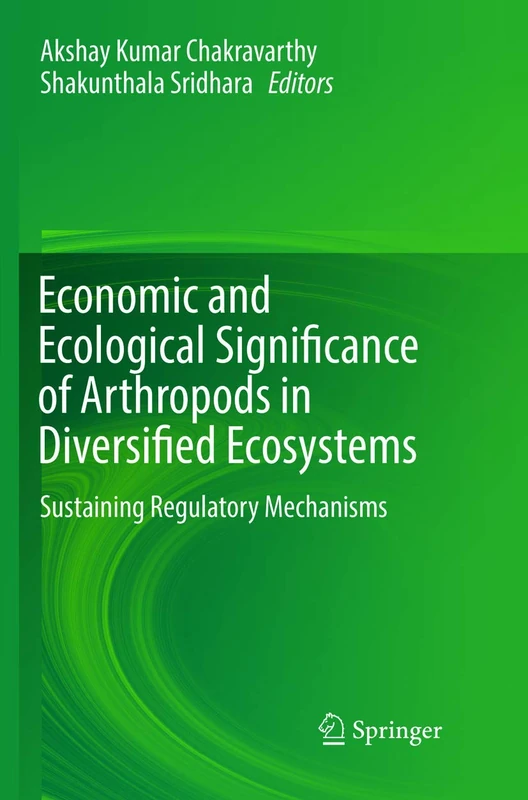
Springer Economic and Ecological Significance of Arthropods in Diversified Ecosystems: Sustaining Regulatory Mechanisms

White

Price data last checked 10 day(s) ago - will refresh soon

View at Amazon

We'll watch every seller, every day. One email when your price arrives.

It has never been this cheap. We have no record of a lower price.

£155 today · cheaper than every other day in the last 2 months

NEW HERE?

Amazon shows you one price. We show you all of them.

Tosheroon watches Amazon prices so you don't have to. Every product on Amazon has a price history — we make it visible. Set the price you'd actually pay, and we'll email you the second it gets there. No app, no account, one email.

WHAT'S ON THIS PAGE

↓ Price chart
when this has been cheap or pricey
↓ Forecast
where the price is heading next
↓ Statistics
all-time high & low, recent range
↑ Price alert
name your number, we'll email you

Price History & Forecast

Grey patches = out of stock. Cheaper = lower on the chart. Hover for exact prices.

Last 45 days · 45 data points (no recent data)

Historical
Generating forecast…
£174.13 £152.71 £157.39 £162.06 £166.73 £171.40 £176.08 01 June 2026 12 June 2026 23 June 2026 04 July 2026 15 July 2026

Price Distribution

Price distribution over 45 days • 3 price levels

Days at Price
Current Price
26 days · current 10 days 9 days 0 7 13 20 26 £155 £173 £174 Days at Price

Price Analysis

Most common price: £155 (26 days, 57.8%)

Price range: £155 - £174

Price levels: 3 different prices over 45 days

Description

Arthropods are invertebrates that constitute over 90% of the animal kingdom, and their bio-ecology is closely linked with global functioning and survival. Arthropods play an important role in maintaining the health of ecosystems, provide livelihoods and nutrition to human communities, and are important indicators of environmental change. Yet the population trends of several arthropods species show them to be in decline. Arthropods constitute a dominant group with 1.2 million species influencing earth’s biodiversity. Among arthropods, insects are predominant, with ca. 1 million species and having evolved some 350 million years ago. Arthropods are closely associated with living and non-living entities alike, making the ecosystem services they provide crucially important. In order to be effective, plans for the conservation of arthropods and ecosystems should include a mixture of strategies like protecting key habitats and genomic studies to formulate relevant policies for in situ and ex situ conservation. This two-volume book focuses on capturing the essentials of arthropod inventories, biology, and conservation. Further, it seeks to identify the mechanisms by which arthropod populations can be sustained in terrestrial and aquatic ecosystems, and by means of which certain problematic species be managed without producing harmful environmental side-effects. This edited compilation includes chapters contributed by over 80 biologists on a wide range of topics embracing the diversity, distribution, utility and conservation of arthropods and select groups of insect taxa. More importantly, it describes in detail the mechanisms of sustaining arthropod ecosystems, services and populations. It addresses the contribution of modern biological tools such as molecular and genetic techniques regulating gene expression, as well as conventional, indigenous practices in arthropod conservation. The contributors reiterate the importance of documenting and understanding the biology of arthropods from a holistic perspective before addressing conservation issues at large. This book offers a valuable resource for all zoologists, entomologists, ecologists, conservation biologists, policy makers, teachers and students interested in the conservation of biological resources. Review “It chiefly covers the status, function, importance and control of insects and other Arthropods in agricultural systems. … there is clearly a huge amount of valuable and interesting information in this book, which is an important reference work. I thoroughly enjoyed reading it. … there are a number of colour plates of Arthropods and their habitats.” (Tom Brereton, Journal of Insect Conservation, Vol. 21, 2017) From the Back Cover Arthropods are invertebrates that constitute over 90% of the animal kingdom, and their bio-ecology is closely linked with global functioning and survival. Arthropods play an important role in maintaining the health of ecosystems, provide livelihoods and nutrition to human communities, and are important indicators of environmental change. Yet the population trends of several arthropods species show them to be in decline. Arthropods constitute a dominant group with 1.2 million species influencing earth’s biodiversity. Among arthropods, insects are predominant, with ca. 1 million species and having evolved some 350 million years ago. Arthropods are closely associated with living and non-living entities alike, making the ecosystem services they provide crucially important. In order to be effective, plans for the conservation of arthropods and ecosystems should include a mixture of strategies like protecting key habitats and genomic studies to formulate relevant policies for in situ and ex situ conservation. This two-volume book focuses on capturing the essentials of arthropod inventories, biology, and conservation. Further, it seeks to identify the mechanisms by which arthropod populations can be sustain

Product Specifications

Colour
White
Format
paperback
Domain
Amazon UK
Release Date
05 July 2018
Listed Since
05 July 2018

Barcode

No barcode data available