£70.03

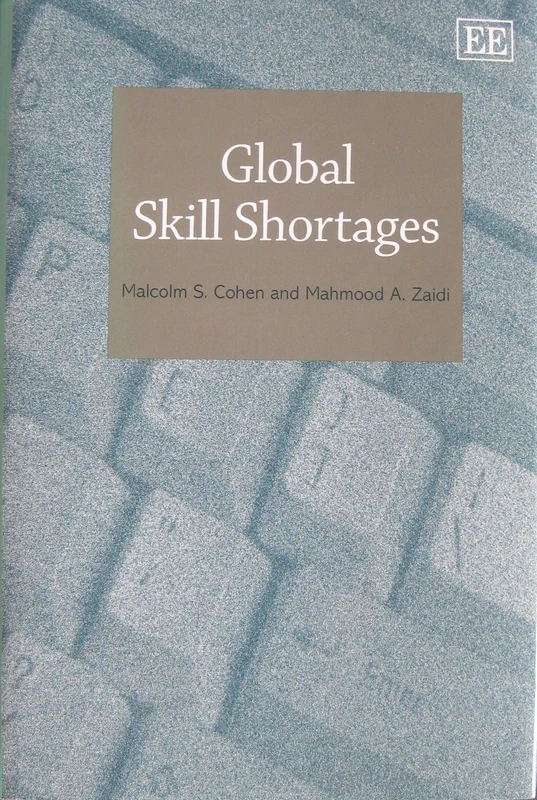
Edward Elgar Publishing Global Skill Shortages

Price data last checked 40 day(s) ago - refreshing...

View at Amazon

We'll watch every seller, every day. One email when your price arrives.

It has never been this cheap. We have no record of a lower price.

£70 today · cheaper than every other day in the last 3 months

NEW HERE?

Amazon shows you one price. We show you all of them.

Tosheroon watches Amazon prices so you don't have to. Every product on Amazon has a price history — we make it visible. Set the price you'd actually pay, and we'll email you the second it gets there. No app, no account, one email.

WHAT'S ON THIS PAGE

↓ Price chart
when this has been cheap or pricey
↓ Forecast
where the price is heading next
↓ Statistics
all-time high & low, recent range
↑ Price alert
name your number, we'll email you

Price History & Forecast

Grey patches = out of stock. Cheaper = lower on the chart. Hover for exact prices.

Last 51 days · 51 data points (no recent data)

Historical
Generating forecast…
£71.38 £69.90 £70.22 £70.54 £70.87 £71.19 £71.52 10 June 2026 22 June 2026 05 July 2026 17 July 2026 30 July 2026

Price Distribution

Price distribution over 51 days • 2 price levels

Days at Price
Current Price
16 days · current 35 days 0 9 18 26 35 £70 £71 Days at Price

Price Analysis

Most common price: £71 (35 days, 68.6%)

Price range: £70 - £71

Price levels: 2 different prices over 51 days

Description

As the world entered the twenty-first century, global skill shortages in many occupations were evident throughout the world. While these were mitigated by a global recession, there is no generally agreed upon method for measuring these shortages. This book discusses various theories for measurement. Using data collected from 19 developed countries in North and Latin America, Europe, and the Pacific region, the authors explore various aspects of skilled labor shortages, develop a methodology of measuring shortages by occupation, and provide estimates of the likelihood of the occurrence of such shortages. They develop labor market indicators which measure the degree of shortage or surplus in different occupations. The study covers as many as 49 occupational groups, although the number varies by country. The indicators are compared to anecdotal reports about shortages in the countries studied as well as correlated with various economic, political and institutional indicators. Some occupations such as CEO's, health professionals and computer scientists were common across many countries studied and part of a global shortage. Scholars, government officials, students and corporate and union representatives concerned with employment, labor and training policies and issues will find the data and analysis in this book a valuable addition to their knowledge. Review 'Just before sitting down to write these few words, I happened upon this lead-in to a USA Today article (May 14, 2002), 'Nurse anaesthetists in short supply - Hospitals crank up salaries to attract pivotal employees.' And, as many are aware, this particular shortage has been the case for a period of time measured in decades. Why is it that, for some job classes, supply persists in falling short of demand at the going wage for long periods of time, whether or not the aggregate labor market is tight or slack? What characteristics of labor markets explain this phenomenon? What are the observable indicators that identify a particular job class as being seriously in shortage or as heading into such a condition? Do the same indicators manage to identify most shortage categories? Is the shortage phenomenon local, national, or global? How do economic agents, both on the supply and the demand side, cope with such shortages? These are some of the major issues dealt with by Cohen and Zaidi in their concise and highly readable Global Skill Shortages. Economists, business managers, HR professionals, career counsellors, and educators will all enjoy and get the message in this well-written book. Economists in particular, however, will appreciate the way the authors push the analytics of the problem into suggesting the route to empirical indicators.' About the Author Malcolm S. Cohen, President, Employment Research Corporation, Ann Arbor, Michigan and a former Director, Institute of Labor and Industrial Relations, University of Michigan, US and Mahmood A. Zaidi, Professor of Human Resources and Industrial Relations, and Director, International Program Development, Carlson School of Management, University of Minnesota, Minneapolis, US

Key Features

Used Book in Good Condition

Product Specifications

Format
hardcover
Domain
Amazon UK
Release Date
26 June 2002
Listed Since
20 December 2006

Barcode

No barcode data available