£75.67

This is the most expensive it has ever been. Walk away.

£76 today · previous high £76 · all-time low £74

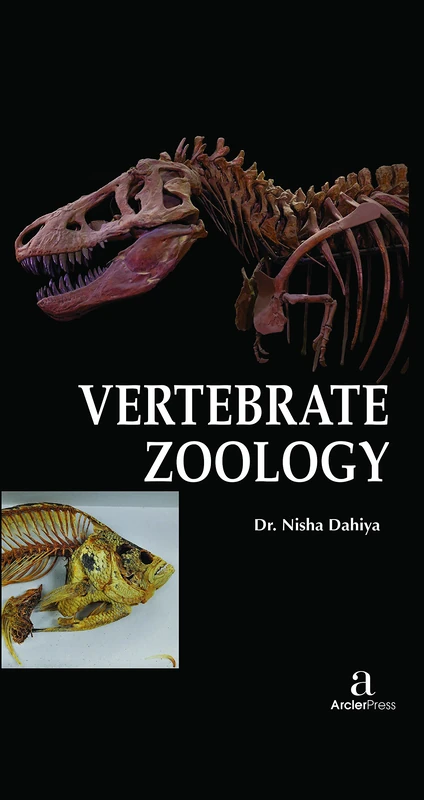
Vertebrate Zoology

Amazon

Price History & Forecast

Grey patches = out of stock. Cheaper = lower on the chart. Hover for exact prices.

Last 61 days · 61 data points (no recent data)

Historical
Generating forecast…
£75.67 £73.61 £74.06 £74.51 £74.96 £75.41 £75.86 25 July 2026 09 August 2026 24 August 2026 08 September 2026 23 September 2026
View at Amazon ↗

Price data last checked 30 day(s) ago - will refresh soon

NEW HERE?

Amazon shows you one price. We show you all of them.

Tosheroon watches Amazon prices so you don't have to. Every product on Amazon has a price history — we make it visible. Set the price you'd actually pay, and we'll email you the second it gets there. No app, no account, one email.

WHAT'S ON THIS PAGE

↑ Price chart
when this has been cheap or pricey
↑ Forecast
where the price is heading next
↓ Statistics
all-time high & low, recent range
↑ Price alert
name your number, we'll email you

Price Distribution

Price distribution over 61 days • 3 price levels

Days at Price
Current Price
14 days 42 days 5 days · current 0 11 21 32 42 £74 £75 £76 Days at Price

Price Analysis

Most common price: £75 (42 days, 68.9%)

Price range: £74 - £76

Price levels: 3 different prices over 61 days

Description

Vertebrates belong to the phylum Chordata of kingdom Animalia and constitute subphylum vertebrata. Subphylum vertebrata includes organisms that have a spinal column and brain enclosed in cranium (as indicated by their Clade Craniata). In vertebrates, during early development, three different segmental systems are established: the somites, the rhombomeres and the pharyngeal arches. In each segmental system, an iteration of parts along the long axis is established. The formation of the somites emphasizes the segmental organization of trunk. Somites are the unique characteristic of developing vertebrate embryo, which are derived from mesenchymal cells in the presomitic mesoderm. The segmental boundary of somites in vertebrates is determined by Notch signaling. Rhombomeres indicate the segmentation of the hindbrain and the pharyngeal arches designate segmentation of the pharynx. In a study, the whole-genome comparison between humans and the pufferfish, revealed 1400 highly conserved non-coding sequences, most of which were found to be located in and around developmental regulator genes. A medium throughput functional assay using 25 sequence elements around four unrelated developmental regulators (SOX21, PAX6, HLXB9, and SHH) indicated that 23 show significant enhancer activity in one or more tissue. These highly conserved non-coding sequences are likely to form part of the genomic assembly that uniquely defines vertebrate development. Vertebrates possess a circulatory system; the unique features of such a system are specialized cardiac conduction system and cardiac valves, which ensure unidirectional blood flow. Using a transgenic zebra fish line Tg(cmlc2:gCaMP)s878 four distinct stages of cardiac conduction development were identified. Other factors such hemodynamic flow and contraction, regulate the fast conduction network of this specialized conduction system. It was also found that a homeobox transcription factor gene tcf2 regulates the articulo-ventricular conduction. In vertebrates, two major skeletal systems, the endoskeleton and the exoskeleton have been identified where exoskeletons arise from the neural crest and mesoderm. In these organisms, both the systems cannot be differentiated by their differences in embryonic histogenesis but by their relative positions. The brain size in vertebrates increases among mammals and birds. It is postulated by some researchers that temperature is a critical factor in brain enlargement with ectothermic animals thriving in tropical climates having brain sizes larger than those of ectothermic animals living in cold climates. In a similar study, it was estimated that the species from higher latitudes tended to be younger, and colour-polymorphic species were older than monomorphic species. In addition, those organisms, which have persisted for a long time, may be more likely to deal with future modifications of their environment. Terrestrial vertebrates exhibit latitudinal gradient in diversity where the warm and productive biomes such as tropical forests possess greater number of vertebrate species. A model that integrates area and productivity over temperature and geological time can best explain species richness in 32 bioregions globally.

Product Specifications

Format
hardcover
Domain
Amazon UK
Release Date
30 November 2016
Listed Since
25 February 2017

Barcode

No barcode data available