£144.22

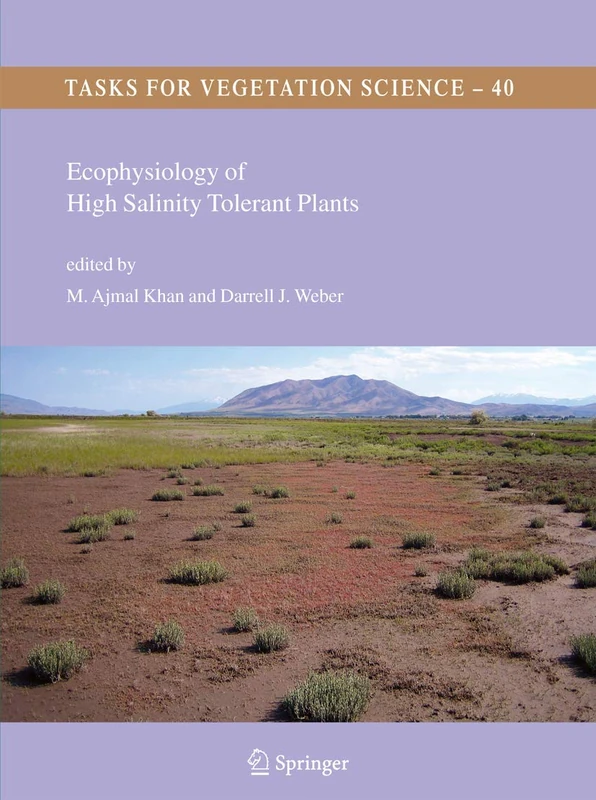
Springer Ecophysiology of High Salinity Tolerant Plants: 40 (Tasks for Vegetation Science, 40)

Price data last checked 72 day(s) ago - refreshing...

View at Amazon

Price History & Forecast

Last 19 days • 19 data points (No recent data available)

Historical
Generating forecast...
£147.59 £143.88 £144.69 £145.50 £146.31 £147.12 £147.93 25 January 2026 29 January 2026 03 February 2026 07 February 2026 12 February 2026

Price Distribution

Price distribution over 19 days • 2 price levels

Days at Price
Current Price
1 day · current 18 days 0 5 9 14 18 £144 £148 Days at Price

Price Analysis

Most common price: £148 (18 days, 94.7%)

Price range: £144 - £148

Price levels: 2 different prices over 19 days

Description

Product Description The halophytes are highly specialized plants, which have greater tolerance to salt. They can germinate, grow and reproduce successfully in saline areas which would cause the death of regular plants. Most halophytic species are found in salt marsh systems along seashores or around landlocked inland lakes and flat plains with high evaporation. The halophytes play a very significant role in the saline areas specially in the coast by overcoming the salinity in different ways, viz. with regulating mechanisms in which excess salts are excreted and without regulating mechanism, which may include succulents or cumulative types. Besides that they protect coasts from erosion and cyclones, provide feeding ground and nursery for fish, shrimps and birds. Halophytes get increasing attention today because of the steady increase of the salinity in irrigation systems in the arid and semi-arid regions where the increasing population reaches the limits of freshwater availability. In many countries, halophytes have been successfully grown on saline wasteland to provide animal fodder which have the potential for rehabilitation and even reclamation of these sites. The value of certain salt-tolerant grass species has been recognized by their incorporation in pasture improvement programs in many salt affected regions throughout the world. There have been recent advances in selecting species with high biomass and protein levels in combination with their ability to survive a wide range of environmental conditions, including salinity. From the Back Cover This volume presents new and additional information about the physiology and ecology of halophytic plant species and saline ecosystems. The halophytes are highly specialized plants, which have greater tolerance to salt. They can germinate, grow and reproduce successfully in saline areas which would cause the death of regular plants. Most halophytic species are found in salt marsh systems along seashores or around landlocked inland lakes and flat plains with high evaporation. The halophytes play very significant role in the saline areas specially in the coast by overcoming the salinity in different ways, viz. with regulating mechanisms in which excess salts are excreted and with out regulating mechanism, which may include succulents or cumulative types. Besides that they protect coast from erosion and cyclones, provide feeding ground and nursery for fish, shrimps and birds. Halophytes get increasing attention today because of the steady increase of the salinity in irrigation systems in the arid and semi-arid regions where the increasing population reaches the limits of freshwater availability. In many countries, halophytes have been successfully grown on saline wasteland to provide animal fodder and have the potential for rehabilitation and even reclamation of these sites. The value of certain salt-tolerant grass species has been recognized by their incorporation in pasture improvement programs in many salt affected regions throughout the world. There have been recent advances in selecting species with high biomass and protein levels in combination with their ability to survive a wide range of environmental conditions, including salinity. Our limited understanding of how halophytes work, as this may well be our future as our limit of fresh water is reached. It is important that we preserve these unusual plants and their habitats, not just for their aesthetic beauty, but also as a resource for the development of new salt tolerant and halophyte crop of economic importance. Over the last ten years much new information has become available, which is important for agriculture, forestry and floriculture.

Product Specifications

Format
Paperback
Domain
Amazon UK
Release Date
10 October 2008
Listed Since
15 September 2008

Barcode

No barcode data available

Similar Products You Might Like
Saline Soil-based Agriculture by Halotolerant Microorganisms
95% match

Saline Soil-based Agriculture by Halotolerant Microorganisms

Springer

£110.73 13 Jan 2026
Ecophysiology, Abiotic Stress Responses and Utilization of Halophytes
95% match

Ecophysiology, Abiotic Stress Responses and Utilization of Halophytes

Springer

£74.56 01 Mar 2026
Springer - Contributions to the Ecology of Halophytes: 2
94% match

Springer - Contributions to the Ecology of Halophytes: 2

Springer

£114.00 28 Feb 2026
Halophytic and Salt-Tolerant Feedstuffs: Impacts on Nutrition, Physiology and Reproduction of Livestock
94% match

Halophytic and Salt-Tolerant Feedstuffs: Impacts on Nutrition, Physiology and Reproduction of Livestock

CRC Press

£140.13 02 Apr 2026
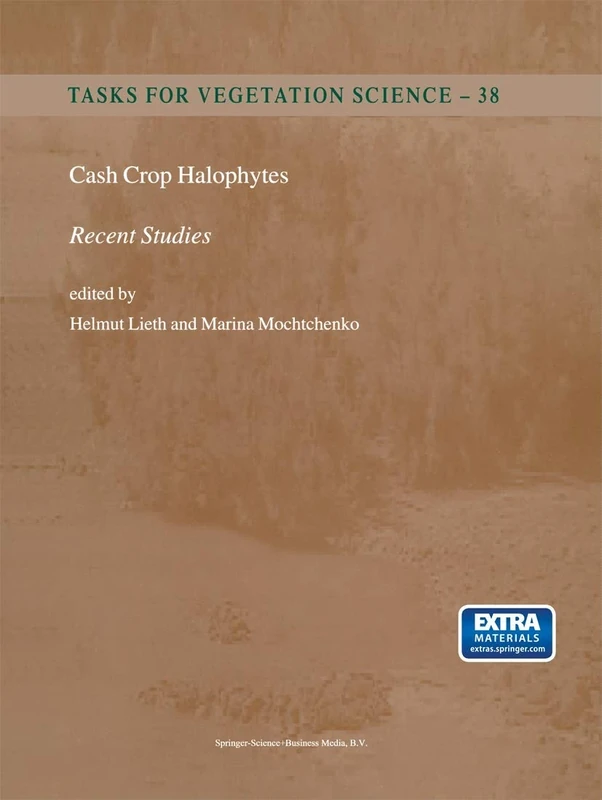
Cash Crop Halophytes: Recent Studies: 10 Years after Al Ain Meeting: 38 (Tasks for Vegetation Science, 38)
94% match

Cash Crop Halophytes: Recent Studies: 10 Years after Al Ain Meeting: 38 (Tasks for Vegetation Science, 38)

Springer

£145.23 31 Jan 2026
Salt Stress in Plants: Signalling, Omics and Adaptations
94% match

Salt Stress in Plants: Signalling, Omics and Adaptations

Springer

£136.74 30 Mar 2026
Wiley Physiology of Salt Stress in Plants - Academic Book
94% match

Wiley Physiology of Salt Stress in Plants - Academic Book

Wiley

£127.79 17 Apr 2026
Ecophysiology of Vascular Halophytes
94% match

Ecophysiology of Vascular Halophytes

CRC Press

£444.66 28 Mar 2026
Towards the rational use of high salinity tolerant plants: Vol 2: Agriculture and forestry under marginal soil water conditions: 28 (Tasks for Vegetation Science, 28)
93% match

Towards the rational use of high salinity tolerant plants: Vol 2: Agriculture and forestry under marginal soil water conditions: 28 (Tasks for Vegetation Science, 28)

Springer

£151.29 30 Jan 2026
Halophytes and Climate Change: Adaptive Mechanisms and Potential Uses
93% match

Halophytes and Climate Change: Adaptive Mechanisms and Potential Uses

Cabi

£72.32 01 Mar 2026
Towards the rational use of high salinity tolerant plants: Vol 1: Deliberations about High Salinity Tolerant Plants and Ecosystems: 27 (Tasks for Vegetation Science, 27)
93% match

Towards the rational use of high salinity tolerant plants: Vol 1: Deliberations about High Salinity Tolerant Plants and Ecosystems: 27 (Tasks for Vegetation Science, 27)

Springer

£212.92 15 Feb 2026
Towards the rational use of high salinity tolerant plants: Vol 1: Deliberations about High Salinity Tolerant Plants and Ecosystems: 27 (Tasks for Vegetation Science, 27)
93% match

Towards the rational use of high salinity tolerant plants: Vol 1: Deliberations about High Salinity Tolerant Plants and Ecosystems: 27 (Tasks for Vegetation Science, 27)

Springer

£249.98 16 Feb 2026
Salt Stress, Microbes, and Plant Interactions: Causes and Solution: Volume 1
93% match

Salt Stress, Microbes, and Plant Interactions: Causes and Solution: Volume 1

Springer

£111.47 24 Feb 2026
Innovative Saline Agriculture
93% match

Innovative Saline Agriculture

Springer

£136.74 12 Dec 2025
Innovative Saline Agriculture
93% match

Innovative Saline Agriculture

Springer

£154.04 24 Jan 2026
Salt Stress, Microbes, and Plant Interactions: Mechanisms and Molecular Approaches: Volume 2
93% match

Salt Stress, Microbes, and Plant Interactions: Mechanisms and Molecular Approaches: Volume 2

Springer

£112.79 12 Apr 2026
Halophytes as a resource for livestock and for rehabilitation of degraded lands: 32 (Tasks for Vegetation Science, 32)
93% match

Halophytes as a resource for livestock and for rehabilitation of degraded lands: 32 (Tasks for Vegetation Science, 32)

Springer

£164.02 18 Mar 2026
Stomata Regulation and Water Use Efficiency in Plants under Saline Soil Conditions: Volume 103 (Advances in Botanical Research, Volume 103)
93% match

Stomata Regulation and Water Use Efficiency in Plants under Saline Soil Conditions: Volume 103 (Advances in Botanical Research, Volume 103)

Academic Press

£127.99 10 Mar 2026
Saline and Alkaline Soils in Latin America: Natural Resources, Management and Productive Alternatives
93% match

Saline and Alkaline Soils in Latin America: Natural Resources, Management and Productive Alternatives

Springer

£75.52 25 Feb 2026
Salt-affected Soils and Marginal Waters: Global Perspectives and Sustainable Management (Springer Water)
93% match

Salt-affected Soils and Marginal Waters: Global Perspectives and Sustainable Management (Springer Water)

Springer

£110.68 03 Apr 2026
Mangroves and Halophytes: Restoration and Utilisation: 43 (Tasks for Vegetation Science, 43)
93% match

Mangroves and Halophytes: Restoration and Utilisation: 43 (Tasks for Vegetation Science, 43)

Springer

£115.64 20 Feb 2026
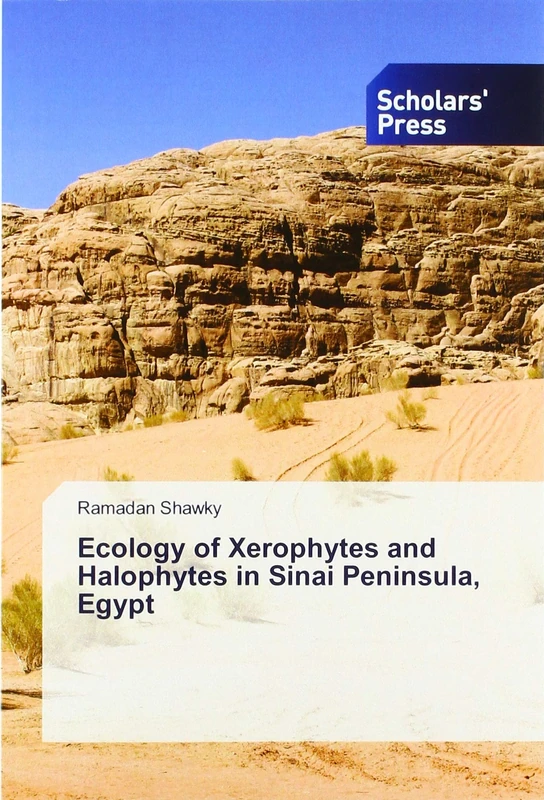
Ecology of Xerophytes and Halophytes in Sinai Peninsula, Egypt
93% match

Ecology of Xerophytes and Halophytes in Sinai Peninsula, Egypt

£78.00 28 Feb 2026
Harsh Environment and Plant Resilience: Molecular and Functional Aspects
93% match

Harsh Environment and Plant Resilience: Molecular and Functional Aspects

Springer

£121.10 09 Mar 2026
Salt Marshes: Formation, Ecological Functions and Threats (Environmental Research Advances)
93% match

Salt Marshes: Formation, Ecological Functions and Threats (Environmental Research Advances)

£97.99 15 Apr 2026