£146.61

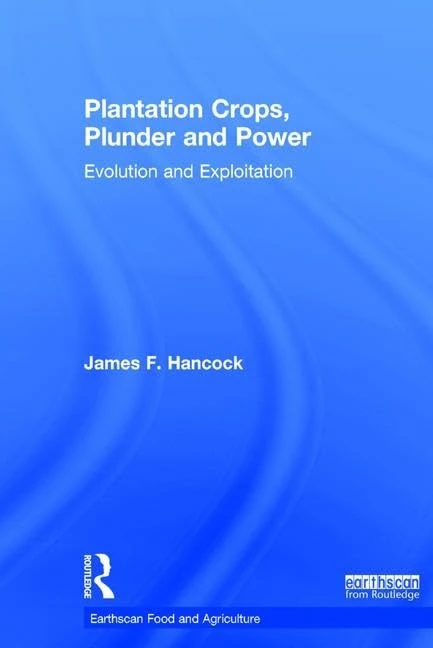
Routledge Plantation Crops, Plunder and Power: Evolution and exploitation (Earthscan Food and Agriculture)

Price data last checked 9 day(s) ago - will refresh soon

View at Amazon

We'll watch every seller, every day. One email when your price arrives.

This is the most expensive it has ever been. Walk away.

£147 today · previous high £147 · all-time low £133

NEW HERE?

Amazon shows you one price. We show you all of them.

Tosheroon watches Amazon prices so you don't have to. Every product on Amazon has a price history — we make it visible. Set the price you'd actually pay, and we'll email you the second it gets there. No app, no account, one email.

WHAT'S ON THIS PAGE

↓ Price chart
when this has been cheap or pricey
↓ Forecast
where the price is heading next
↓ Statistics
all-time high & low, recent range
↑ Price alert
name your number, we'll email you

Price History & Forecast

Grey patches = out of stock. Cheaper = lower on the chart. Hover for exact prices.

Last 82 days · 82 data points (no recent data)

Historical
Generating forecast…
£146.61 £132.08 £135.25 £138.42 £141.59 £144.76 £147.93 26 April 2026 16 May 2026 05 June 2026 25 June 2026 16 July 2026

Price Distribution

Price distribution over 82 days • 3 price levels

Days at Price
Current Price
29 days 52 days 1 day · current 0 13 26 39 52 £133 £137 £147 Days at Price

Price Analysis

Most common price: £137 (52 days, 63.4%)

Price range: £133 - £147

Price levels: 3 different prices over 82 days

Description

Over the last five centuries, plantation crops have represented the best and worst of industrialized agriculture – "best" through their agronomic productivity and global commercial success, and "worst" as examples of exploitative colonialism, conflict and ill-treatment of workers. This book traces the social, political and evolutionary history of seven major plantation crops – sugarcane, banana, cotton, tea, tobacco, coffee and rubber. It describes how all of these were domesticated in antiquity and grown by small landowners for thousands of years before European traders and colonists sought to make a profit out of them. The author relates how their development and spread were closely associated with government expansionist policies. They stimulated the exploration of far off lands, were the focus of major conflicts and led to the enslavement of both native and displaced peoples. From the southern United States, Latin America and the Caribbean, to Asia and Africa, plantation crops turned social structures upside down leading to revolution and government change. The economies of whole countries became tied to the profits of these plantations, leading to internal power struggles to control the burgeoning wealth. Open warfare routinely broke out between the more powerful countries and factions for trade dominance. This book shows that from the early 1500s to today, at least one of the plantation crops was always at the center of world politics, and that this still continues today, for example with the development of oil palm plantations in Southeast Asia. Written in an accessible style, it is fascinating supplementary reading for students of  agricultural, environmental and colonial history. Review "James Hancock’s book covers seven crops: sugar, banana, cotton, tea, tobacco, coffee and rubber, briefly mentions oilpalm, and should have included cacao. The chapters are divided on the historical development of each crop including product development (very well done), and on the dark side of plantation agriculture that involved slavery and human exploitation. The book is an indictment of unfettered, unregulated capitalism, which, while responsible for economic development, has often led to social injustice and environmental damage, and fostered unhealthy products such as tobacco and opium. The system continued in the form of indentured workers, tenant farmers, and sweatshops. Attempts have been made to humanize the plantation system by encouraging small holders for crop production, cooperatives for crop processing, and unions and regulations to promote worker’s rights. The struggle continues. In the United States the supreme court declared laws to declare child labor unconstitutional in 1918 and 1922; child labor laws were only passed in 1938 and agriculture was largely exempted. This book covers these issues splendidly and will be a valuable resource for crop historians, agricultural development, and environmental advocates." - Jules Janick, Purdue University, USA, in Chronica Horticulturae (2017). "It is an ambitious effort and Hancock succeeds in providing a concise, engaging, and thoroughly entertaining survey of the subject. The style makes it suitable for general audiences while the inclusion of many fascinating and humorous historical anecdotes adds tactful levity to a work which quite naturally also includes many sobering accounts of slavery, indentured servitude, corvée, child labor, and countless other cruelties." - Simon Riley, International Institute of Tropical Agriculture, Uganda, in Economic Botany (2017). "This book is a very welcome primer to plantation systems and their pernicious effects that will be of service to anyone with an interest in agrarian systems and their evolution." - James H. McDonald, University of Montevallo,USA, in Journal of International and Global Studies (2017). "This book is a portrait of the information and intricacies of seven important plantation crops, beginn

Product Specifications

Format
hardcover
Domain
Amazon UK
Release Date
08 March 2017
Listed Since
05 August 2016

Barcode

No barcode data available