We can't find the internet
Attempting to reconnect
Something went wrong
Hang in there while we get back on track

£52.13
This is the most expensive it has ever been. Walk away.
£52 today · previous high £52 · all-time low £38
Fordham University Press The Dark Side of Literacy: Literature and Learning Not to Read
Price data last checked 31 day(s) ago - refreshing...
We'll watch every seller, every day. One email when your price arrives.
Price History & Forecast
Grey patches = out of stock. Cheaper = lower on the chart. Hover for exact prices.
Last 60 days · 60 data points (no recent data)
Price data last checked 31 day(s) ago - refreshing...
NEW HERE?
Amazon shows you one price. We show you all of them.
Tosheroon watches Amazon prices so you don't have to. Every product on Amazon has a price history — we make it visible. Set the price you'd actually pay, and we'll email you the second it gets there. No app, no account, one email.
WHAT'S ON THIS PAGE
when this has been cheap or pricey
where the price is heading next
all-time high & low, recent range
name your number, we'll email you
Price Distribution
Price distribution over 60 days • 2 price levels
Price Analysis
Most common price: £52 (58 days, 96.7%)
Price range: £38 - £52
Price levels: 2 different prices over 60 days
Description
Product Specifications
- Brand
- Fordham University Press
- Format
- hardcover
- ASIN
- 0823229165
- Domain
- Amazon UK
- Release Date
- 14 November 2008
- Listed Since
- 20 May 2008
Barcode
No barcode data available
Similar Products You Might Like
Goethe's Ghosts: Reading and the Persistence of Literature (Studies in German Literature Linguistics and Culture)
Camden House (NY)

The Reception of Classical German Literature in England, 1760-1860, Volume 7: A Documentary History from Contemporary Periodicals (Routledge Library Editions: German Literature)
Routledge

The Reception of Classical German Literature in England, 1760-1860, Volume 9: A Documentary History from Contemporary Periodicals (Routledge Library Editions: German Literature)
Routledge

The Reception of Classical German Literature in England, 1760-1860, Volume 3: A Documentary History from Contemporary Periodicals (Routledge Library Editions: German Literature)
Routledge

The Reception of Classical German Literature in England, 1760-1860, Volume 8: A Documentary History from Contemporary Periodicals (Routledge Library Editions: German Literature)
Routledge

The Reception of Classical German Literature in England, 1760-1860, Volume 7: A Documentary History from Contemporary Periodicals (Routledge Library Editions: German Literature)
Routledge

The Reception of Classical German Literature in England, 1760-1860, Volume 4: A Documentary History from Contemporary Periodicals (Routledge Library Editions: German Literature)
Routledge
Beckett's Dantes: Intertextuality in the Fiction and Criticism
Manchester University Press
Goethe Yearbook 23: Publications of the Goethe Society of North America
Camden House (NY)
Georg Büchner: Contemporary Perspectives: 89 (Amsterdamer Beiträge zur neueren Germanistik, 89)
Brill
Goethe Yearbook 20
Camden House (NY)
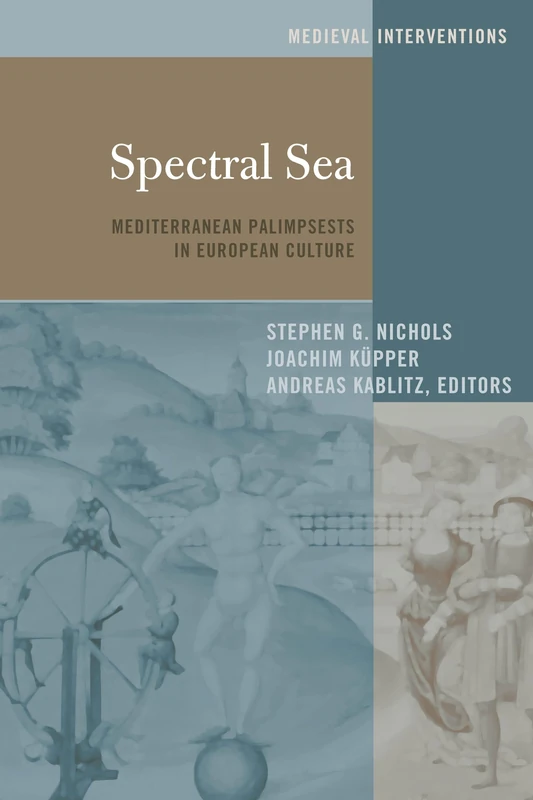
Spectral Sea: Mediterranean Palimpsests in European Culture: 8 (Medieval Interventions: New Light on Traditional Thinking)
Peter Lang Gmbh, Internationaler Verlag Der Wissenschaften

Dante's Multitudes: History, Philosophy, Method (William and Katherine Devers Series in Dante and Medieval Italian Literature)
University of Notre Dame Press
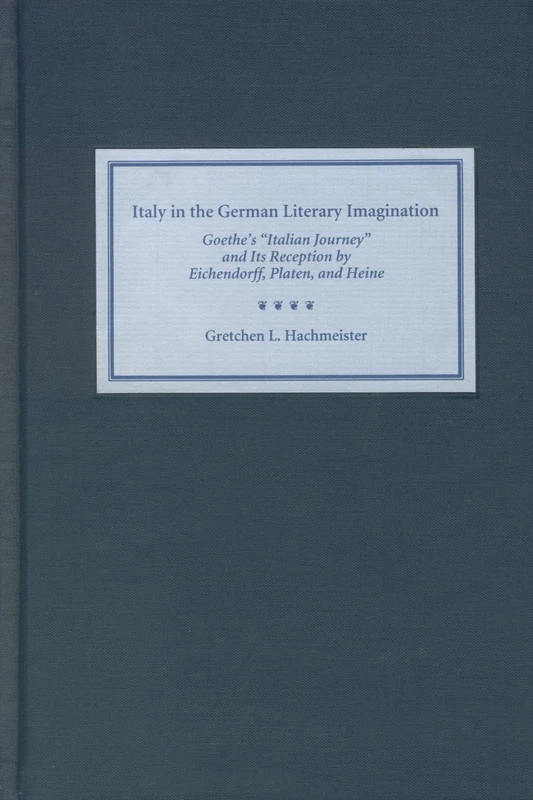
Italy in the German Literary Imagination: Goethe's 'Italian Journey' and Its Reception by Eichendorff, Platen, and Heine: 1 (Studies in German Literature Linguistics and Culture)
Camden House (NY)
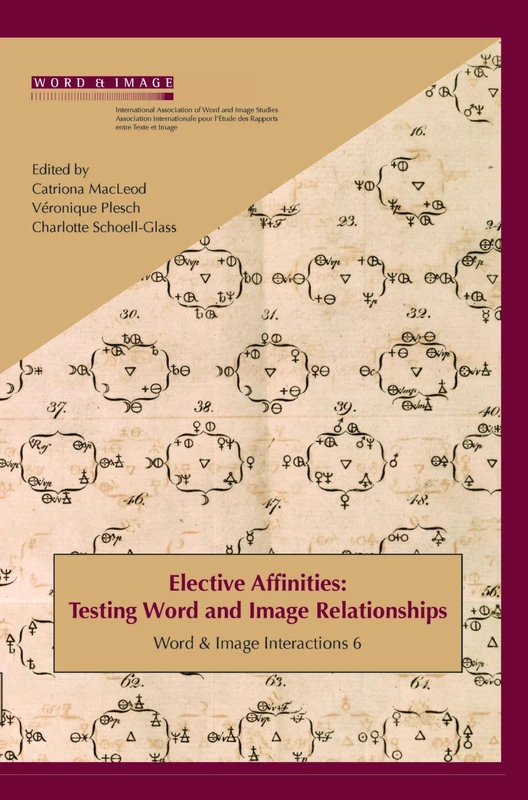
Elective Affinities: Testing Word and Image Relationships: 6 (Word and Image Interactions, 6)
Brill

Ways of Re-Thinking Literature
Routledge

Pretexts for Writing - German Romanticism Book - Rutgers Press
Rutgers University Press
Routledge Walter Benjamin's Concept of the Image - Philosophy
Routledge

German Literature of the Nineteenth Century, 1832-1899
Boydell & Brewer

Goethe und die Bildende Kunst
Vieweg+Teubner Verlag

Cultural Impact in the German Context: Studies in Transmission, Reception, and Influence (Studies in German Literature Linguistics and Culture)
Camden House (NY)

Goethes Dichtung und Wahrheit: Beiträge zu Goethes autobiographischen Schriften
De Gruyter