£94.47

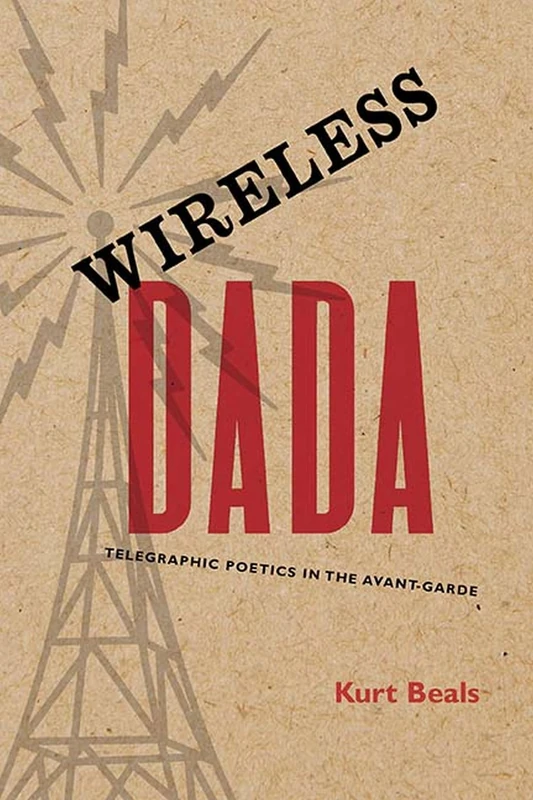
Northwestern Wireless Dada: Telegraphic Poetics in the Avant-Garde

Price data last checked 15 day(s) ago - will refresh soon

View at Amazon

We'll watch every seller, every day. One email when your price arrives.

This is the most expensive it has ever been. Walk away.

£94 today · previous high £94 · all-time low £88

NEW HERE?

Amazon shows you one price. We show you all of them.

Tosheroon watches Amazon prices so you don't have to. Every product on Amazon has a price history — we make it visible. Set the price you'd actually pay, and we'll email you the second it gets there. No app, no account, one email.

WHAT'S ON THIS PAGE

↓ Price chart
when this has been cheap or pricey
↓ Forecast
where the price is heading next
↓ Statistics
all-time high & low, recent range
↑ Price alert
name your number, we'll email you

Price History & Forecast

Grey patches = out of stock. Cheaper = lower on the chart. Hover for exact prices.

Last 76 days · 76 data points (no recent data)

Historical
Generating forecast…
£94.47 £87.66 £89.15 £90.63 £92.12 £93.60 £95.09 26 April 2026 14 May 2026 02 June 2026 21 June 2026 10 July 2026

Price Distribution

Price distribution over 76 days • 3 price levels

Days at Price
Current Price
25 days 50 days 1 day · current 0 13 25 38 50 £88 £90 £94 Days at Price

Price Analysis

Most common price: £90 (50 days, 65.8%)

Price range: £88 - £94

Price levels: 3 different prices over 76 days

Description

Wireless Dada: Telegraphic Poetics in the Avant-Garde demonstrates that the poetics of the Dada movement were profoundly influenced by the telegraph and the technological and social transformations that it brought about in the nineteenth and early twentieth centuries. While telegraphy's impact on other avant-gardes such as Italian futurism and German expressionism is widely acknowledged, its formative role in Dada poetics has been largely neglected. Yet the telegraph exerted an unmistakable influence on the Dada movement, providing a fundamentally new paradigm for understanding language that proved well suited to an avant-garde in search of revolutionary means of expression. Drawing on methods and insights from media history and theory, avant-garde studies, and German literary studies, Kurt Beals shows how the telegraph and the cultural discourses that surrounded it shaped the radical works of this seminal avant-garde movement. The "nonsense" strain in Dada is frequently seen as a response to the senseless violence of the First World War. However, Beals argues, it was not just the war that turned Dada poetry into a jumble of senseless signals―it was also the wireless. Review "Telegraphic poetics addresses the stuff of non- or low-level semantic communication, be it electronic or in print, and how it relates to the cultural product. Beals enriches this examination of the history of the telegraph (and related inventions) by looking at how creative artists perceived the new technology . . . In its broadest implications, this study extends beyond literary history to communication and information studies." --J. M. Jeep, Miami University in CHOICE "Viewing artistic practice as part of a broader shift in communication technologies where meaning and personality give way to a system of nodes exchanging information, Wireless Dada helps us to uncover a new model for Dada poetics: the author is replaced with the transcriber, the cryptographer, the medium, and the telegraph operator." --Michael Subialka, EuropeNow ?" Wireless Dada offers a new and consistent reading of one of the most enigmatic movements of twentieth-century literature. It is an important, original, and far-reaching contribution not only to literary studies but also to the cultural and media history of the twentieth century." --Wolf Kittler, author of Die Geburt des Partisanen aus dem Geist der Poesie (The Birth of the Partisan out of the Spirit of Poetry) "There are many fine studies of Dada, but Kurt Beals's Wireless Dada is unique in offering a genuine alternative to the familiar narrative that Dada radical experimentation was first and foremost a response to the violence and horror of WWI. On the contrary, Beals argues, it was the breakthrough technology of the period--especially telegraphy, with its new conception of language, punctuation, and wireless information--that ushered in the new poetics. And further, it was the telegraph that undermined any conception of language as a means of pure, authentic self-expression and paved the way for a more capacious sense of poetry. Beals has produced a study as persuasively argued as it is elegantly written." --Marjorie Perloff, author of Unoriginal Genius: Poetry by Other Means in the New Century About the Author Kurt Beals is an assistant professor of German in the Department of Germanic Languages and Literatures at Washington University in St. Louis. He is co-editor of Hans Richters Rhythmus 21: Schlüsselfilm der Moderne (Hans Richter’s Rhythmus 21: Key Film of Modernism).

Product Specifications

Format
hardcover
Domain
Amazon UK
Release Date
30 November 2019
Listed Since
12 February 2019

Barcode

No barcode data available