We can't find the internet
Attempting to reconnect
Something went wrong
Hang in there while we get back on track
£59.22
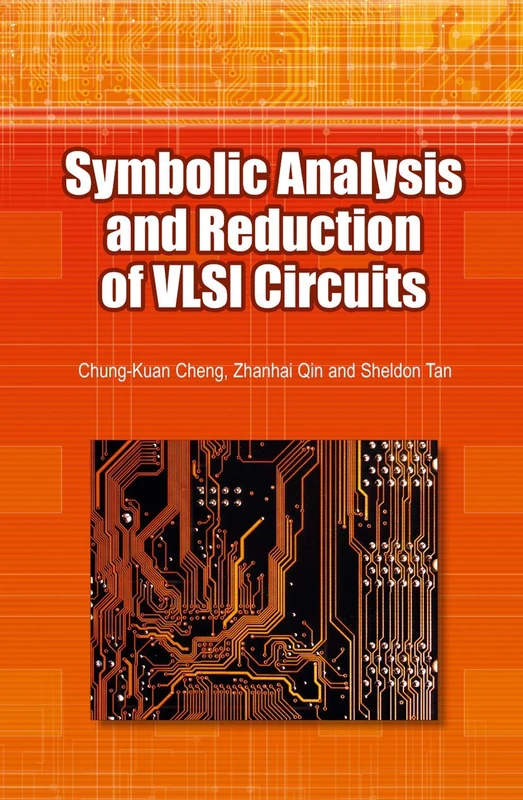
Springer Symbolic Analysis and Reduction of VLSI Circuits
9780387239040
Price data checked 7 days ago
We'll watch every seller, every day. One email when your price arrives.
New to our records — first sighting 12 days ago. We'll learn its rhythm.
12 days of data · current price £59
NEW HERE?
Amazon shows you one price. We show you all of them.
Tosheroon watches Amazon prices so you don't have to. Every product on Amazon has a price history — we make it visible. Set the price you'd actually pay, and we'll email you the second it gets there. No app, no account, one email.
WHAT'S ON THIS PAGE
when this has been cheap or pricey
where the price is heading next
all-time high & low, recent range
name your number, we'll email you
Price History & Forecast
Grey patches = out of stock. Cheaper = lower on the chart. Hover for exact prices.
Last 6 days · 6 data points (no recent data)
Price Distribution
Price distribution over 6 days • 2 price levels
Price Analysis
Most common price: £61 (5 days, 83.3%)
Price range: £59 - £61
Price levels: 2 different prices over 6 days
Description
Product Specifications
- Brand
- Springer
- Model
- 9780387239040
- Format
- hardcover
- ASIN
- 0387239049
- Category
- Books > Subjects > Computing & Internet > Computer Science > Architecture & Microprocessors
- Domain
- Amazon UK
- Release Date
- 15 December 2004
- Listed Since
- 13 December 2006
Barcode
No barcode data available
Similar Products You Might Like

Statistical Performance Analysis and Modeling Techniques for Nanometer VLSI Designs
Springer
Circuit Analysis, Simulation and Design (Volume 2) (Advances in CAD for VLSI, Volume 2)
North Holland
VLSI-SoC: Design Trends: 28th IFIP WG 10.5/IEEE International Conference on Very Large Scale Integration, VLSI-SoC 2020, Salt Lake City, UT, USA, ... and Communication Technology, 621)
Springer
Logic Design of NanoICS (Nano- and Microscience, Engineering, Technology and Medicine)
CRC Press
3-Dimensional VLSI: A 2.5-Dimensional Integration Scheme
Springer
VLSI 2010 Annual Symposium: Selected papers: 105 (Lecture Notes in Electrical Engineering, 105)
Springer
The VLSI Handbook: 15 (The Electrical Engineering Handbook)
CRC Press
VLSI: Integrated Systems on Silicon: IFIP TC10 WG10.5 International Conference on Very Large Scale Integration 26–30 August 1997, Gramado, RS, Brazil ... in Information and Communication Technology)
Springer
VLSI 2010 Annual Symposium: Selected papers: 105 (Lecture Notes in Electrical Engineering, 105)
Springer
VLSI: Integrated Systems on Silicon: IFIP TC10 WG10.5 International Conference on Very Large Scale Integration 26–30 August 1997, Gramado, RS, Brazil ... in Information and Communication Technology)
Springer
VLSI Design Handbook: Volume II: 2
Clanrye International
Springer Statistical Modeling for MOS VLSI Circuits Book
Springer

Reconfigurable Cryptographic Processor
Springer

Design Automation for Differential MOS Current-Mode Logic Circuits
Springer
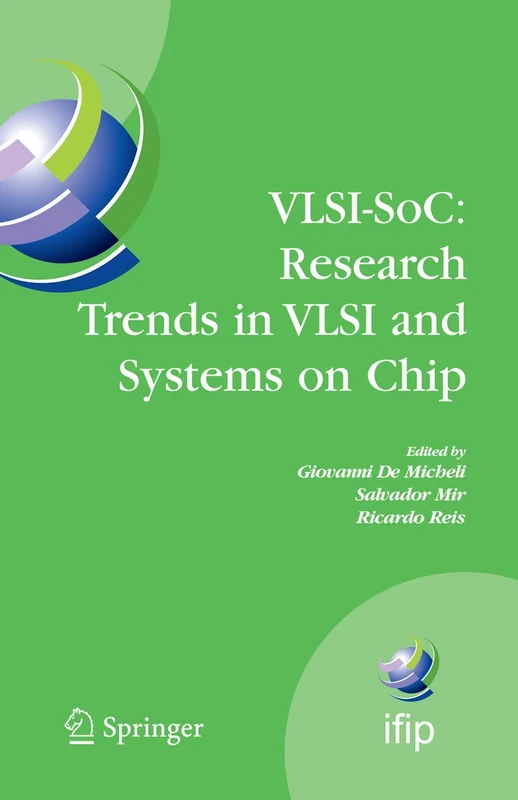
VLSI-SoC: Research Trends in VLSI and Systems on Chip: Fourteenth International Conference on Very Large Scale Integration of System on Chip ... and Communication Technology, 249)
Springer
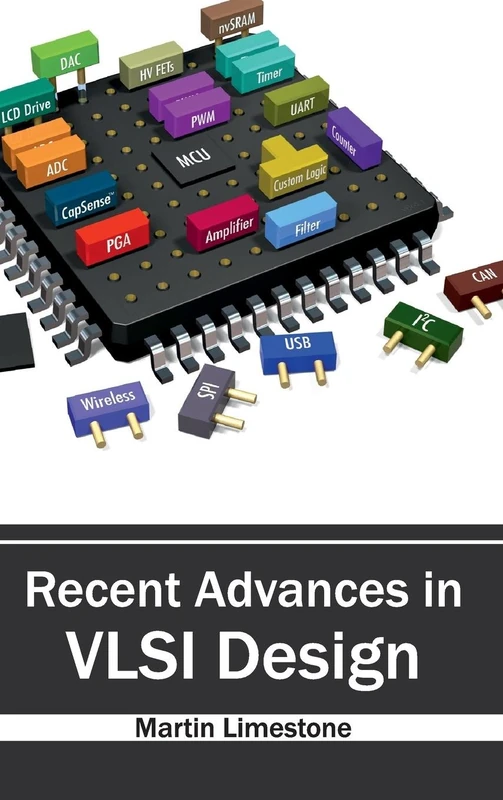
Recent Advances in VLSI Design
Clanrye International
Proceeding of the Second International Conference on Microelectronics, Computing & Communication Systems (MCCS 2017): 476 (Lecture Notes in Electrical Engineering, 476)
Springer
Analog VLSI Design Automation (VLSI Circuits)
CRC Press

Novel Algorithms for Fast Statistical Analysis of Scaled Circuits: 46 (Lecture Notes in Electrical Engineering, 46)
Springer
Multi-Level Simulation for VLSI Design: 18 (The Springer International Series in Engineering and Computer Science, 18)
Springer
Glsvlsi '19: Proceedings of the 2019 Great Lakes Symposium on VLSI
MCA

CRC Press Nanoscale Devices: Physics, Modeling, and Applications
CRC Press
Statistical Analysis and Optimization for VLSI: Timing and Power (Integrated Circuits and Systems)
Springer
Design Systems for VLSI Circuits: Logic Synthesis and Silicon Compilation: 136 (NATO Science Series E:, 136)
Springer