£106.29

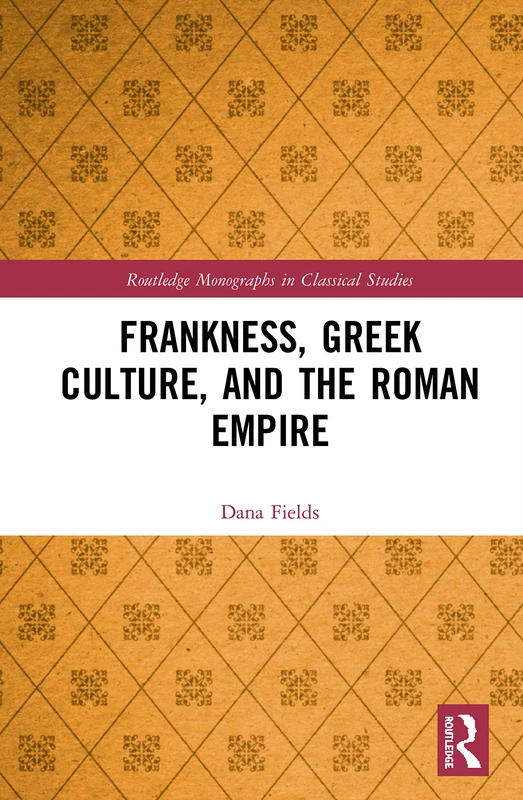
Routledge Frankness, Greek Culture, and the Roman Empire (Routledge Monographs in Classical Studies)

Price data last checked 9 day(s) ago - will refresh soon

View at Amazon

We'll watch every seller, every day. One email when your price arrives.

It has never been this cheap. We have no record of a lower price.

£106 today · cheaper than every other day in the last 3 months

NEW HERE?

Amazon shows you one price. We show you all of them.

Tosheroon watches Amazon prices so you don't have to. Every product on Amazon has a price history — we make it visible. Set the price you'd actually pay, and we'll email you the second it gets there. No app, no account, one email.

WHAT'S ON THIS PAGE

↓ Price chart
when this has been cheap or pricey
↓ Forecast
where the price is heading next
↓ Statistics
all-time high & low, recent range
↑ Price alert
name your number, we'll email you

Price History & Forecast

Grey patches = out of stock. Cheaper = lower on the chart. Hover for exact prices.

Last 82 days · 82 data points (no recent data)

Historical
Generating forecast…
£120.00 £104.92 £108.21 £111.50 £114.79 £118.08 £121.37 26 April 2026 16 May 2026 05 June 2026 25 June 2026 16 July 2026

Price Distribution

Price distribution over 82 days • 3 price levels

Days at Price
Current Price
53 days · current 8 days 21 days 0 13 27 40 53 £106 £107 £120 Days at Price

Price Analysis

Most common price: £106 (53 days, 64.6%)

Price range: £106 - £120

Price levels: 3 different prices over 82 days

Description

Frankness, Greek Culture, and the Roman Empire discusses the significance of parrhēsia (free and frank speech) in Greek culture of the Roman empire. The term parrhēsia first emerged in the context of the classical Athenian democracy and was long considered a key democratic and egalitarian value. And yet, references to frank speech pervade the literature of the Roman empire, a time when a single autocrat ruled over most of the known world, Greek cities were governed at the local level by entrenched oligarchies, and social hierarchy was becoming increasingly stratified. This volume challenges the traditional view that the meaning of the term changed radically after Alexander the Great, and shows rather that parrhēsia retained both political and ethical significance well into the Roman empire. By examining references to frankness in political writings, rhetoric, philosophy, historiography, biographical literature, and finally satire, the volume also explores the dynamics of political power in the Roman empire, where politics was located in interpersonal relationships as much as, if not more than, in institutions. The contested nature of the power relations in such interactions - between emperors and their advisors, between orators and the cities they counseled, and among fellow members of the oligarchic elite in provincial cities - reveals the political implications of a prominent post-classical intellectual development that reconceptualizes true freedom as belonging to the man who behaves - and speaks - freely. At the same time, because the role of frank speaker is valorized, those who claim it also lay themselves open to suspicions of self-promotion and hypocrisy. This volume will be of interest to students and scholars of rhetoric and political thought in the ancient world, and to anyone interested in ongoing debates about intellectual freedom, limits on speech, and the advantages of presenting oneself as a truth-teller. Review "Field’s small but thoughtful book has achieved important results. It is based on thorough knowledge of the literary sources, but Fields is also well read in the international, multilingual literature in this field. Her study is full of new insights into the perception of frank speech in the Roman Empire and thus highlights and explains the pervasiveness of frank speech in Greek culture during the early Empire. It maps the world of parrhēsia in a new way." - Bryn Mawr Classical Review About the Author Dana Fields is an Assistant Professor in the Department of Classics at the University at Buffalo, SUNY. She has published scholarship on a number of texts from the Roman imperial era, including works by Aelius Aristides, Dio Chrysostom, Lucian, Pliny, and Plutarch, as well as poetic fable collections.

Product Specifications

Format
hardcover
Domain
Amazon UK
Release Date
30 July 2020
Listed Since
14 January 2020

Barcode

No barcode data available