We can't find the internet
Attempting to reconnect
Something went wrong
Hang in there while we get back on track

£121.63
About as cheap as it gets — within 5% of the all-time low it hit 3 months ago.
£122 today · all-time low £118 (Jul 2026) · usually £122
Oxford University Press Rome's Economic Revolution - Oxford Studies Roman Economy
Price data last checked 21 day(s) ago - will refresh soon
We'll watch every seller, every day. One email when your price arrives.
Price History & Forecast
Grey patches = out of stock. Cheaper = lower on the chart. Hover for exact prices.
Last 70 days · 70 data points (no recent data)
Price data last checked 21 day(s) ago - will refresh soon
NEW HERE?
Amazon shows you one price. We show you all of them.
Tosheroon watches Amazon prices so you don't have to. Every product on Amazon has a price history — we make it visible. Set the price you'd actually pay, and we'll email you the second it gets there. No app, no account, one email.
WHAT'S ON THIS PAGE
when this has been cheap or pricey
where the price is heading next
all-time high & low, recent range
name your number, we'll email you
Price Distribution
Price distribution over 70 days • 2 price levels
Price Analysis
Most common price: £122 (40 days, 57.1%)
Price range: £118 - £122
Price levels: 2 different prices over 70 days
Description
Key Features
Philip Kay's detailed examination of monetary liquidity expansion and its effects on Roman market development between the Second Punic War and the first century BC.
Analysis of how increased silver bullion inflows combined with credit expansion to generate significant economic growth across Rome and Italy.
Comprehensive investigation of market developments including investment farming, trade, construction, and manufacturing during Rome's economic transformation.
Scholarly synthesis of diverse evidence demonstrating how Rome's economic composition and scale changed radically during this critical historical period.
Product Specifications
- Brand
- Oxford University Press
- Format
- hardcover
- ASIN
- 0199681546
- Category
- Books > Subjects > Business, Finance & Law > Biographies & Histories > Business & Economic History
- Domain
- Amazon UK
- Release Date
- 23 January 2014
- Listed Since
- 22 March 2013
Barcode
No barcode data available
Similar Products You Might Like
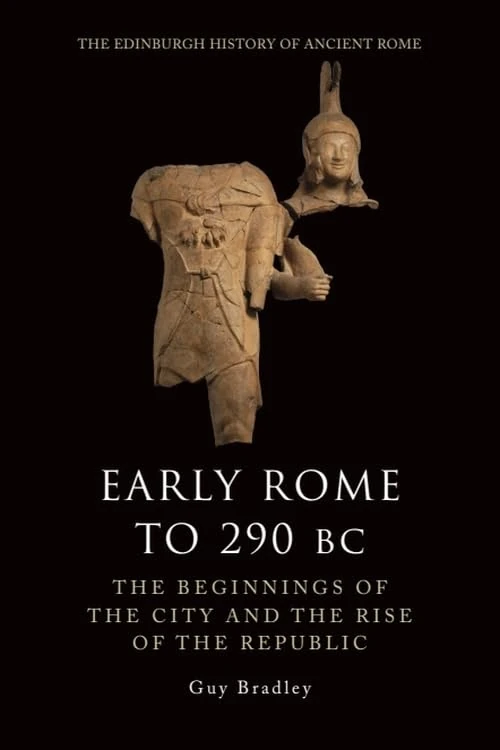
Early Rome to 290 BC: The Beginnings of the City and the Rise of the Republic (The Edinburgh History of Ancient Rome)
Edinburgh University Press

Ancient Rome: A Military and Political History
Cambridge University Press

Roma Nova: La refundación de la República en los siglos IV y III AC: 1148 (British Archaeological Reports International Series)

Exploring the Economy of Late Antiquity: Selected Essays
Cambridge University Press

Roman Archaeology for Historians - Ancient World Guide
Routledge

Roman Civilization: A Sourcebook (2 volume set)
Columbia University Press

The Social History of Roman Art: 0 (Key Themes in Ancient History)
Cambridge University Press

Rome's Eastern Trade: International Commerce and Imperial Policy 31 BC - AD 305
Routledge