£185.45

This is the most expensive it has ever been. Walk away.

£185 today · previous high £185 · all-time low £74

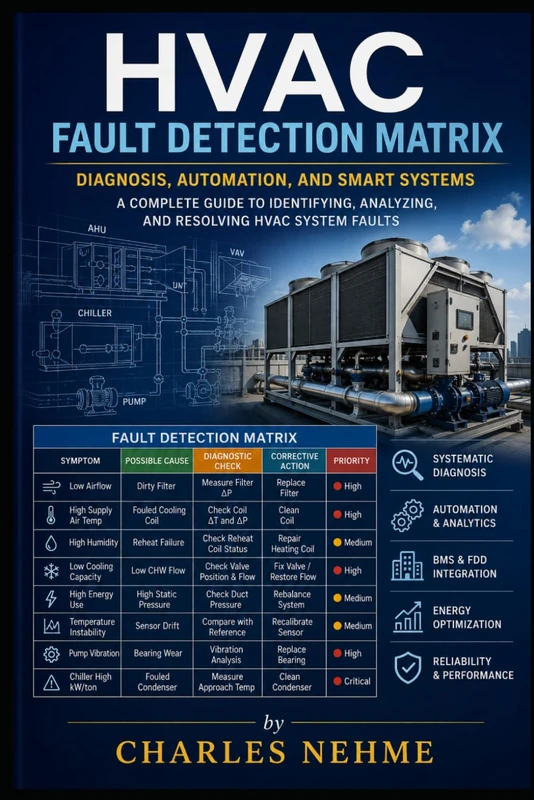
HVAC Fault Detection Matrix

Amazon

Price History & Forecast

Grey patches = out of stock. Cheaper = lower on the chart. Hover for exact prices.

Last 87 days · 87 data points (no recent data)

Historical
Generating forecast…
£185.45 £62.86 £89.60 £116.35 £143.10 £169.85 £196.60 22 July 2026 12 August 2026 03 September 2026 24 September 2026 16 October 2026
View at Amazon ↗

Price data checked 4 days ago

NEW HERE?

Amazon shows you one price. We show you all of them.

Tosheroon watches Amazon prices so you don't have to. Every product on Amazon has a price history — we make it visible. Set the price you'd actually pay, and we'll email you the second it gets there. No app, no account, one email.

WHAT'S ON THIS PAGE

↑ Price chart
when this has been cheap or pricey
↑ Forecast
where the price is heading next
↓ Statistics
all-time high & low, recent range
↑ Price alert
name your number, we'll email you

Price Distribution

Price distribution over 87 days • 4 price levels

Days at Price
Current Price
7 days 1 day 18 days 61 days · current 0 15 31 46 61 £74 £121 £180 £185 Days at Price

Price Analysis

Most common price: £185 (61 days, 70.1%)

Price range: £74 - £185

Price levels: 4 different prices over 87 days

Description

Heating, Ventilation, and Air Conditioning (HVAC) systems are among the most critical components of modern buildings. From commercial towers and hospitals to data centers, laboratories, industrial facilities, and residential developments, HVAC systems are responsible for maintaining indoor comfort, environmental control, operational continuity, and energy efficiency. As buildings become increasingly complex and energy-conscious, the ability to detect faults early and diagnose system problems accurately has become essential. Traditional HVAC maintenance approaches have often relied on reactive troubleshooting or scheduled preventive maintenance. While these methods remain important, they are no longer sufficient for modern high-performance buildings where downtime, energy waste, and comfort complaints can result in substantial financial and operational consequences. Even small undetected faults—such as sensor drift, improper valve operation, fouled coils, or airflow imbalance—can significantly reduce system efficiency and increase operating costs. The emergence of Fault Detection and Diagnostics (FDD) has transformed the HVAC industry by introducing structured and intelligent approaches to system monitoring and analysis. At the heart of many FDD methodologies lies the concept of the HVAC Fault Detection Matrix: a practical framework that links system symptoms, operating conditions, probable causes, diagnostic procedures, and corrective actions into a systematic decision-making tool. This book explores the principles, development, and implementation of HVAC fault detection matrices across a wide range of HVAC applications. It combines engineering fundamentals with practical field knowledge to provide readers with a comprehensive understanding of how faults occur, how they can be identified, and how they can be resolved efficiently. The content addresses both traditional rule-based diagnostics and modern smart-building technologies, including Building Management Systems (BMS), IoT devices, cloud analytics, artificial intelligence, and predictive maintenance strategies. Particular attention is given to real-world HVAC systems used in commercial buildings, hospitals, cleanrooms, industrial facilities, and mission-critical environments such as data centers. This book is intended for: HVAC engineers MEP consultants Commissioning professionals Facility managers Energy auditors Building operators BMS and controls specialists Students and researchers in building services engineering The objective is not only to explain fault detection theory, but also to provide practical methodologies and structured diagnostic approaches that can be applied directly in the field. The HVAC Fault Detection Matrix serves as both an engineering reference and a foundation for advanced analytics and automated FDD systems. As buildings continue evolving toward smarter, more connected, and more sustainable infrastructures, fault detection will play an increasingly important role in ensuring system reliability, energy optimization, occupant comfort, and operational resilience. It is hoped that this book will contribute to improved HVAC performance, better engineering practices, and a deeper understanding of intelligent building diagnostics within the HVAC industry.

Product Specifications

Barcode

No barcode data available