£81.94

It has never been this cheap. We have no record of a lower price.

£82 today · cheaper than every other day in the last 3 months

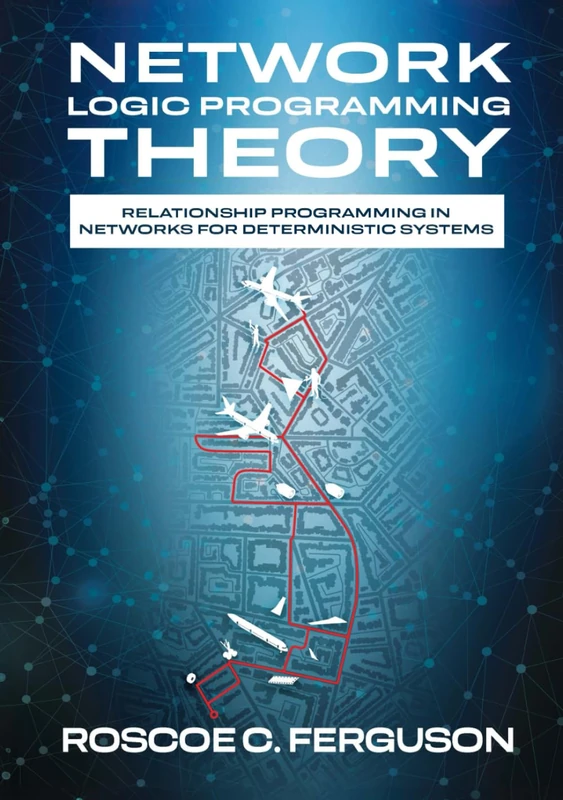
Network Logic Programming Theory

View at Amazon

Price History & Forecast

Grey patches = out of stock. Cheaper = lower on the chart. Hover for exact prices.

Last 70 days · 70 data points (no recent data)

Historical
Generating forecast…
£81.94 £77.84 £79.48 £81.12 £82.76 £84.40 £86.04 21 July 2026 07 August 2026 24 August 2026 10 September 2026 28 September 2026
View at Amazon ↗

Price data last checked 21 day(s) ago - will refresh soon

NEW HERE?

Amazon shows you one price. We show you all of them.

Tosheroon watches Amazon prices so you don't have to. Every product on Amazon has a price history — we make it visible. Set the price you'd actually pay, and we'll email you the second it gets there. No app, no account, one email.

WHAT'S ON THIS PAGE

↑ Price chart
when this has been cheap or pricey
↑ Forecast
where the price is heading next
↓ Statistics
all-time high & low, recent range
↑ Price alert
name your number, we'll email you

Price Distribution

Price distribution over 70 days • 1 price levels

Days at Price
70 days 0 18 35 53 70 £82 Days at Price

Price Analysis

Most common price: £82 (70 days, 100.0%)

Price range: £82 - £82

Price levels: 1 different prices over 70 days

Description

Logic abstracted as relationships and their derivates is the next evolution of programming. There is an assumption that, with the rise of artificial intelligence, the art of programming is dead, in part because it has the reputation of being expensive, with costs rising and production timelines expanding. But can anything be done? The answer is yes. However, complexity must be better understood. This book introduces Network Logic Programming Theory, which tackles programming's challenges with a technique that separates complex programming algorithms into networks and computations (U.S. Patent 12,131,160 and Patent Pending). Networks store logic in the form of relationships to make decisions, while computations are reduced to simple algorithms. This network-based system utilizes the principles of network science to analyze complexity within software systems. AI and Network Logic Programming Theory are based on the concept of relationships and their derivates. The difference is AI extracts relationships from data using networks, while Network Logic Programming Theory programs networks using relationship-based abstraction. Such an approach can serve as the next evolution of programming, and be integrated with AI to create deterministic systems. Networks become a new version of assembly language and can store both static and dynamic information for data processing algorithms. The use of network logic makes it more natural to open the door for concepts such as runtime verification, true distributed logic processing systems (including network logic distributed across geographically dispersed locations), or more deterministic adaptive systems by providing generative logic paths. Generative logic paths allow for the runtime generation of logic using predefined relationships such as the capability of a GPS Application that calculates routes based on a predetermined set of streets and roads (relationships). When coupled with AI, the opportunities are to use Network Logic Programming Theory to support deterministic decision making, use AI models that learn relationships from data to produce static graphs that define these relationships as input to Network Logic Programming Theory network programs, and have AI generate systems using Network Logic Programming Theory so the generated complexity can be understood using Network Science technology. All in the name of supporting deterministic systems. Network Logic Programming Theory introduces the concept of the Network Processor. The Network Processor is designed to process network flow logic for static logic paths defined in network definitions. It can also generate new paths dynamically during run time based on stored relationships. It can respond to queries during runtime about how items are related similar in concept to the query capability of a graph database such as Neo4j using cypher. The Network Processor and CPU work together to support the data processing model.

Product Specifications

Format
hardcover
Domain
Amazon UK
Release Date
20 January 2025
Listed Since
01 January 2025

Barcode

No barcode data available