£86.48

It has never been this cheap. We have no record of a lower price.

£86 today · cheaper than every other day in the last 3 months

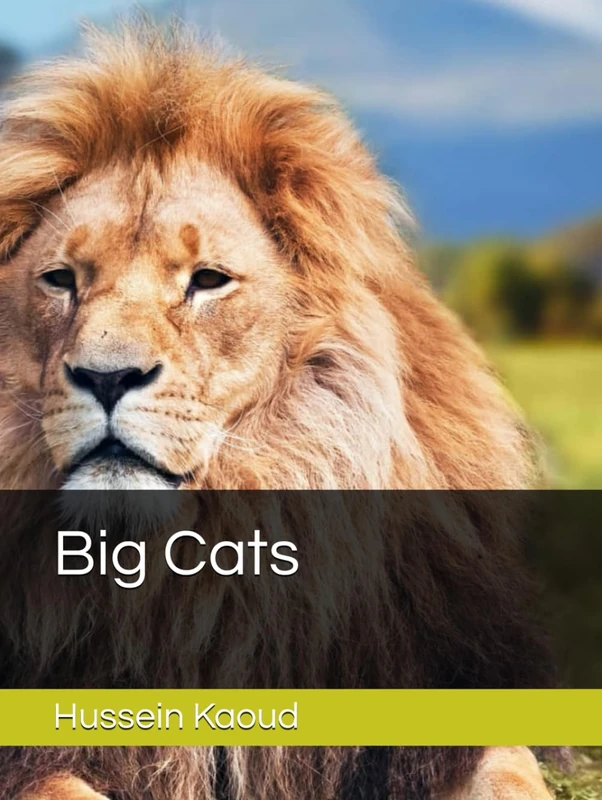
Big Cats

View at Amazon

Price History & Forecast

Grey patches = out of stock. Cheaper = lower on the chart. Hover for exact prices.

Last 59 days · 59 data points (no recent data)

Historical
Generating forecast…
£86.48 £82.16 £83.89 £85.62 £87.34 £89.07 £90.80 29 July 2026 12 August 2026 27 August 2026 10 September 2026 25 September 2026
View at Amazon ↗

Price data last checked 32 day(s) ago - refreshing...

NEW HERE?

Amazon shows you one price. We show you all of them.

Tosheroon watches Amazon prices so you don't have to. Every product on Amazon has a price history — we make it visible. Set the price you'd actually pay, and we'll email you the second it gets there. No app, no account, one email.

WHAT'S ON THIS PAGE

↑ Price chart
when this has been cheap or pricey
↑ Forecast
where the price is heading next
↓ Statistics
all-time high & low, recent range
↑ Price alert
name your number, we'll email you

Price Distribution

Price distribution over 59 days • 1 price levels

Days at Price
59 days 0 15 30 44 59 £86 Days at Price

Price Analysis

Most common price: £86 (59 days, 100.0%)

Price range: £86 - £86

Price levels: 1 different prices over 59 days

Description

The informal term "big cat" is typically used to refer to any of the four largest (living) members of the entire Panthera genus. Among the five total species within the Panthera genus, these four are the only cats that are able to roar. In descending order of their maximum potential size, these four species are: tigers, lions, jaguars, and leopards, with the tiger (Panthera tigris) being the largest. A more liberal and expansive definition is sometimes used which may include the snow leopard, puma, clouded leopard, Sunda clouded leopard and/or cheetah, although these added species do not roar. There are 40 species of cats on the planet. Most, like the margay, are relatively small. But some—the lion, tiger, leopard, snow leopard, clouded leopard, jaguar, lynx, and cheetah—are big. These big cats are among the most beloved and recognizable animals on the planet. There is only one species of lion, which is known scientifically as Panthera leo. There are two recognized subspecies, the African lion (P. l. leo) and the Asiatic lion (P. l. persica). Some taxonomists have proposed a different split of the subspecies – with P. l. leo covering lions in Asian and west, central and north Africa, and P. l. melanochaita for lions in south and east Africa. There is only one species of tiger, but there are six extant (living) subspecies: Siberian, South China, Sumatran, Indochinese, Malayan and Bengal. Despite enormous differences in size, various species of cat are quite similar in both structure and behavior, with the exception of the cheetah, which significantly stands out from the other big and small cats. All cats are carnivores and efficient apex predators.Their range includes the Americas, Africa, Asia, and Europe. The principal threats to big cats vary by geographic location, but primarily are habitat destruction and poaching. In Africa many big cats are hunted by pastoralists or government 'problem animal control' officers. Certain protected areas exist that shelter large and exceptionally visible populations of lions, hyenas, leopards, and cheetahs. The initial Captive Wildlife Safety Act (CWSA) was signed into law on, 2003.To address problems associated with the increasing trade in certain big cat species, the CSWA regulations were strengthened by a law passed on, 2007. The big cat species addressed in these regulations are the lion, tiger, leopard, snow leopard, clouded leopard, cheetah, jaguar, cougar, and any hybrid combination any of these species (liger, tigon, etc) that results from breeding of these big cats. The World Wildlife Fund (WWF) has encouraged the strengthen these laws. The main purpose of the book is to point out the interest of animal wildlife and its importance in our lives. On addition, it included a chapter on general guidelines for the conservation of wildlife that provides good background information for wildlife management.

Product Specifications

Format
hardcover
Domain
Amazon UK
Release Date
06 January 2024
Listed Since
07 January 2024

Barcode

No barcode data available