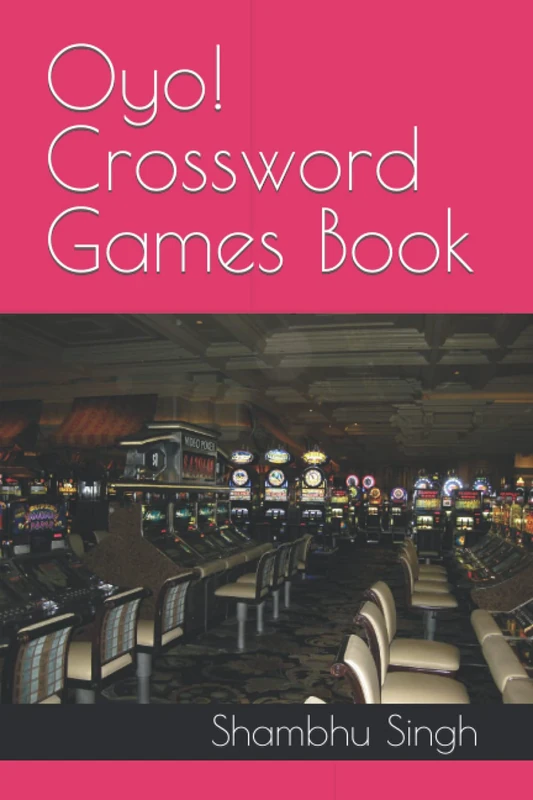
£158.84

It has never been this cheap. We have no record of a lower price.

£159 today · cheaper than every other day in the last 3 months

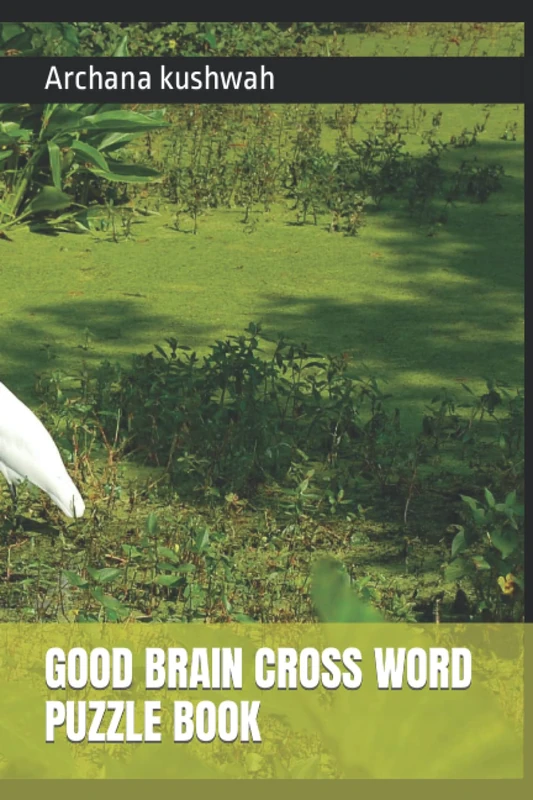
GOOD BRAIN CROSS WORD PUZZLE BOOK

View at Amazon

Price History & Forecast

Grey patches = out of stock. Cheaper = lower on the chart. Hover for exact prices.

Last 69 days · 69 data points (no recent data)

Historical
Generating forecast…
£158.84 £150.90 £154.07 £157.25 £160.43 £163.61 £166.78 24 July 2026 10 August 2026 27 August 2026 13 September 2026 30 September 2026
View at Amazon ↗

Price data last checked 22 day(s) ago - will refresh soon

NEW HERE?

Amazon shows you one price. We show you all of them.

Tosheroon watches Amazon prices so you don't have to. Every product on Amazon has a price history — we make it visible. Set the price you'd actually pay, and we'll email you the second it gets there. No app, no account, one email.

WHAT'S ON THIS PAGE

↑ Price chart
when this has been cheap or pricey
↑ Forecast
where the price is heading next
↓ Statistics
all-time high & low, recent range
↑ Price alert
name your number, we'll email you

Price Distribution

Price distribution over 69 days • 1 price levels

Days at Price
69 days 0 17 35 52 69 £159 Days at Price

Price Analysis

Most common price: £159 (69 days, 100.0%)

Price range: £159 - £159

Price levels: 1 different prices over 69 days

Description

Crossword grids such as those appearing in most North American newspapers and magazines feature solid areas of white squares. Every letter is checked (i.e. is part of both an "across" word and a "down" word) and usually each answer must contain at least three letters. In such puzzles shaded squares are typically limited to about one-sixth of the total. Crossword grids elsewhere, such as in Britain, South Africa, India and Australia, have a lattice-like structure, with a higher percentage of shaded squares (around 25%), leaving about half the letters in an answer unchecked. For example, if the top row has an answer running all the way across, there will often be no across answers in the second row. Another tradition in puzzle design (in North America, India, and Britain particularly) is that the grid should have 180-degree rotational (also known as "radial") symmetry, so that its pattern appears the same if the paper is turned upside down. Most puzzle designs also require that all white cells be orthogonally contiguous (that is, connected in one mass through shared sides, to form a single polyomino). The design of Japanese crossword grids often follows two additional rules: that shaded cells may not share a side (i.e. they may not be orthogonally contiguous) and that the corner squares must be white. The "Swedish-style" grid (picture crosswords) uses no clue numbers. Instead, clues are contained in the cells which do not contain answers, with arrows indicating where and in what direction to fill in answers. Arrows can be omitted from clue cells, in which case the convention is for the answer to go horizontally to the right of the clue cell, or – if the clue cell is split vertically and contains two clues – for the answer to go horizontally to the right for the top clue and vertically below for the bottom clue. This style of grid is also used in several countries other than Sweden, often in magazines, but also in daily newspapers. The grid often has one or more photos replacing a block of squares as a clue to one or several answers, for example, the name of a pop star, or some kind of rhyme or phrase that can be associated with the photo. These puzzles usually have no symmetry in the grid but instead often have a common theme (literature, music, nature, geography, events of a special year, etc.) Substantial variants from the usual forms exist. Two of the common ones are barred crosswords, which use bold lines between squares (instead of shaded squares) to separate answers, and circular designs, with answers entered either radially or in concentric circles. "Free form" crosswords ("criss-cross" puzzles), which have simple, asymmetric designs, are often seen on school worksheets, children's menus, and other entertainment for children. Grids forming shapes other than squares are also occasionally used. Puzzles are often one of several standard sizes. For example, many weekday newspaper puzzles (such as the American New York Times crossword puzzle) are 15×15 squares, while weekend puzzles may be 21×21, 23×23, or 25×25. The New York Times puzzles also set a common pattern for American crosswords by increasing in difficulty throughout the week: their Monday puzzles are the easiest and the puzzles get harder each day until Saturday. Their larger Sunday puzzle is about the same level of difficulty as a weekday-size Thursday puzzle.[1] This has led U.S. solvers to use the day of the week as a shorthand when describing how hard a puzzle is: e.g. an easy puzzle may be referred to as a "Monday" or a "Tuesday", a medium-difficulty puzzle as a "Wednesday", and a truly difficult puzzle as a "Saturday". One of the smallest crosswords in general distribution is a 4×4 crossword compiled daily by John Wilmes, distributed online by USA Today as "QuickCross" and by Universal Uclick as "PlayFour".

Product Specifications

Format
paperback
Domain
Amazon UK
Release Date
03 June 2022
Listed Since
11 June 2022

Barcode

No barcode data available

Similar Products You Might Like