We can't find the internet
Attempting to reconnect
Something went wrong
Hang in there while we get back on track

£85.27
It has never been this cheap. We have no record of a lower price.
£85 today · cheaper than every other day in the last 3 months
Springer Deep Learning and Physics (Mathematical Physics Studies)
We'll watch every seller, every day. One email when your price arrives.
Price History & Forecast
Grey patches = out of stock. Cheaper = lower on the chart. Hover for exact prices.
Last 16 days · 16 data points (no recent data)
NEW HERE?
Amazon shows you one price. We show you all of them.
Tosheroon watches Amazon prices so you don't have to. Every product on Amazon has a price history — we make it visible. Set the price you'd actually pay, and we'll email you the second it gets there. No app, no account, one email.
WHAT'S ON THIS PAGE
when this has been cheap or pricey
where the price is heading next
all-time high & low, recent range
name your number, we'll email you
Price Distribution
Price distribution over 16 days • 1 price levels
Price Analysis
Most common price: £85 (16 days, 100.0%)
Price range: £85 - £85
Price levels: 1 different prices over 16 days
Description
Product Specifications
- Brand
- Springer
- Format
- hardcover
- ASIN
- 9813361077
- Domain
- Amazon UK
- Release Date
- 21 February 2021
- Listed Since
- 13 November 2020
Barcode
No barcode data available
Similar Products You Might Like

The Role of Mathematics in Physical Sciences: Interdisciplinary and Philosophical Aspects
Springer

Machine Learning with Neural Networks: An Introduction for Scientists and Engineers
Cambridge University Press

Quantum versus Classical Mechanics and Integrability Problems: towards a unification of approaches and tools
Springer
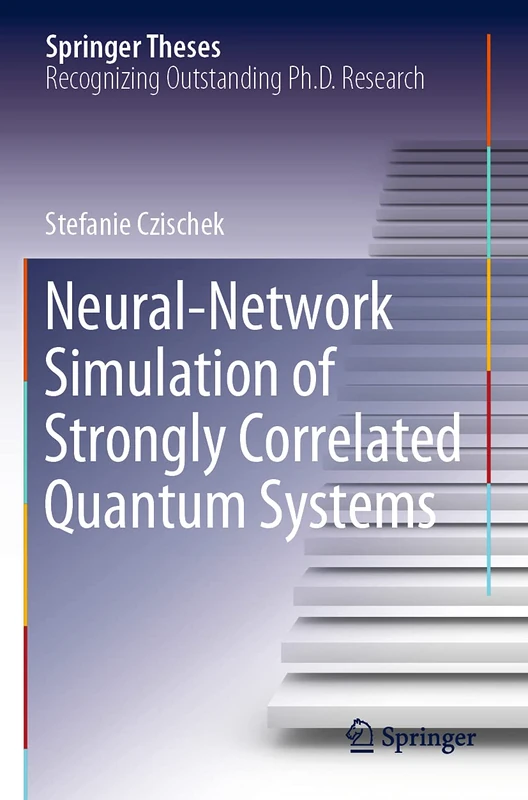
Neural-Network Simulation of Strongly Correlated Quantum Systems (Springer Theses)
Springer

Chance in Physics: Foundations and Perspectives: 574 (Lecture Notes in Physics, 574)
Springer
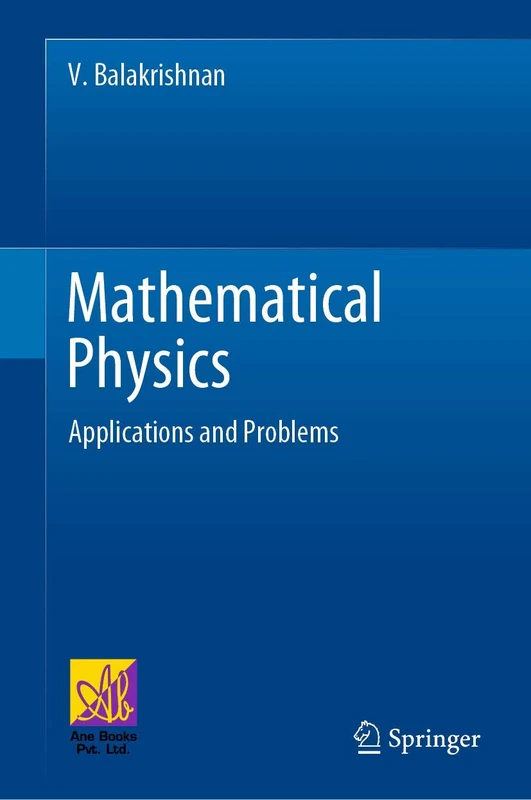
Mathematical Physics: Applications and Problems
Springer

From Hamiltonian Chaos to Complex Systems: A Nonlinear Physics Approach: 5 (Nonlinear Systems and Complexity, 5)
Springer

Probability for Physicists (Graduate Texts in Physics)
Springer

Linear Algebra, Data Science, and Machine Learning (Springer Undergraduate Texts in Mathematics and Technology)
Springer

Rhythmic Advantages in Big Data and Machine Learning (Studies in Rhythm Engineering)
Springer
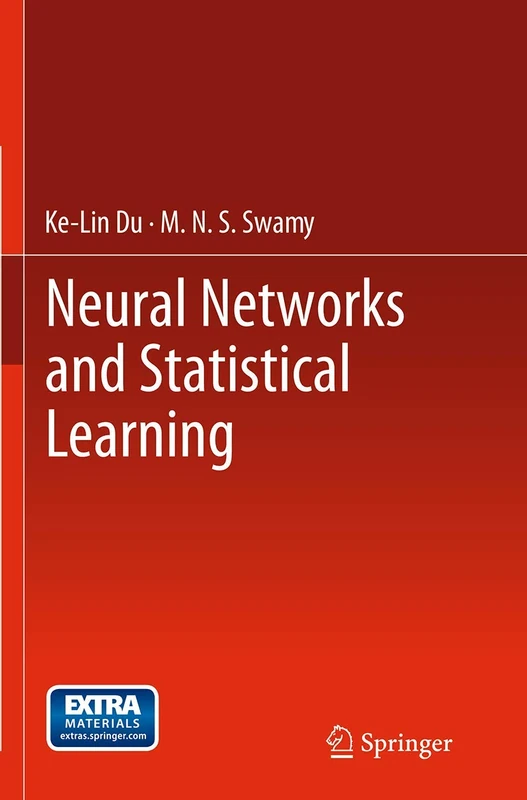
Neural Networks and Statistical Learning
Springer

Basic Concepts in Computational Physics
Springer

An Introduction to Hilbert Space and Quantum Logic (Problem Books in Mathematics)
Springer
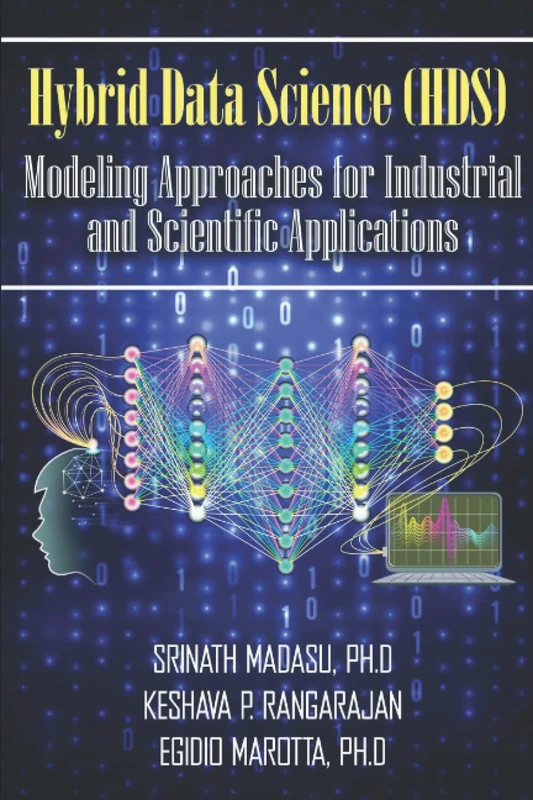
Hybrid Data Science (HDS) Modeling Approaches for Industrial and Scientific Applications

Machine Learning Paradigms: Advances in Deep Learning-based Technological Applications: 18 (Learning and Analytics in Intelligent Systems, 18)
Springer

Application of Machine Learning and Deep Learning Methods to Power System Problems
Springer

Cybernetical Physics: From Control of Chaos to Quantum Control (Understanding Complex Systems)
Springer

Machine Learning in Complex Networks
Springer

Computational Statistical Physics: From Billiards to Monte Carlo
Springer

Applied Differential Equations In Physics

Quantum Mathematical Physics: A Bridge between Mathematics and Physics
Birkhauser

Fundamentals in Chemical Physics
Springer

Topics in Physical Mathematics
Springer

Introduction to Deep Learning and Neural Networks with Python™: A Practical Guide
Elsevier