£115.63

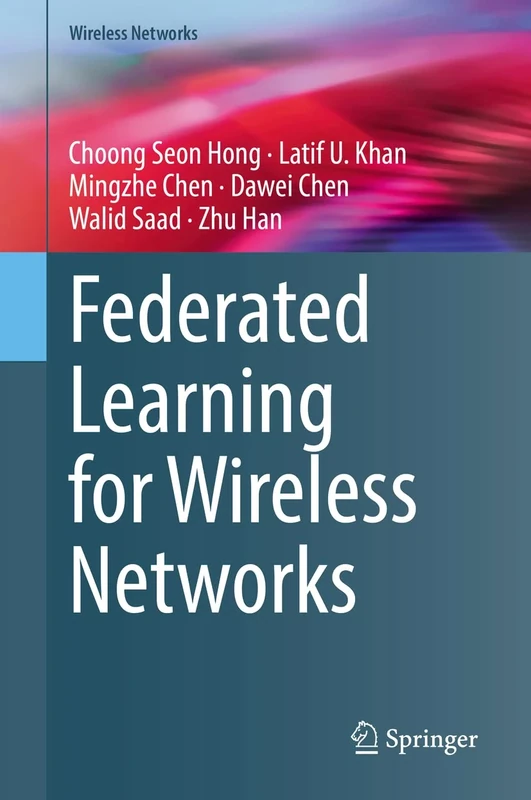
Springer Federated Learning for Wireless Networks

Price data last checked 91 day(s) ago - refreshing...

View at Amazon

We'll watch every seller, every day. One email when your price arrives.

This is the usual price. Wait for it to drop, or tell us your number.

£116 today · usual range £0–£0 · best ever £87

NEW HERE?

Amazon shows you one price. We show you all of them.

Tosheroon watches Amazon prices so you don't have to. Every product on Amazon has a price history — we make it visible. Set the price you'd actually pay, and we'll email you the second it gets there. No app, no account, one email.

WHAT'S ON THIS PAGE

↓ Price chart
when this has been cheap or pricey
↓ Forecast
where the price is heading next
↓ Statistics
all-time high & low, recent range
↑ Price alert
name your number, we'll email you

Price History & Forecast

Grey patches = out of stock. Cheaper = lower on the chart. Hover for exact prices.

Last 640 days • 640 data points (No recent data available)

Historical
Generating forecast...
£129.99 £82.86 £93.14 £103.42 £113.71 £123.99 £134.28 07 July 2024 13 December 2024 22 May 2025 29 October 2025 07 April 2026

Price Distribution

Price distribution over 640 days • 10 price levels

Days at Price
Current Price
13 days 21 days 19 days 23 days 75 days 128 days 133 days 202 days · current 8 days 18 days 0 51 101 152 202 £87 £93 £97 £105 £110 £113 £114 £115 £123 £130 Days at Price

Price Analysis

Most common price: £115 (202 days, 31.6%)

Price range: £87 - £130

Price levels: 10 different prices over 640 days

Description

Recently machine learning schemes have attained significant attention as key enablers for next-generation wireless systems. Currently, wireless systems are mostly using machine learning schemes that are based on centralizing the training and inference processes by migrating the end-devices data to a third party centralized location. However, these schemes lead to end-devices privacy leakage. To address these issues, one can use a distributed machine learning at network edge. In this context, federated learning (FL) is one of most important distributed learning algorithm, allowing devices to train a shared machine learning model while keeping data locally. However, applying FL in wireless networks and optimizing the performance involves a range of research topics. For example, in FL, training machine learning models require communication between wireless devices and edge servers via wireless links. Therefore, wireless impairments such as uncertainties among wireless channel states, interference, and noise significantly affect the performance of FL. On the other hand, federated-reinforcement learning leverages distributed computation power and data to solve complex optimization problems that arise in various use cases, such as interference alignment, resource management, clustering, and network control. Traditionally, FL makes the assumption that edge devices will unconditionally participate in the tasks when invited, which is not practical in reality due to the cost of model training. As such, building incentive mechanisms is indispensable for FL networks. This book provides a comprehensive overview of FL for wireless networks. It is divided into three main parts: The first part briefly discusses the fundamentals of FL for wireless networks, while the second part comprehensively examines the design and analysis of wireless FL, covering resource optimization, incentive mechanism, security and privacy. It also presents several solutions based on optimization theory, graph theory, and game theory to optimize the performance of federated learning in wireless networks. Lastly, the third part describes several applications of FL in wireless networks. From the Back Cover Recently machine learning schemes have attained significant attention as key enablers for next-generation wireless systems. Currently, wireless systems are mostly using machine learning schemes that are based on centralizing the training and inference processes by migrating the end-devices data to a third party centralized location. However, these schemes lead to end-devices privacy leakage. To address these issues, one can use a distributed machine learning at network edge. In this context, federated learning (FL) is one of most important distributed learning algorithm, allowing devices to train a shared machine learning model while keeping data locally. However, applying FL in wireless networks and optimizing the performance involves a range of research topics. For example, in FL, training machine learning models require communication between wireless devices and edge servers via wireless links. Therefore, wireless impairments such as uncertainties among wireless channel states, interference, and noise significantly affect the performance of FL. On the other hand, federated-reinforcement learning leverages distributed computation power and data to solve complex optimization problems that arise in various use cases, such as interference alignment, resource management, clustering, and network control. Traditionally, FL makes the assumption that edge devices will unconditionally participate in the tasks when invited, which is not practical in reality due to the cost of model training. As such, building incentive mechanisms is indispensable for FL networks. This book provides a comprehensive overview of FL for wireless networks. It is divided into three main parts: The first part briefly discusses the fundamentals of FL for wirele

Product Specifications

Format
hardcover
Domain
Amazon UK
Release Date
03 December 2021
Listed Since
30 June 2021

Barcode

No barcode data available