£90.14

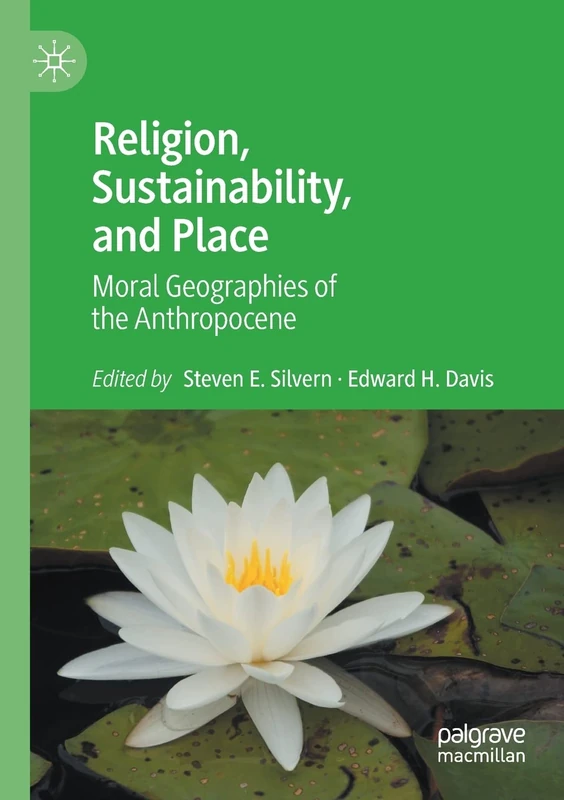
MACMILLAN Religion, Sustainability, and Place: Moral Geographies of the Anthropocene

Price data last checked 91 day(s) ago - refreshing...

View at Amazon

We'll watch every seller, every day. One email when your price arrives.

This is the most expensive it has ever been. Walk away.

£90 today · previous high £90 · all-time low £83

NEW HERE?

Amazon shows you one price. We show you all of them.

Tosheroon watches Amazon prices so you don't have to. Every product on Amazon has a price history — we make it visible. Set the price you'd actually pay, and we'll email you the second it gets there. No app, no account, one email.

WHAT'S ON THIS PAGE

↓ Price chart
when this has been cheap or pricey
↓ Forecast
where the price is heading next
↓ Statistics
all-time high & low, recent range
↑ Price alert
name your number, we'll email you

Price History & Forecast

Grey patches = out of stock. Cheaper = lower on the chart. Hover for exact prices.

Last 640 days · 640 data points (no recent data)

Historical
Generating forecast…
£90.14 £82.18 £83.91 £85.65 £87.39 £89.13 £90.86 13 July 2024 19 December 2024 28 May 2025 04 November 2025 13 April 2026

Price Distribution

Price distribution over 640 days • 3 price levels

Days at Price
Current Price
10 days 522 days 108 days · current 0 131 261 392 522 £83 £85 £90 Days at Price

Price Analysis

Most common price: £85 (522 days, 81.6%)

Price range: £83 - £90

Price levels: 3 different prices over 640 days

Description

This book explores how religious groups work to create sustainable relationships between people, places and environments. This interdisciplinary volume deepens our understanding of this relationship, revealing that the geographical imagination―our sense of place―is a key aspect of the sustainability ideas and practices of religious groups.  The book begins with a broad examination of how place shapes faith-based ideas about sustainability, with examples drawn from indigenous Hawaiians and the sacred texts of Judaism and Islam. Empirical case studies from North America, Europe, Central Asia and Africa follow, illustrating how a local, bounded, and sacred sense of place informs religious-based efforts to protect people and natural resources from threatening economic and political forces. Other contributors demonstrate that a cosmopolitan geographical imagination, viewing place as extending from the local to the global, shapes the struggles of Christian, Jewish and interfaith groups to promote just and sustainable food systems and battle the climate crisis. Review “The editors and authors are right to note that the field of sustainability studies has been strangely silent on the salience of religion. This volume provides exactly the right kind of intervention to this emerging and multidisciplinary field, that is one which includes a diverse range of voices, practitioners alongside academics, and focuses on a range of landscapes from Ethiopia to Scotland where religion and sustainability meet in specific problems and forms of praxis. I highly recommend it!” (Jeremy Kidwell, Department of Theology & Religion, University of Birmingham) From the Back Cover “The editors and authors are right to note that the field of sustainability studies has been strangely silent on the salience of religion. This volume provides exactly the right kind of intervention to this emerging and multidisciplinary field, that is one which includes a diverse range of voices, practitioners alongside academics, and focuses on a range of landscapes from Ethiopia to Scotland where religion and sustainability meet in specific problems and forms of praxis. I highly recommend it!” ― Jeremy Kidwell, Department of Theology & Religion, University of Birmingham This book explores how religious groups work to create sustainable relationships between people, places and environments. This interdisciplinary volume deepens our understanding of this relationship, revealing that the geographical imagination―our sense of place―is a key aspect of the sustainability ideas and practices of religious groups.  The book begins with a broad examination of how place shapes faith-based ideas about sustainability, with examples drawn from indigenous Hawaiians and the sacred texts of Judaism and Islam. Empirical case studies from North America, Europe, Central Asia and Africa follow, illustrating how a local, bounded, and sacred sense of place informs religious-based efforts to protect people and natural resources from threatening economic and political forces. Other contributors demonstrate that a cosmopolitan geographical imagination, viewing place as extending from the local to the global, shapes the struggles of Christian, Jewish and interfaith groups to promote just and sustainable food systems and battle the climate crisis. About the Author Steven E. Silvern is Professor of Geography and Sustainability at Salem State University. His research has appeared in journals such as Political Geography, Cultural Geographies, Historical Geography, and American Indian Culture and Research Journal. He is also editor of The Northeastern Geographer. Edward H. Davis is Professor and Chair in the Department of Geography and Environmental Studies at Emory & Henry College in Virginia, USA. He has published extensively on rural and agricultural change in the US and Central America. Funded by the USDA, his explorations for se

Product Specifications

Format
paperback
Domain
Amazon UK
Release Date
16 December 2021
Listed Since
18 November 2021

Barcode

No barcode data available