We can't find the internet
Attempting to reconnect
Something went wrong!
Hang in there while we get back on track
£100.88
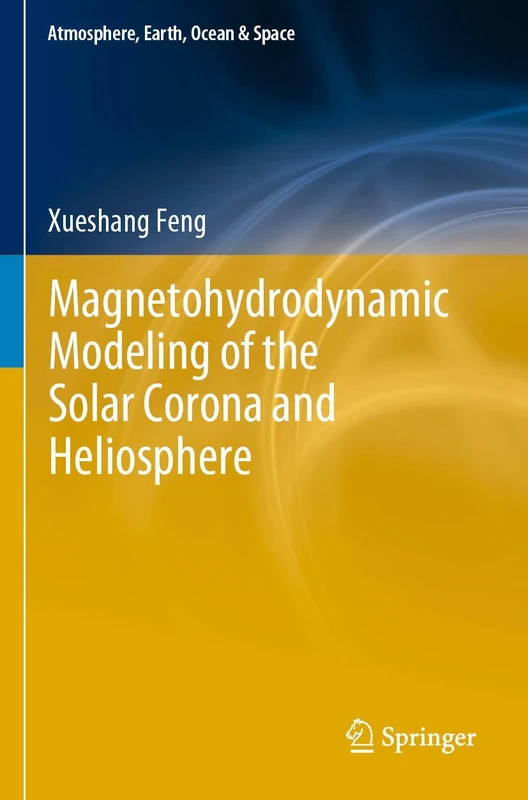
Springer Magnetohydrodynamic Modeling of the Solar Corona and Heliosphere (Atmosphere, Earth, Ocean & Space)
Price data last checked 95 day(s) ago - refreshing...
We'll watch every seller, every day. One email when your price arrives.
This is the most expensive it has ever been. Walk away.
£101 today · previous high £101 · all-time low £97
NEW HERE?
Amazon shows you one price. We show you all of them.
Tosheroon watches Amazon prices so you don't have to. Every product on Amazon has a price history — we make it visible. Set the price you'd actually pay, and we'll email you the second it gets there. No app, no account, one email.
WHAT'S ON THIS PAGE
when this has been cheap or pricey
where the price is heading next
all-time high & low, recent range
name your number, we'll email you
Price History & Forecast
Grey patches = out of stock. Cheaper = lower on the chart. Hover for exact prices.
Last 636 days • 636 data points (No recent data available)
Price Distribution
Price distribution over 636 days • 3 price levels
Price Analysis
Most common price: £100 (445 days, 70.0%)
Price range: £98 - £101
Price levels: 3 different prices over 636 days
Description
Product Specifications
- Brand
- Springer
- Format
- Paperback
- ASIN
- 9811390835
- Domain
- Amazon UK
- Release Date
- 28 August 2020
- Listed Since
- 26 July 2020
Barcode
No barcode data available
Similar Products You Might Like

Magnetic Cloud Boundary Layers and Magnetic Reconnection (Springer Theses)
Springer

Magnetic Cloud Boundary Layers and Magnetic Reconnection (Springer Theses)
Springer
Solar and Space Physics: A Science for a Technological Society
National Academies Press

Extreme Space Weather
Elsevier

Multi-Scale Physics in Coronal Heating and Solar Wind Acceleration: From the Sun into the Inner Heliosphere: 38 (Space Sciences Series of ISSI, 38)
Springer
Heliophysics: Space Storms and Radiation: Causes and Effects
Cambridge University Press

Magnetic Coupling between the Interior and Atmosphere of the Sun (Astrophysics and Space Science Proceedings)
Springer

Magnetic Coupling between the Interior and Atmosphere of the Sun (Astrophysics and Space Science Proceedings)
Springer
Space Physics and Aeronomy, Set (Geophysical Monograph Series)
American Geophysical Union
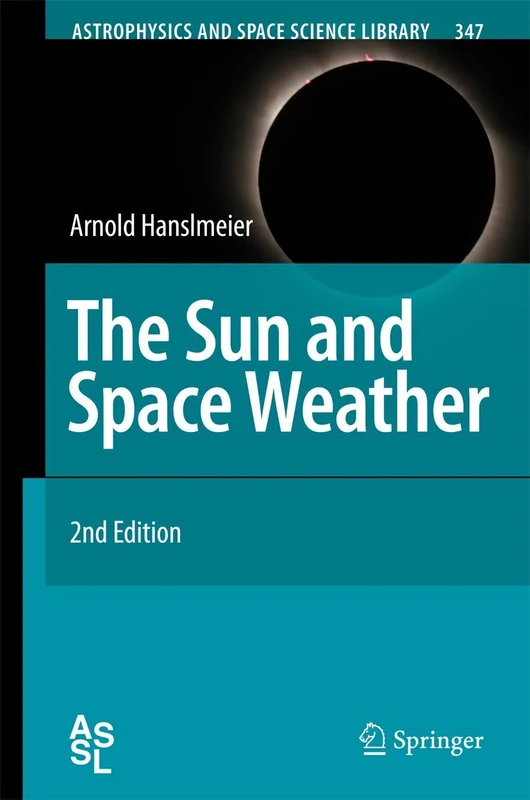
The Sun and Space Weather: 347 (Astrophysics and Space Science Library, 347)
Springer
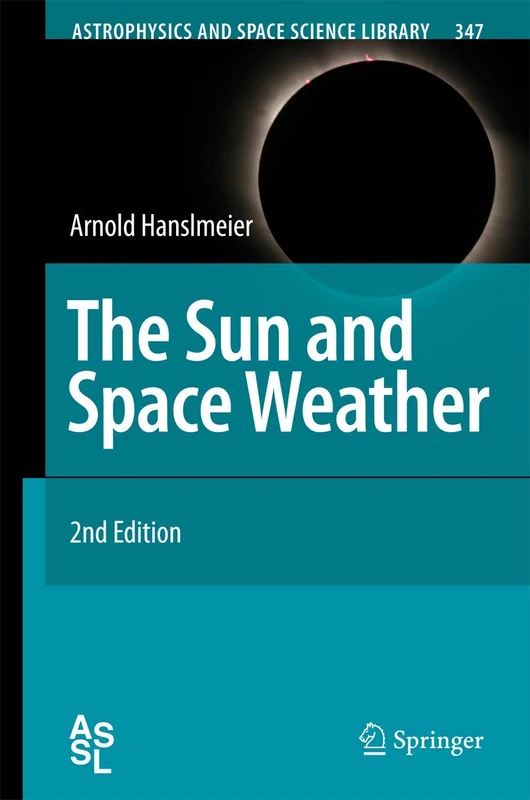
Springer - The Sun and Space Weather: 347 Astrophysics Book
Springer

Energetic Particles in the Heliosphere: 438 (Astrophysics and Space Science Library, 438)
Springer

The Sun, the Solar Wind, and the Heliosphere: 4 (IAGA Special Sopron Book Series, 4)
Springer

Space Physics: An Introduction to Plasmas and Particles in the Heliosphere and Magnetospheres (Advanced Texts in Physics)
Springer

Intercorrelated Satellite Observations Related to Solar Events: Proceedings of the Third ESLAB/ESRIN Symposium Held in Noordwijk, The Netherlands, ... (Astrophysics and Space Science Library, 19)
Springer
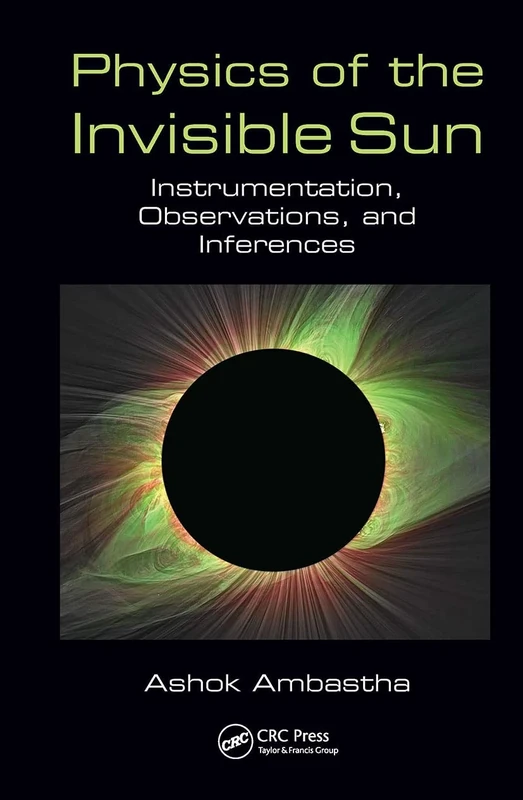
Physics of the Invisible Sun: Instrumentation, Observations, and Inferences
CRC Press
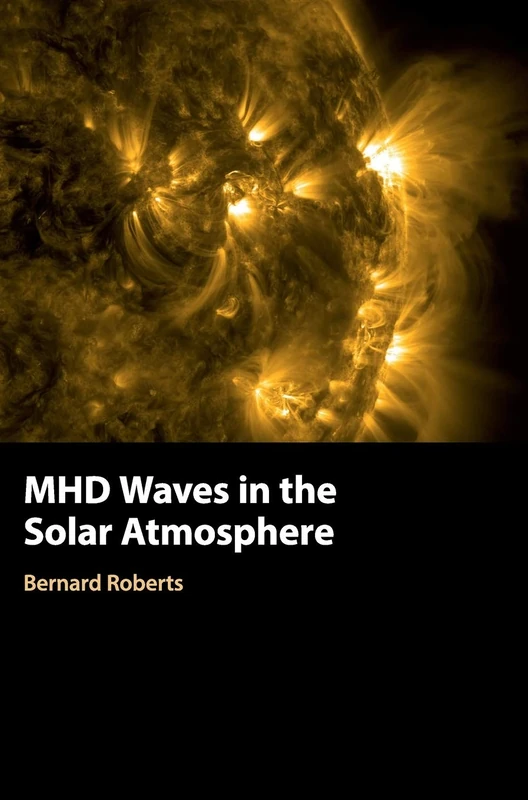
MHD Waves in the Solar Atmosphere
Cambridge University Press

Fast Solar Wind Driven by Parametric Decay Instability and Alfvén Wave Turbulence (Springer Theses)
Springer

Basics of the Solar Wind (Cambridge Atmospheric and Space Science Series)
Cambridge University Press
Physics of Solar System Plasmas (Cambridge Atmospheric and Space Science Series)
Cambridge University Press

Solar Prominences: 415 (Astrophysics and Space Science Library, 415)
Springer

Space Physics: An Introduction
Cambridge University Press
Space Weather: Research Towards Applications in Europe: 344 (Astrophysics and Space Science Library, 344)
Springer

Solar Eruptions and Energetic Particles: 165 (Geophysical Monograph Series)
American Geophysical Union