£108.95

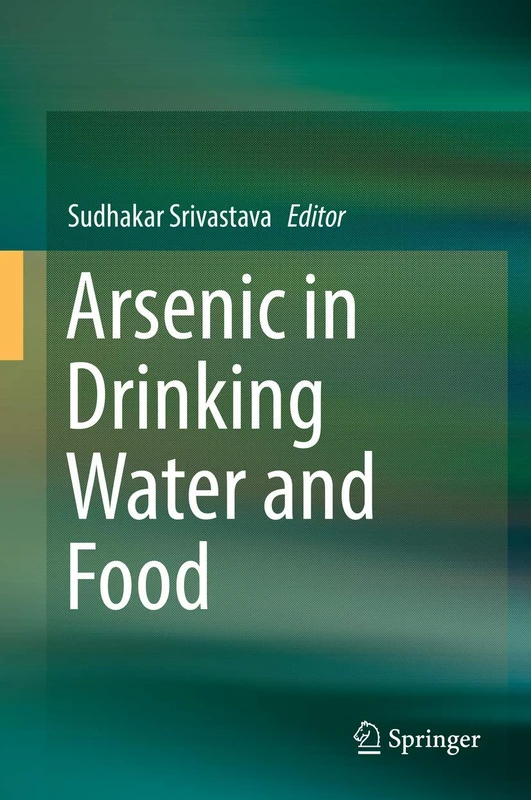
Springer Arsenic in Drinking Water and Food

Price data last checked 55 day(s) ago - refreshing...

View at Amazon

We'll watch every seller, every day. One email when your price arrives.

This is the most expensive it has ever been. Walk away.

£109 today · previous high £109 · all-time low £100

NEW HERE?

Amazon shows you one price. We show you all of them.

Tosheroon watches Amazon prices so you don't have to. Every product on Amazon has a price history — we make it visible. Set the price you'd actually pay, and we'll email you the second it gets there. No app, no account, one email.

WHAT'S ON THIS PAGE

↓ Price chart
when this has been cheap or pricey
↓ Forecast
where the price is heading next
↓ Statistics
all-time high & low, recent range
↑ Price alert
name your number, we'll email you

Price History & Forecast

Grey patches = out of stock. Cheaper = lower on the chart. Hover for exact prices.

Last 36 days · 36 data points (no recent data)

Historical
Generating forecast…
£108.95 £98.61 £100.87 £103.12 £105.38 £107.63 £109.89 10 June 2026 18 June 2026 27 June 2026 06 July 2026 15 July 2026

Price Distribution

Price distribution over 36 days • 2 price levels

Days at Price
Current Price
35 days 1 day · current 0 9 18 26 35 £100 £109 Days at Price

Price Analysis

Most common price: £100 (35 days, 97.2%)

Price range: £100 - £109

Price levels: 2 different prices over 36 days

Description

Arsenic contamination poses a major environmental problem, especially in Southeast Asian countries like Bangladesh and India. Threatening the health of millions of people due to arsenic’s toxicity and carcinogenicity, the major routes of arsenic exposure for humans are either through drinking water or crops. Rice is the crop most affected by arsenic owing to its cultivation in major arsenic contaminated areas, biogeochemical factors in the soil during rice growth, and specific features of rice that enable it take up more arsenic than other crop plants. This book addresses the problem of arsenic by pursuing a holistic approach. It presents the status quo in different parts of the world (North and South America, Europe, Asia, etc.) and provides essential information on food-related arsenic exposure risks for humans, and possible preventive and curative measures for tackling arsenic poisoning. It covers the arsenic contamination status of rice, rice-based products, other vegetables, fishes, mushrooms, and other foods, with a special focus on rice-arsenic interactions. The mechanisms of arsenic uptake, translocation and distribution in plants and grains are also explained. In closing, the book reviews a variety of prospective agronomic and biotechnological solutions to the problem of arsenic accumulation in rice grains. The book is intended for a broad audience including researchers, scientists, and readers with diverse backgrounds including agriculture, environmental science, food science, environmental management, and human health. It can also be used as an important reference guide for undergraduate and graduate students, university faculties, and environmentalists. From the Back Cover Arsenic contamination poses a major environmental problem, especially in Southeast Asian countries like Bangladesh and India. Threatening the health of millions of people due to arsenic’s toxicity and carcinogenicity, the major routes of arsenic exposure for humans are either through drinking water or crops. Rice is the crop most affected by arsenic owing to its cultivation in major arsenic contaminated areas, biogeochemical factors in the soil during rice growth, and specific features of rice that enable it take up more arsenic than other crop plants. This book addresses the problem of arsenic by pursuing a holistic approach. It presents the status quo in different parts of the world (North and South America, Europe, Asia, etc.) and provides essential information on food-related arsenic exposure risks for humans, and possible preventive and curative measures for tackling arsenic poisoning. It covers the arsenic contamination status of rice, rice-based products, other vegetables, fishes, mushrooms, and other foods, with a special focus on rice-arsenic interactions. The mechanisms of arsenic uptake, translocation and distribution in plants and grains are also explained. In closing, the book reviews a variety of prospective agronomic and biotechnological solutions to the problem of arsenic accumulation in rice grains. The book is intended for a broad audience including researchers, scientists, and readers with diverse backgrounds including agriculture, environmental science, food science, environmental management, and human health. It can also be used as an important reference guide for undergraduate and graduate students, university faculties, and environmentalists. About the Author Dr. Sudhakar Srivastava is presently working as an Assistant Professor at the Institute of Environment and Sustainable Development (IESD), Banaras Hindu University (BHU). He completed his M.Sc. and Ph.D. in Botany at the University of Lucknow. He also served as a Scientific Officer at Bhabha Atomic Research Centre (BARC), Mumbai from 2009 to 2014. He has more than sixteen years of research experience in the field of plant-metal interactions, with a major focus on arsenic stress responses in plants. He has published

Product Specifications

Format
hardcover
Domain
Amazon UK
Release Date
24 August 2019
Listed Since
30 April 2019

Barcode

No barcode data available