We can't find the internet
Attempting to reconnect
Something went wrong
Hang in there while we get back on track

£81.94
This is the most expensive it has ever been. Walk away.
£82 today · previous high £82 · all-time low £80
Scientific Publishing Statistical Mechanics And Scientific Explanation: Determinism, Indeterminism And Laws Of Nature
We'll watch every seller, every day. One email when your price arrives.
Price History & Forecast
Grey patches = out of stock. Cheaper = lower on the chart. Hover for exact prices.
Last 56 days · 56 data points (no recent data)
NEW HERE?
Amazon shows you one price. We show you all of them.
Tosheroon watches Amazon prices so you don't have to. Every product on Amazon has a price history — we make it visible. Set the price you'd actually pay, and we'll email you the second it gets there. No app, no account, one email.
WHAT'S ON THIS PAGE
when this has been cheap or pricey
where the price is heading next
all-time high & low, recent range
name your number, we'll email you
Price Distribution
Price distribution over 56 days • 3 price levels
Price Analysis
Most common price: £81 (41 days, 73.2%)
Price range: £80 - £82
Price levels: 3 different prices over 56 days
Description
Product Specifications
- Brand
- Scientific Publishing
- Format
- hardcover
- ASIN
- 981121171X
- Domain
- Amazon UK
- Release Date
- 10 April 2020
- Listed Since
- 05 September 2019
Barcode
No barcode data available
Similar Products You Might Like

Introduction To Statistical Mechanics
World Scientific Publishing Company

Theoretical Physics and Philosophical Problems: Selected Writings: 5 (Vienna Circle Collection, 5)
Springer

Entropy Beyond the Second Law: Thermodynamics and statistical mechanics for equilibrium, non-equilibrium, classical, and quantum systems (IOP Expanding Physics)
IOP Publishing

Fully Chaotic Maps and Broken Time Symmetry: 4 (Nonlinear Phenomena and Complex Systems, 4)
Springer
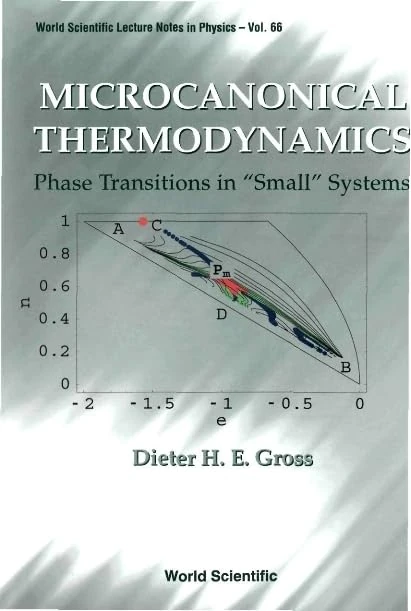
MICROCANONICAL THERMODYNAMICS: PHASE TRANSITIONS IN "SMALL" SYSTEMS: 66 (WORLD SCIENTIFIC LECTURE NOTES IN PHYSICS)
Scientific Publishing

Non-Equilibrium Statistical Mechanics
CRC Press

The Boltzmann Equation: Theory and Applications - Springer
Springer

Making Sense of Statistical Mechanics (Undergraduate Lecture Notes in Physics)
Springer

A Dynamical Systems Theory of Thermodynamics: 1 (Princeton Series in Applied Mathematics)
Princeton University Press

From Microphysics to Macrophysics: Methods and Applications of Statistical Physics. Volume I: 1 (Theoretical and Mathematical Physics)
Springer

Atoms, Mechanics, and Probability: Ludwig Boltzmann's Statistico-Mechanical Writings - An Exegesis
Oxford University Press

An Introduction to Statistical Mechanics and Thermodynamics (Oxford Graduate Texts)
Oxford University Press
Statistical Thermodynamics: An Information Theory Approach
Wiley

Kinetic Boltzmann, Vlasov and Related Equations
Elsevier
Statistical Mechanics for Physicists and Mathematicians
Cambridge University Press
Oxford Statistical Mechanics and Thermodynamics Textbook
Oxford University Press

The Mathematical Theory of Dilute Gases: 106 (Applied Mathematical Sciences, 106)
Springer

Statistical Mechanics: Thermodynamics to Renormalization Group
CRC Press

Nonextensive Statistical Mechanics and Its Applications: 560 (Lecture Notes in Physics, 560)
Springer

Stochastic Dynamics and Boltzmann Hierarchy (De Gruyter Expositions in Mathematics): 48
De Gruyter
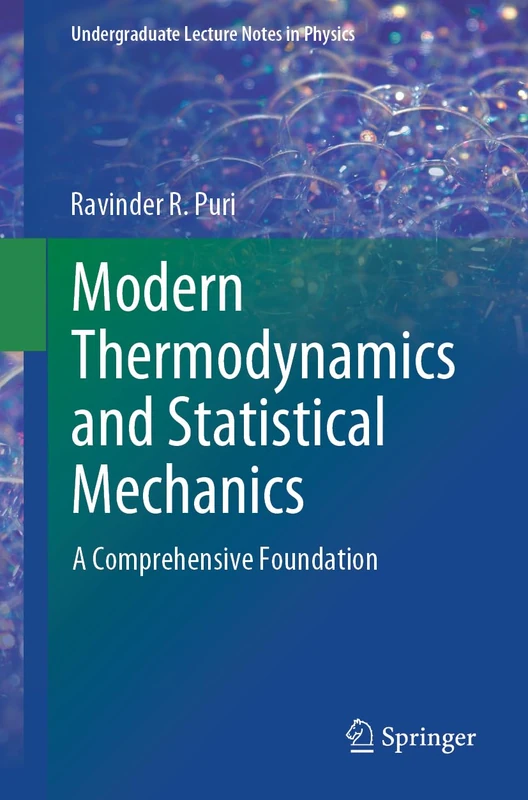
Modern Thermodynamics and Statistical Mechanics: A Comprehensive Foundation (Undergraduate Lecture Notes in Physics)
Springer
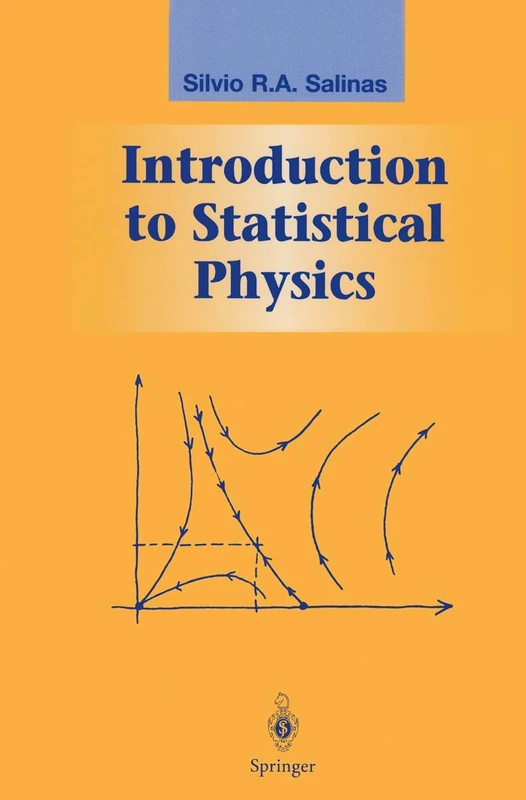
Introduction to Statistical Physics (Graduate Texts in Contemporary Physics)
Springer
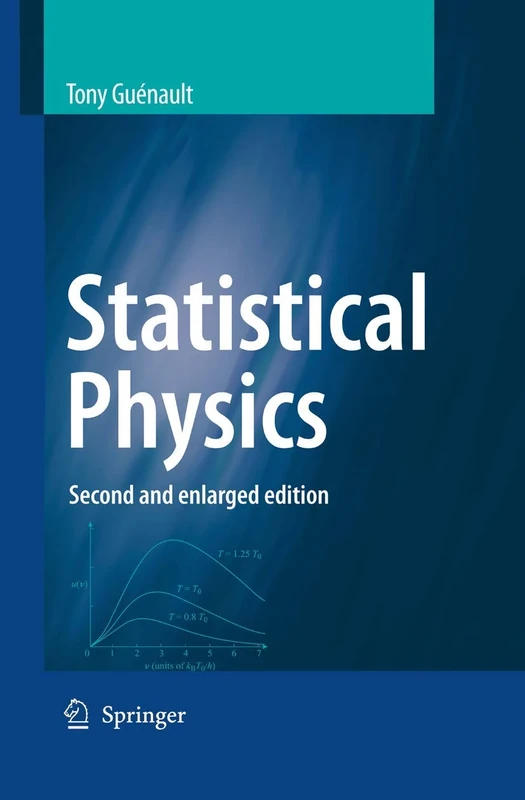
Statistical Physics (Student Physics Series)
Springer

Equilibrium and Non-Equilibrium Statistical Thermodynamics
Cambridge University Press