£147.51

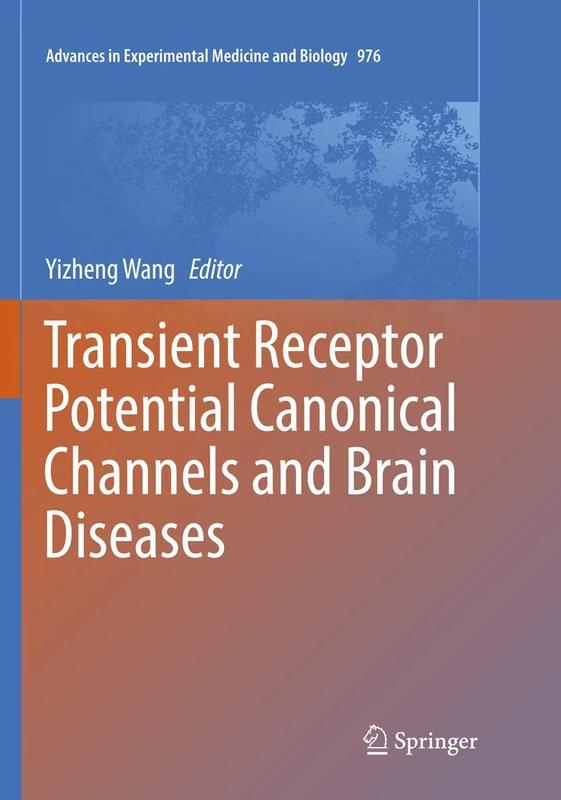
Springer Transient Receptor Potential Canonical Channels and Brain Diseases: 976 (Advances in Experimental Medicine and Biology, 976)

Price data last checked 11 day(s) ago - will refresh soon

View at Amazon

We'll watch every seller, every day. One email when your price arrives.

It has never been this cheap. We have no record of a lower price.

£148 today · cheaper than every other day in the last 3 months

NEW HERE?

Amazon shows you one price. We show you all of them.

Tosheroon watches Amazon prices so you don't have to. Every product on Amazon has a price history — we make it visible. Set the price you'd actually pay, and we'll email you the second it gets there. No app, no account, one email.

WHAT'S ON THIS PAGE

↓ Price chart
when this has been cheap or pricey
↓ Forecast
where the price is heading next
↓ Statistics
all-time high & low, recent range
↑ Price alert
name your number, we'll email you

Price History & Forecast

Grey patches = out of stock. Cheaper = lower on the chart. Hover for exact prices.

Last 80 days · 80 data points (no recent data)

Historical
Generating forecast…
£147.51 £140.13 £143.08 £146.03 £148.99 £151.94 £154.89 28 April 2026 17 May 2026 06 June 2026 26 June 2026 16 July 2026

Price Distribution

Price distribution over 80 days • 1 price levels

Days at Price
80 days 0 20 40 60 80 £148 Days at Price

Price Analysis

Most common price: £148 (80 days, 100.0%)

Price range: £148 - £148

Price levels: 1 different prices over 80 days

Description

This book discusses the latest findings on the physiological and pathological functions of transient receptor potential canonical/classical (TRPC) proteins in the brain. In addition to reviewing the functions of TRPCs in brain development and neuron transmission, it mainly covers the potential roles of TRPCs in brain disorders. TRPC proteins belong to the TRP channel superfamily, which has around 30 members. Just like TRP channels, TRPCs are non-selectively permeable to cations, with a selectivity of calcium over sodium that varies among different members. The TRPC subfamily consists of six members, grouped on the basis of the similarities in gene sequence and protein structure in mammalians. What sets TRPCs apart from other subfamilies in TRPs is that their activation, stimulated by a membrane receptor-phospholipid C (PLC) cascade, contributes to the slow and sustained elevation of intracellular free calcium. Calcium ions, one of the most important types of second messengers, mediate a variety of physiological functions in the brain, including progenitor cell proliferation, dendritic formation, synaptic transmission and neuronal survival. All TRPCs except TRPC7 have been found in various regions of the brain, including the cerebrum, cerebellum, forebrain and hippocampus. This book provides students and investigators with comprehensive information on the regulation, function and potential of TRPCs and brain diseases in order to attract more attention to this field. From the Back Cover This book discusses the latest findings on the physiological and pathological functions of transient receptor potential canonical/classical (TRPC) proteins in the brain. In addition to reviewing the functions of TRPCs in brain development and neuron transmission, it mainly covers the potential roles of TRPCs in brain disorders. TRPC proteins belong to the TRP channel superfamily, which has around 30 members. Just like TRP channels, TRPCs are non-selectively permeable to cations, with a selectivity of calcium over sodium that varies among different members. The TRPC subfamily consists of six members, grouped on the basis of the similarities in gene sequence and protein structure in mammalians. What sets TRPCs apart from other subfamilies in TRPs is that their activation, stimulated by a membrane receptor-phospholipid C (PLC) cascade, contributes to the slow and sustained elevation of intracellular free calcium. Calcium ions, one of the most important types of second messengers, mediate a variety of physiological functions in the brain, including progenitor cell proliferation, dendritic formation, synaptic transmission and neuronal survival. All TRPCs except TRPC7 have been found in various regions of the brain, including the cerebrum, cerebellum, forebrain and hippocampus. This book provides students and investigators with comprehensive information on the regulation, function and potential of TRPCs and brain diseases in order to attract more attention to this field. About the Author  Dr. Yizheng Wang is a senior investigator at the Institute of Neuroscience, Shanghai Institutes for Biological Sciences, Chinese Academy of Sciences. He is the leader of the Laboratory of Neuronal Signal Transduction and an executive director of the Chinese Society for Neuroscience and Chinese Society of Biochemistry and Molecular Biology. His research focuses on the function and regulation of TRPC channels in neural development and diseases, a field in which he has published more than 40 research articles.

Product Specifications

Barcode

No barcode data available