£109.20

This is the most expensive it has ever been. Walk away.

£109 today · previous high £109 · all-time low £108

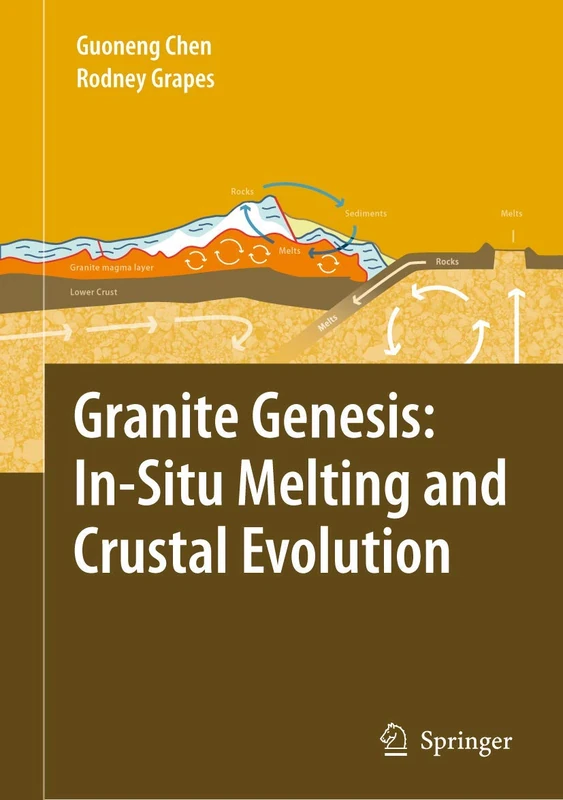
Springer Granite Genesis: In-Situ Melting and Crustal Evolution

Amazon

Price History & Forecast

Grey patches = out of stock. Cheaper = lower on the chart. Hover for exact prices.

Last 70 days · 70 data points (no recent data)

Historical
Generating forecast…
£109.20 £107.58 £107.94 £108.29 £108.64 £108.99 £109.35 25 July 2026 11 August 2026 28 August 2026 14 September 2026 02 October 2026
View at Amazon ↗

Price data last checked 21 day(s) ago - will refresh soon

NEW HERE?

Amazon shows you one price. We show you all of them.

Tosheroon watches Amazon prices so you don't have to. Every product on Amazon has a price history — we make it visible. Set the price you'd actually pay, and we'll email you the second it gets there. No app, no account, one email.

WHAT'S ON THIS PAGE

↑ Price chart
when this has been cheap or pricey
↑ Forecast
where the price is heading next
↓ Statistics
all-time high & low, recent range
↑ Price alert
name your number, we'll email you

Price Distribution

Price distribution over 70 days • 2 price levels

Days at Price
Current Price
69 days 1 day · current 0 17 35 52 69 £108 £109 Days at Price

Price Analysis

Most common price: £108 (69 days, 98.6%)

Price range: £108 - £109

Price levels: 2 different prices over 70 days

Description

Granitic rocks are a major component of the continental crust and the many and complex problems of their origin that have confronted geologists for over 200 years still are presenting challenges today. Current ideas of granite formation involve lower crustal melting, segregation, ascent (as dykes or diapirs) and emplacement in the upper crust. In this book we suggest an alternative model for the origin of granite in terms of in-situ melting-intracrustal convection that physically determines the process from partial melting of mid-upper crustal rocks to formation of a convecting magma layer. We illustrate the model using geological, geochemical and geophysical studies from Australia, North and South America, Europe and China, and conclude that heat convection within a crustal partial melt layer is essential for the formation of granite magma and that without convection, partial melting of rocks produces migmatites rather than granites. Granite is layer-like within the crust, and shape and size of granite bodies reflect the geometric relationship between an irregular upper surface of the crystallised magma layer and depth of erosion. Repeated melting of the crust generates downward-younging granite sequences. Chemical and isotopic compositions of granites indicate differentiation within the magma rather than different deep sources. Of a number of proposed heat sources that can cause mid-upper crustal anatexis, large-scale crustal melting and formation of a granite magma layer is considered to be primarily related to plate convergence. A dynamic model with examples from the western Pacific continental margin in SE China and Tethys-Tibet is proposed to explain the relationship between plate convergence, granite and compressive deformation of the continental crust. Mineralisation related to granite formation, fault-block basins, formation of continental red beds and volcanism with examples from SE China, are also discussed in terms of the new model. In a final section, we introduce a new rock cycling model of the continental crust and the concept of Geochemical Fields of Elements, illustrating the unity between the microcosm and macrocosm of the natural world. Audience: This book will be of interest to scientists, researchers and students in geology, geophysics, geochemistry and economic geology

Product Specifications

Format
paperback
Domain
Amazon UK
Release Date
19 October 2010
Listed Since
01 October 2010

Barcode

No barcode data available