We can't find the internet
Attempting to reconnect
Something went wrong!
Hang in there while we get back on track

£147.40
Springer Mass Terms: Some Philosophical Problems: 6 (Studies in Linguistics and Philosophy, 6)
Price data last checked 183 day(s) ago - refreshing...
We'll watch every seller, every day. One email when your price arrives.
About as cheap as it gets. The only time it was cheaper was 2 years ago.
£147 today · all-time low £141 (Jun 2024) · usually the usual
NEW HERE?
Amazon shows you one price. We show you all of them.
Tosheroon watches Amazon prices so you don't have to. Every product on Amazon has a price history — we make it visible. Set the price you'd actually pay, and we'll email you the second it gets there. No app, no account, one email.
WHAT'S ON THIS PAGE
when this has been cheap or pricey
where the price is heading next
all-time high & low, recent range
name your number, we'll email you
Price History & Forecast
Grey patches = out of stock. Cheaper = lower on the chart. Hover for exact prices.
Last 548 days • 548 data points (No recent data available)
Price Distribution
Price distribution over 548 days • 6 price levels
Price Analysis
Most common price: £144 (234 days, 42.7%)
Price range: £141 - £160
Price levels: 6 different prices over 548 days
Description
Product Specifications
- Brand
- Springer
- Format
- hardcover
- ASIN
- 9027709319
- Domain
- Amazon UK
- Release Date
- 31 March 1979
- Listed Since
- 12 January 2007
Barcode
No barcode data available
Similar Products You Might Like

Mass Terms: Some Philosophical Problems: 6 (Studies in Linguistics and Philosophy, 6)
Springer
Count and Mass Across Languages: 42 (Oxford Studies in Theoretical Linguistics)
Oxford University Press
Semantics for Counting and Measuring (Key Topics in Semantics and Pragmatics)
Cambridge University Press
Iceberg Semantics for Mass Nouns and Count Nouns: A New Framework for Boolean Semantics: 105 (Studies in Linguistics and Philosophy, 105)
Springer

Tracing the Life Cycle of Ideas in the Humanities and Social Sciences (Quantitative Methods in the Humanities and Social Sciences)
Springer
Intermediate Quantities: Logic, Linguistics and Aristotelian Semantics (Routledge Revivals)
Routledge

Countability in Natural Language
Cambridge University Press
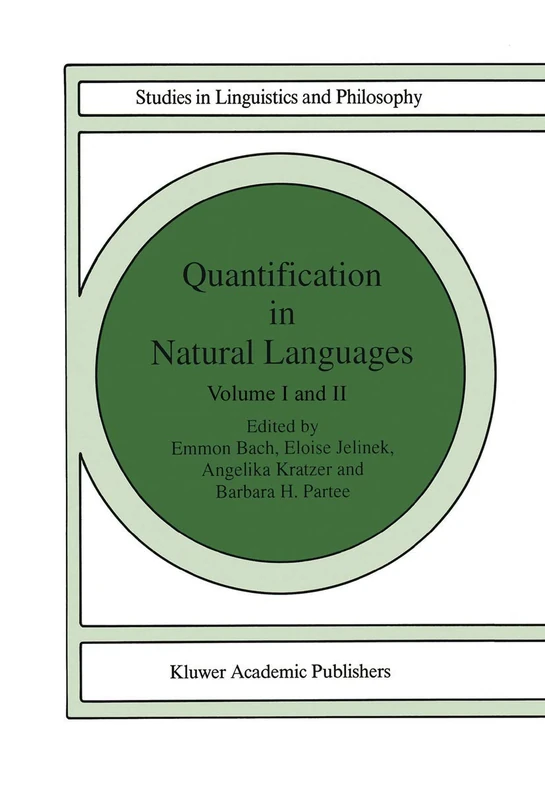
Quantification in Natural Languages: Volume I: 54 (Studies in Linguistics and Philosophy, 54)
Springer
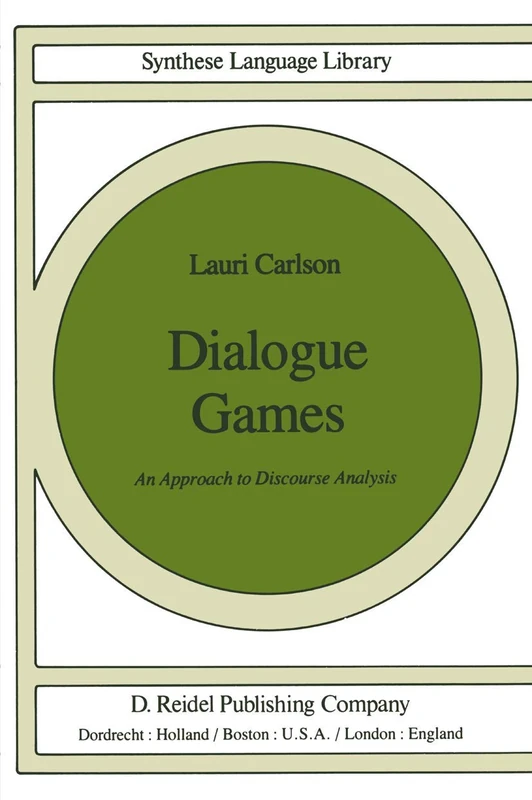
Springer - Dialogue Games: An Approach to Discourse Analysis
Springer
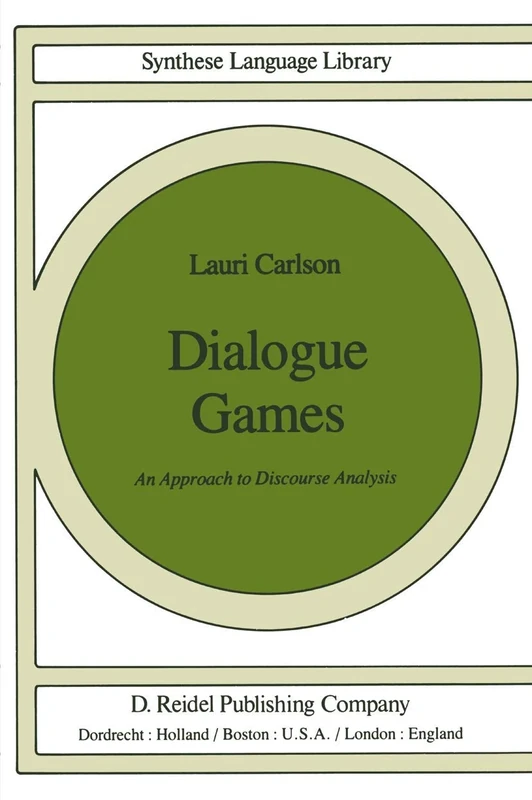
Dialogue Games: An Approach to Discourse Analysis: 17 (Studies in Linguistics and Philosophy, 17)
Springer
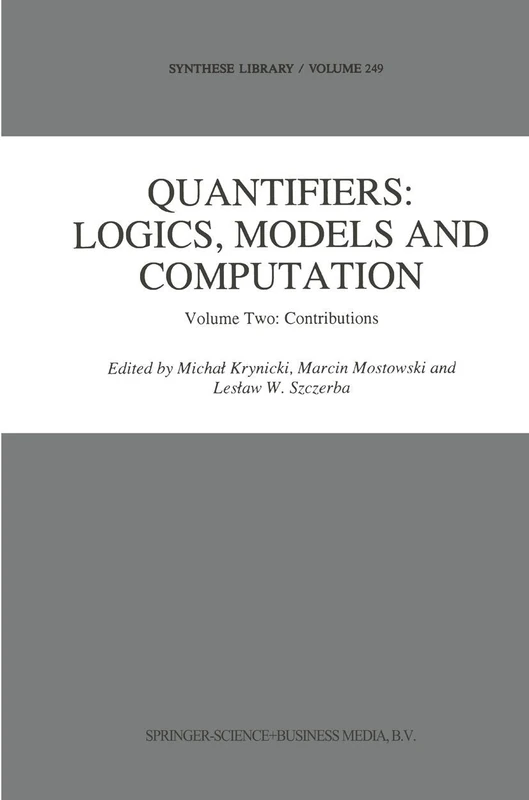
Quantifiers: Logics, Models and Computation: Volume Two: Contributions: 249 (Synthese Library, 249)
Springer

Handbook of Computational Social Science - Vol 1 & Vol 2: 1-2 (European Association of Methodology Series)

Neoliberalism, the Security State, and the Quantification of Reality
Lexington Books

The Pandemic of Argumentation: 43 (Argumentation Library, 43)
Springer

Springer Quantificational Topics - Scopal Treatment Book 86
Springer
Count and Mass Across Languages (Oxford Studies in Theoretical Linguistics): 42
Oxford University Press

Binominal Quantifiers in Spanish: Conceptually-driven Analogy in Diachrony and Synchrony: 391 (Beihefte zur Zeitschrift fur Romanische Philologie, 391)
De Gruyter

New Trends in Computational Collective Intelligence: 572 (Studies in Computational Intelligence, 572)
Springer

Discourse, Structure and Linguistic Choice: The Theory and Applications of Molecular Sememics: 101 (Studies in Linguistics and Philosophy, 101)
Springer

The Many and the One: A Philosophical Study of Plural Logic
Oxford University Press
Best Practices in Quantitative Methods
Sage Publications

Advanced Technology in Teaching: Selected papers from the 2012 International Conference on Teaching and Computational Science (ICTCS 2012): 163 (Advances in Intelligent and Soft Computing, 163)
Springer

Quantitative Logic and Soft Computing 2016: Proceedings of the 4th International Conference on Quantitative Logic and Soft Computing (QLSC2016) held ... in Intelligent Systems and Computing, 510)
Springer

Routledge Partition and Quantity - Mandarin Chinese Linguistics
Routledge