We can't find the internet
Attempting to reconnect
Something went wrong!
Hang in there while we get back on track
Price loading...
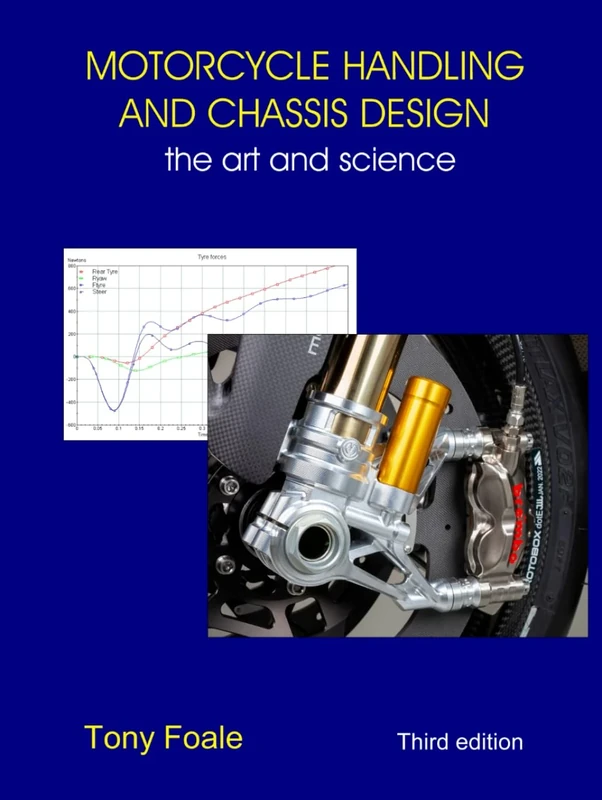
MOTORCYCLE HANDLING AND CHASSIS DESIGN: the art and science
Price data last checked 102 day(s) ago - refreshing...
Price History & Forecast
No Price Data Available
Price history will appear here once data is collected from Amazon.
Price Distribution
No price data available for histogram
Description
MOTORCYCLE HANDLING AND CHASSIS DESIGN gives a thorough explanation of the structure and performance of motorcycle frames and other chassis components. Written with the minimum of mathematics to appeal to the widest possible range of enthusiasts, from engineer to the layman, it is nevertheless based on sound principles of physics. Illustrated profusely with photos, diagrams and many graphs it gives a clear account of the many factors involved in motorcycle handling behaviour. In a simple logical step by step process it leads the reader through the details of tyre behaviour, anti-squat geometry, suspension characteristics plus much more, including the first widely published description of the detail mechanism of the lean-in process. Showing exactly just what part gyroscopic reactions and tyre forces play in this vitally important topic. 520 information packed pages and over 550 illustrations. Foreword by Kevin Cameron. Technical editor Cycle World magazine. The motorcycle is a complex system that has long defied full analysis. For a very long time, motorcycle handing was hardly even considered a subject. Engines, whose performance could be measured in "objective" terms, therefore received the lion's share of development. Engine development moved rapidly ahead of chassis, suspension, and tires, creating a succession of design crises that required new thought for their solution. Examples might be Rex McCandless's twin-loop swingarm chassis of 1950, Tony Mills wide, belted Dunlop Daytona tire of 1974, and the present-day elaborations of Antonio Cobas's large-section aluminium twin-beam chassis of the early 1980s. ........ Yet motorcycle performance is at present again deadlocked, with no sunny uplands of easy progress in sight. As motorcycles lean over farther on their wonderful tires, their suspensions turn sideways, at a large angle to the bumps they are designed to absorb. As engine and brake torque is applied, motorcycles short enough to turn quickly, and tall enough for adequate cornering clearance suddenly lift the front or rear wheel, limiting maximum rates of acceleration and deceleration. While autos present 100% of the width of their tires to the pavement, the motorcycle offers only 1/3 of tread width at a time, severely limiting cornering grip. To make motorcycles steer well, front tires must be of modest section, while rears, to apply engine power, must be large. With the forward CG position necessary for rapid acceleration, a powerful motorcycle must therefore overload its small front tire in cornering, while under-using its larger rear. The result is that as a machine's power increases, its corner speed must decrease. Racing is the environment in which these problems hurt worst, and from which solutions have most often come. Racing has, however, evolved from a sport into a conservative business. The practical men of racing are now too busy loading and unloading their beautifully painted transport trucks to have much time for innovation. The theoreticians remain, as ever, divorced from practicality, often ignorant of the real problems motorcycles confront. Yet the infinite refinement of the piston internal combustion engine did not create the gas turbine - only a careful consideration of theoretical heat engine cycles could make that leap. Therefore the practical and theoretical sides need each other - but they have had little dialogue thus far. This book is a valuable step toward that dialog. Tony Foale's first book was almost entirely practical, and has been deservedly widely read. He is a man who can control a weld puddle and twist safety wire. He also knows that refinement within existing thought must ultimately reach a dead end. This has forced him to learn to walk with one foot upon practicalities and the other upon theory. This new book is the result. Read on.
Product Specifications
- Format
- hardcover
- ASIN
- 8493328677
- Domain
- Amazon UK
- Release Date
- 27 August 2025
- Listed Since
- 28 August 2025
Barcode
No barcode data available
Similar Products You Might Like

99% match
MOTORCYCLE HANDLING AND CHASSIS DESIGN: the art a science

£51.54
01 Feb 2026
94% match
Introduction to Torque Management in Race Motorbikes
£54.42
13 Jan 2026
93% match
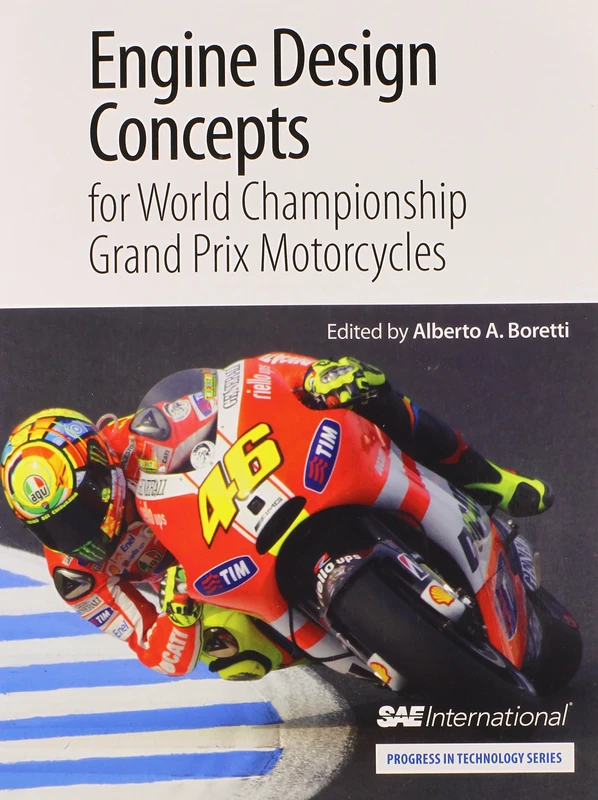
Engine Design Concepts for World Championship Grand Prix Motorcycles (Progress in Technology Series)

£95.50
08 Jan 2026
93% match
Aesthetics: Quantification and Deconstruction: A Case Study in Motorcycles (Design Science and Innovation)
Springer
£72.40
29 Jan 2026
93% match
Motorbike Suspensions: Modern design and optimisation (SpringerBriefs in Applied Sciences and Technology)
Springer
£46.53
15 Apr 2026
93% match
Motorcycle Tuning: Chassis
Butterworth-Heinemann
£45.79
06 Mar 2026
93% match
Sechspunktige Kreisführungen durch das Gelenkviereck: 1245 (Forschungsberichte des Landes Nordrhein-Westfalen, 1245)
VS Verlag für Sozialwissenschaften
£45.89
07 Mar 2026
92% match
Rennwagentechnik - Praxislehrgang Fahrdynamik: Eine praktische Anleitung für Amateure und Profis: 6 (Handbuch Rennwagentechnik, 6)
Springer
£89.99
08 Mar 2026