£92.20

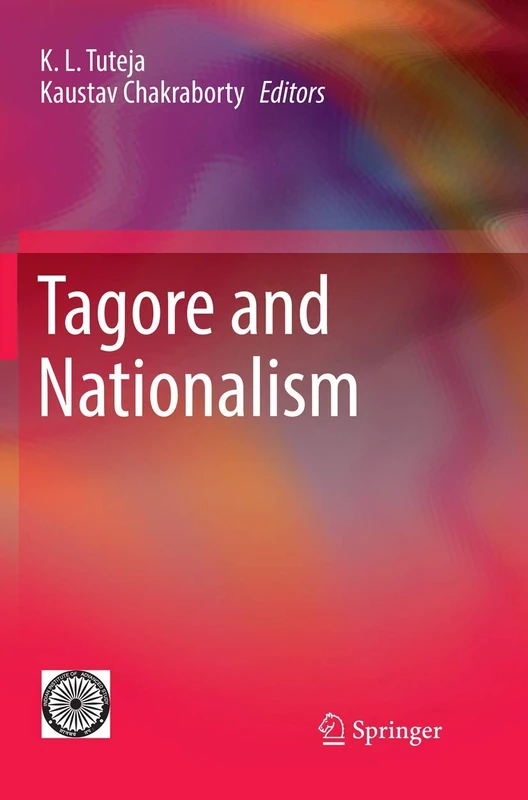
Springer Tagore and Nationalism

Price data last checked 12 day(s) ago - will refresh soon

View at Amazon

We'll watch every seller, every day. One email when your price arrives.

This is the most expensive it has ever been. Walk away.

£92 today · previous high £92 · all-time low £92

NEW HERE?

Amazon shows you one price. We show you all of them.

Tosheroon watches Amazon prices so you don't have to. Every product on Amazon has a price history — we make it visible. Set the price you'd actually pay, and we'll email you the second it gets there. No app, no account, one email.

WHAT'S ON THIS PAGE

↓ Price chart
when this has been cheap or pricey
↓ Forecast
where the price is heading next
↓ Statistics
all-time high & low, recent range
↑ Price alert
name your number, we'll email you

Price History & Forecast

Grey patches = out of stock. Cheaper = lower on the chart. Hover for exact prices.

Last 79 days · 79 data points (no recent data)

Historical
Generating forecast…
£92.20 £91.78 £91.87 £91.96 £92.06 £92.15 £92.24 29 April 2026 18 May 2026 07 June 2026 26 June 2026 16 July 2026

Price Distribution

Price distribution over 79 days • 1 price levels

Days at Price
79 days 0 20 40 59 79 £92 Days at Price

Price Analysis

Most common price: £92 (79 days, 100.0%)

Price range: £92 - £92

Price levels: 1 different prices over 79 days

Description

This volume brings together eminent Tagore scholars and younger writers to revisit the concepts of nation, nationalism, identity and selfhood, civilization, culture and homeland in Tagore’s writings. As these ideas take up the centre-stage of politics in the subcontinent as also elsewhere in the world in the 21st century, it becomes extremely relevant to revisit his works in this context.  Tagore’s ambivalence towards nationalism as an ideology was apparent in the responses in his discussions with Indians and non-Indians alike. Tagore developed the concept of ‘syncretic’ civilization as a basis of nationalist civilizational unity, where society was central, unlike the European model of state-centric civilization. However, as the subterranean tensions of communalism became clear in the early 20th century, Tagore reflexively critiqued his own political position in society. He thus emerged as the critic of the nation/nation-state and in this he shared his deep unease with other thinkers like Romain Rolland and Albert Einstein.  This volume for the first time covers the socio-political, historical, literary and cultural concerns relating to Tagore’s efforts towards the 'de-colonization' of the Self. The volume begins with various perspectives on Tagore’s ‘ambivalence’ about nationalism. It encompasses critical examinations of Tagore’s literary works and other art forms as well as adaptations of his works on film. It also reads Tagore’s nationalism in a comparative mode with contemporary thinkers in India and abroad who were engaged in similar debates. From the Back Cover This volume brings together eminent Tagore scholars and younger writers to revisit the concepts of nation, nationalism, identity and selfhood, civilization, culture and homeland in Tagore’s writings. As these ideas take up the centre-stage of politics in the subcontinent as also elsewhere in the world in the 21st century, it becomes extremely relevant to revisit his works in this context.  Tagore’s ambivalence towards nationalism as an ideology was apparent in the responses in his discussions with Indians and non-Indians alike. Tagore developed the concept of ‘syncretic’ civilization as a basis of nationalist civilizational unity, where society was central, unlike the European model of state-centric civilization. However, as the subterranean tensions of communalism became clear in the early 20th century, Tagore reflexively critiqued his own political position in society. He thus emerged as the critic of the nation/nation-state and in this he shared his deep unease with other thinkers like Romain Rolland and Albert Einstein.  This volume for the first time covers the socio-political, historical, literary and cultural concerns relating to Tagore’s efforts towards the 'de-colonization' of the Self. The volume begins with various perspectives on Tagore’s ‘ambivalence’ about nationalism. It encompasses critical examinations of Tagore’s literary works and other art forms as well as adaptations of his works on film. It also reads Tagore’s nationalism in a comparative mode with contemporary thinkers in India and abroad who were engaged in similar debates. About the Author K.L. Tuteja, PhD, is Former Professor of Modern Indian History at Kurukshetra University, Kurukshetra and currently, Tagore Fellow at the Indian Institute of Advanced Study, Shimla.   Kaustav Chakraborty, PhD, is Assistant Professor and Head, Department of English, Southfield (Loreto) College, Darjeeling, West Bengal. He has completed a major Research Project on tribal folklore sponsored by the University Grants Commission and is the editor of the Prentice Hall, India edition of Indian Drama in English. Presently, he is a fellow at IIAS, Shimla.

Product Specifications

Format
paperback
Domain
Amazon UK
Release Date
25 July 2018
Listed Since
25 July 2018

Barcode

No barcode data available