£145.86

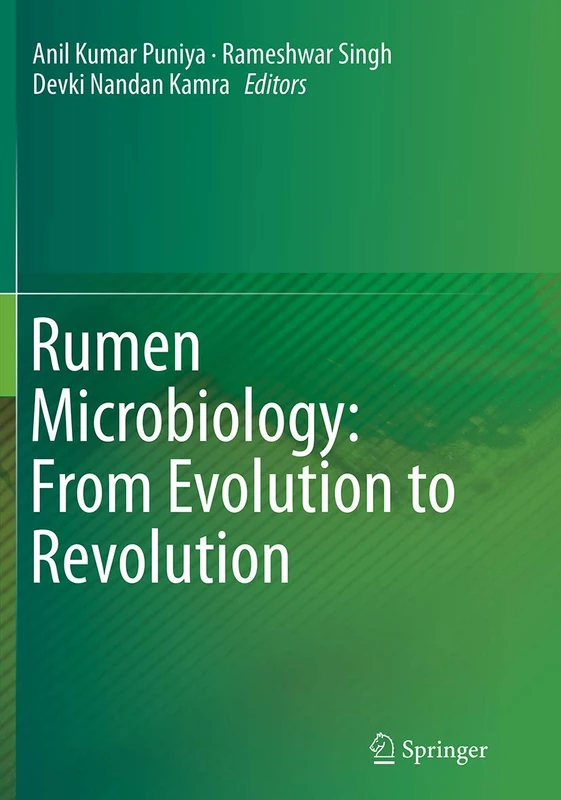
Springer Rumen Microbiology: From Evolution to Revolution

Price data last checked 9 day(s) ago - will refresh soon

View at Amazon

We'll watch every seller, every day. One email when your price arrives.

This is the most expensive it has ever been. Walk away.

£146 today · previous high £146 · all-time low £141

NEW HERE?

Amazon shows you one price. We show you all of them.

Tosheroon watches Amazon prices so you don't have to. Every product on Amazon has a price history — we make it visible. Set the price you'd actually pay, and we'll email you the second it gets there. No app, no account, one email.

WHAT'S ON THIS PAGE

↓ Price chart
when this has been cheap or pricey
↓ Forecast
where the price is heading next
↓ Statistics
all-time high & low, recent range
↑ Price alert
name your number, we'll email you

Price History & Forecast

Grey patches = out of stock. Cheaper = lower on the chart. Hover for exact prices.

Last 82 days · 82 data points (no recent data)

Historical
Generating forecast…
£145.86 £141.00 £142.06 £143.12 £144.18 £145.24 £146.30 26 April 2026 16 May 2026 05 June 2026 25 June 2026 16 July 2026

Price Distribution

Price distribution over 82 days • 3 price levels

Days at Price
Current Price
13 days 34 days 35 days · current 0 9 18 26 35 £141 £143 £146 Days at Price

Price Analysis

Most common price: £146 (35 days, 42.7%)

Price range: £141 - £146

Price levels: 3 different prices over 82 days

Description

This book offers an in-depth description of different groups of microbes (i.e. bacteria, protozoa, fungi and viruses) that exist in the rumen microbial community, and offers an overview of rumen microbiology, the rumen microbial ecosystem of domesticated ruminants, and rumen microbial diversity. It provides the latest concepts on rumen microbiology for scholars, researchers and teachers of animal and veterinary sciences. With this goal in mind, throughout the text we focus on specific areas related to the biology and complex interactions of the microbes in rumen, integrating significant key issues in each respective area. We also discuss rumen manipulation with plant secondary metabolites, microbial feed additives, utilization of organic acids, selective inhibition of harmful rumen microbes, and ‘omics’ approaches to manipulating rumen microbial functions. A section on the exploration and exploitation of rumen microbes addresses topics including the current state of knowledge on rumen metagenomics, rumen: an underutilized niche for industrially important enzymes and ruminal fermentations to produce fuels. We next turn our attention to commercial applications of rumen microbial enzymes and to the molecular characterization of euryarcheal communities within an anaerobic digester. A section on intestinal disorders and rumen microbes covers acidosis in cattle, urea/ ammonia metabolism in the rumen and nitrate/ nitrite toxicity in ruminant diets. Last, the future prospects of rumen microbiology are examined, based on the latest developments in this area. In summary, the book offers a highly systematic collection of essential content on rumen microbiology. From the Back Cover This book offers an in-depth description of different groups of microbes (i.e. bacteria, protozoa, fungi and viruses) that exist in the rumen microbial community, and offers an overview of rumen microbiology, the rumen microbial ecosystem of domesticated ruminants, and rumen microbial diversity. It provides the latest concepts on rumen microbiology for scholars, researchers and teachers of animal and veterinary sciences. With this goal in mind, throughout the text we focus on specific areas related to the biology and complex interactions of the microbes in rumen, integrating significant key issues in each respective area. We also discuss rumen manipulation with plant secondary metabolites, microbial feed additives, utilization of organic acids, selective inhibition of harmful rumen microbes, and ‘omics’ approaches to manipulating rumen microbial functions. A section on the exploration and exploitation of rumen microbes addresses topics including the current state of knowledge on rumen metagenomics, rumen: an underutilized niche for industrially important enzymes, and ruminal fermentations to produce fuels. We next turn our attention to commercial applications of rumen microbial enzymes and to the molecular characterization of euryarcheal communities within an anaerobic digester. A section on intestinal disorders and rumen microbes covers acidosis in cattle, urea/ ammonia metabolism in the rumen, and nitrate/ nitrite toxicity in ruminant diets. Last, the future prospects of rumen microbiology are examined, based on the latest developments in this area. In summary, the book offers a highly systematic collection of essential content on rumen microbiology. About the Author Dr. Anil Puniya, Principal Scientist, ICAR-National Dairy Research Institute, Karnal contributed significantly in rumen and dairy microbiology. He received PhD from NDRI, in 1994 during which he was awarded DAAD fellowship, Germany. He developed expertise in direct-fed microbial for enhanced animal productivity besides, probiotics for controlling lifestyle diseases. He published over 120 research papers/ reviews/ book chapters of impact and 5 lab manuals. He acted as chairman, key-note/invited speaker in scientific events, nationally and internationally. He has been

Product Specifications

Format
paperback
Domain
Amazon UK
Release Date
23 October 2016
Listed Since
21 September 2017

Barcode

No barcode data available