We can't find the internet
Attempting to reconnect
Something went wrong
Hang in there while we get back on track
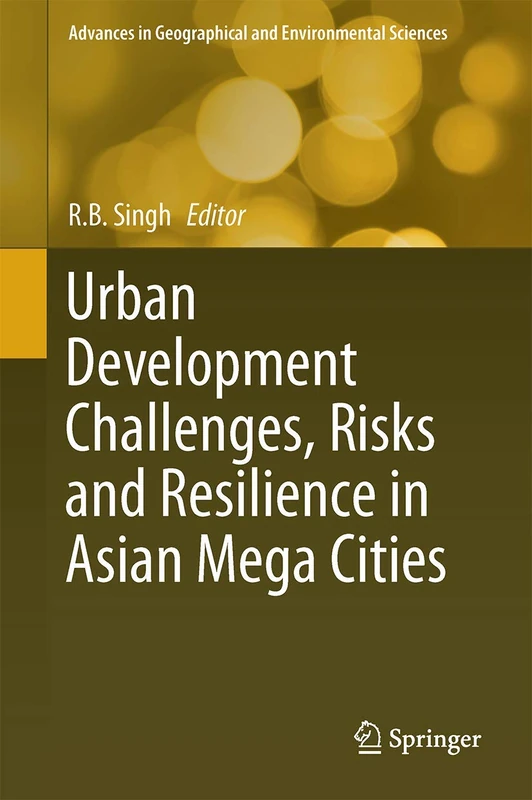
£95.39
It has never been this cheap. We have no record of a lower price.
£95 today · cheaper than every other day in the last 3 months
Springer Urban Development Challenges, Risks and Resilience in Asian Mega Cities (Advances in Geographical and Environmental Sciences)
Price data last checked 35 day(s) ago - refreshing...
We'll watch every seller, every day. One email when your price arrives.
Price History & Forecast
Grey patches = out of stock. Cheaper = lower on the chart. Hover for exact prices.
Last 56 days · 56 data points (no recent data)
Price data last checked 35 day(s) ago - refreshing...
NEW HERE?
Amazon shows you one price. We show you all of them.
Tosheroon watches Amazon prices so you don't have to. Every product on Amazon has a price history — we make it visible. Set the price you'd actually pay, and we'll email you the second it gets there. No app, no account, one email.
WHAT'S ON THIS PAGE
when this has been cheap or pricey
where the price is heading next
all-time high & low, recent range
name your number, we'll email you
Price Distribution
Price distribution over 56 days • 1 price levels
Price Analysis
Most common price: £95 (56 days, 100.0%)
Price range: £95 - £95
Price levels: 1 different prices over 56 days
Description
Product Specifications
- Brand
- Springer
- Format
- hardcover
- ASIN
- 4431550429
- Domain
- Amazon UK
- Release Date
- 04 November 2014
- Listed Since
- 22 April 2014
Barcode
No barcode data available
Similar Products You Might Like
The Challenge of Slums: Global Report on Human Settlements 2003
Routledge
Megacities: Our Global Urban Future (International Year of Planet Earth)
Springer
Cities of the Global South Reader - Routledge Urban Series
Routledge
The SAGE Companion to the City
Sage Publishing
Cities and Development (Routledge Perspectives on Development)
Routledge
Urban Ecology and Health in the Third World: 32 (Society for the Study of Human Biology Symposium Series, Series Number 32)
Cambridge University Press
Cities, Slums and Gender in the Global South: Towards a feminised urban future (Regions and Cities)
Routledge
Changing Asian Urban Geographies: Urbanism and Peripheral Areas
Routledge
Metropolitan Problems: International Perspectives: a Search for Comprehensive Solutions (Routledge Library Editions: The City)
Routledge
Beyond Kolkata: Rajarhat and the Dystopia of Urban Imagination (Cities and the Urban Imperative)
Routledge
The Rise of Megacities: Challenges & Opportunities
World Scientific Publishing Company