We can't find the internet
Attempting to reconnect
Something went wrong
Hang in there while we get back on track
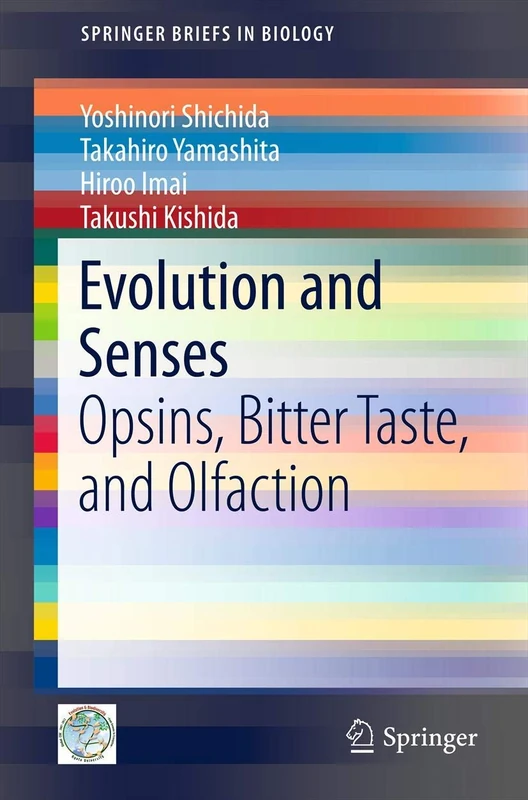
£39.98
Springer Evolution and Senses: Opsins, Bitter Taste, and Olfaction (SpringerBriefs in Biology)
Price data last checked 67 day(s) ago - refreshing...
We'll watch every seller, every day. One email when your price arrives.
It has never been this cheap. We have no record of a lower price.
£40 today · cheaper than every other day in the last 3 months
NEW HERE?
Amazon shows you one price. We show you all of them.
Tosheroon watches Amazon prices so you don't have to. Every product on Amazon has a price history — we make it visible. Set the price you'd actually pay, and we'll email you the second it gets there. No app, no account, one email.
WHAT'S ON THIS PAGE
when this has been cheap or pricey
where the price is heading next
all-time high & low, recent range
name your number, we'll email you
Price History & Forecast
Grey patches = out of stock. Cheaper = lower on the chart. Hover for exact prices.
Last 24 days · 24 data points (no recent data)
Price Distribution
Price distribution over 24 days • 1 price levels
Price Analysis
Most common price: £40 (24 days, 100.0%)
Price range: £40 - £40
Price levels: 1 different prices over 24 days
Description
Product Specifications
- Brand
- Springer
- Format
- paperback
- ASIN
- 4431542213
- Category
- Books > Subjects > Science, Nature & Maths > Biological Sciences > Animal Sciences > Physiology
- Domain
- Amazon UK
- Release Date
- 05 April 2013
- Listed Since
- 07 September 2012
Barcode
No barcode data available
Similar Products You Might Like
The Senses of Fish: Adaptations for the Reception of Natural Stimuli
Springer

Olfaction and Taste XI: Proceedings of the 11th International Symposium on Olfaction and Taste and of the 27th Japanese Symposium on Taste and Smell ... Kaikan, Sapporo, Japan, July 12–16, 1993
Springer

Olfactory Concepts of Insect Control - Alternative to insecticides: Volume 1
Springer

The Olfactory System: From Odor Molecules to Motivational Behaviors
Springer

Sensory and Metabolic Control of Energy Balance: 52 (Results and Problems in Cell Differentiation, 52)
Springer

Molecular Neurobiology of the Olfactory System: Molecular, Membranous, and Cytological Studies
Springer

Smell, Taste, Eat: The Role of the Chemical Senses in Eating Behaviour
MACMILLAN

Virtual Taste and Smell Technologies for Multisensory Internet and Virtual Reality (Human–Computer Interaction Series)
Springer

Ecology of Sensing
Springer

Ecology of Sensing
Springer

Virtual Taste and Smell Technologies for Multisensory Internet and Virtual Reality (Human–Computer Interaction Series)
Springer
Comparative Physiology and Evolution of Vision in Invertebrates: C: Invertebrate Visual Centers and Behavior II: 7 / 6 / 6 C (Handbook of Sensory Physiology, 7 / 6 / 6 C)
Springer

Food History: A Feast of the Senses in Europe, 1750 to the Present (Routledge Studies in Modern History)
Routledge

Biologically Inspired Signal Processing for Chemical Sensing: 188 (Studies in Computational Intelligence, 188)
Springer

Evolutionary Biology – Concepts, Biodiversity, Macroevolution and Genome Evolution
Springer

Food Aroma Evolution: During Food Processing, Cooking, and Aging (Food Analysis & Properties)
CRC Press
Sensors and Sensory Systems for an Electronic Nose: 212 (NATO Science Series E:, 212)
Springer

The Evolution of Same-Sex Attraction
Springer

Morphogenesis, Environmental Stress and Reverse Evolution
Springer
Evolution Of Life Histories: Theory and Analysis
Springer

Evolutionary Biology: Biodiversification from Genotype to Phenotype
Springer

Evolutionary Biology: Biodiversification from Genotype to Phenotype
Springer
Sensors and Sensing in Biology and Engineering
Springer

Environmental Signal Processing and Adaptation
Springer