We can't find the internet
Attempting to reconnect
Something went wrong
Hang in there while we get back on track
£79.05
It has never been this cheap. We have no record of a lower price.
£79 today · cheaper than every other day in the last 3 months
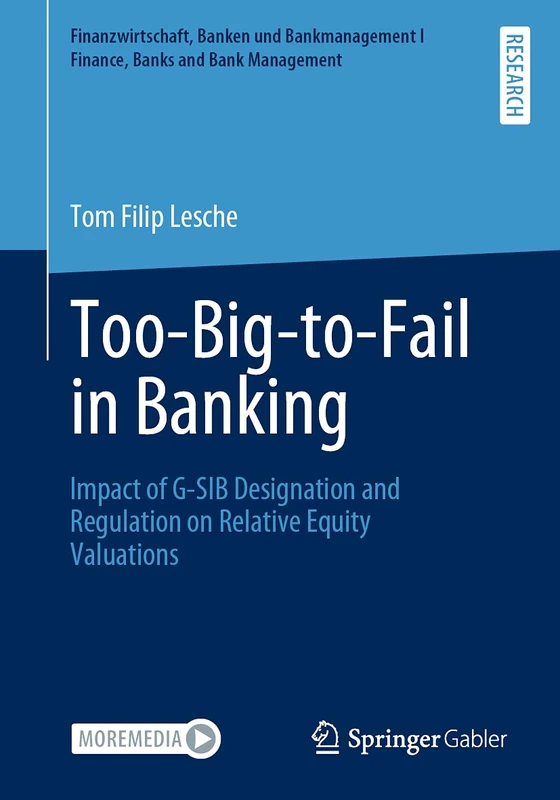
Springer Too-Big-to-Fail in Banking: Impact of G-SIB Designation and Regulation on Relative Equity Valuations (Finanzwirtschaft, Banken und Bankmanagement I Finance, Banks and Bank Management)
We'll watch every seller, every day. One email when your price arrives.
Price History & Forecast
Grey patches = out of stock. Cheaper = lower on the chart. Hover for exact prices.
Last 39 days · 39 data points (no recent data)
NEW HERE?
Amazon shows you one price. We show you all of them.
Tosheroon watches Amazon prices so you don't have to. Every product on Amazon has a price history — we make it visible. Set the price you'd actually pay, and we'll email you the second it gets there. No app, no account, one email.
WHAT'S ON THIS PAGE
when this has been cheap or pricey
where the price is heading next
all-time high & low, recent range
name your number, we'll email you
Price Distribution
Price distribution over 39 days • 2 price levels
Price Analysis
Most common price: £83 (26 days, 66.7%)
Price range: £79 - £83
Price levels: 2 different prices over 39 days
Description
Product Specifications
- Brand
- Springer
- Format
- paperback
- ASIN
- 3658341815
- Domain
- Amazon UK
- Release Date
- 29 June 2021
- Listed Since
- 16 April 2021
Barcode
No barcode data available
Similar Products You Might Like

Die Bewertung und Übertragung von Sparkassenzweigstellen: 15 (Schriftenreihe des Instituts für Kredit- und Finanzwirtschaft, 15)
Gabler Verlag
The Regulation of Systemically Relevant Banks: How Governments Should Manage Their Exposure to Banking System Risk (Finanzwirtschaft, Banken und Bankmanagement I Finance, Banks and Bank Management)
Springer
The U.S. Banking System: Laws, Regulations, and Risk Management
MACMILLAN
Digital Transformation and the Economics of Banking: Economic, Institutional, and Social Dimensions (Routledge International Studies in Money and Banking)
Routledge

New Drivers of Performance in a Changing World (Palgrave Macmillan Studies in Banking and Financial Institutions)
MACMILLAN
Global Issues in Banking and Finance: 4th International Conference on Banking and Finance Perspectives (Springer Proceedings in Business and Economics)
Springer

Financial Innovation for Global Sustainability - FinTech & Green Finance
Wiley
Raising Capital or Improving Risk Management and Efficiency?: Key Issues in the Evolution of Regulation and Supervision in European Banks
MACMILLAN

Bankstrategien im Firmenkundengeschäft: Konzeption - Management - Dimensionen. Mit Beispielen aus der Praxis
Gabler Verlag
Global Issues in Banking and Finance - 4th ICBFP Springer
Springer
Financial Market Regulation: Legislation and Implications
Springer

Contemporary Issues in Financial Institutions and Markets: Volume 3
Routledge

Investment-Banking-Strategien deutscher Banken
Deutscher Universitätsverlag

Financial Systems in Troubled Waters - Routledge Banking Study
Routledge
International Banking in Global Perspective (Routledge International Studies in Money and Banking)
Routledge

Optimale Fremdfinanzierung nach Basel II: 2
Gabler Verlag
Banking and Financial Institutions: A Guide for Directors, Investors, and Borrowers (Wiley Finance)
Wiley
Global Banking
Oxford University Press

Routledge Contemporary Issues in Financial Institutions Vol 3
Routledge

Globalization of Financial Institutions: A Competitive Approach to Finance and Banking
Springer
In Pursuit of Presence or Prominence?: The Prospect of Chinese Banks' Global Expansion and Their Benchmarks (Current Chinese Economic Report Series)
Springer
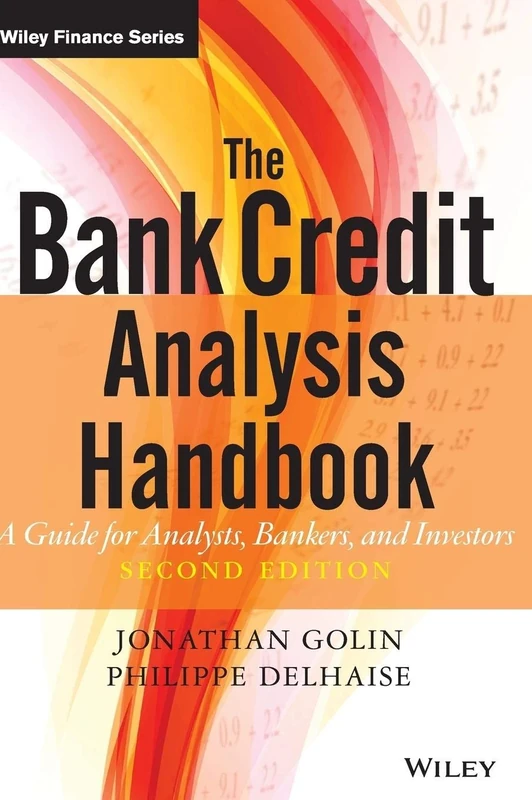
The Bank Credit Analysis Handbook: A Guide for Analysts, Bankers and Investors: 675 (Wiley Finance)
Wiley
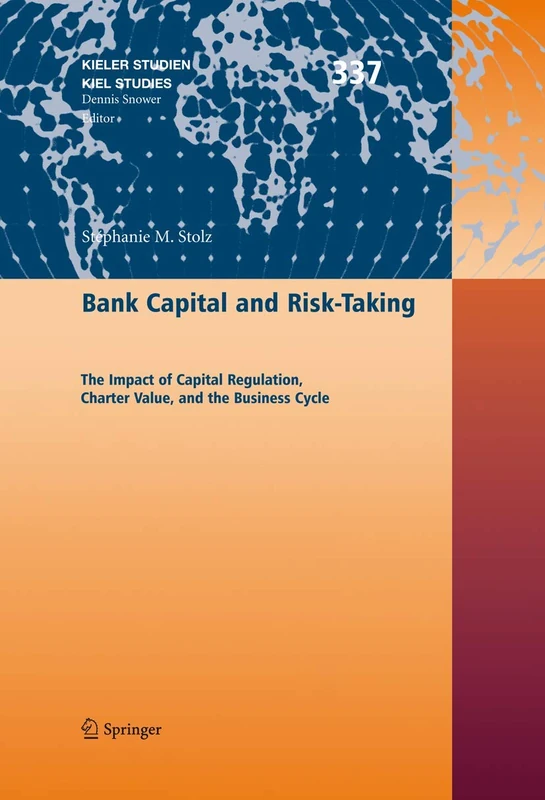
Bank Capital and Risk-Taking: The Impact of Capital Regulation, Charter Value, and the Business Cycle: 337 (Kieler Studien - Kiel Studies, 337)
Springer
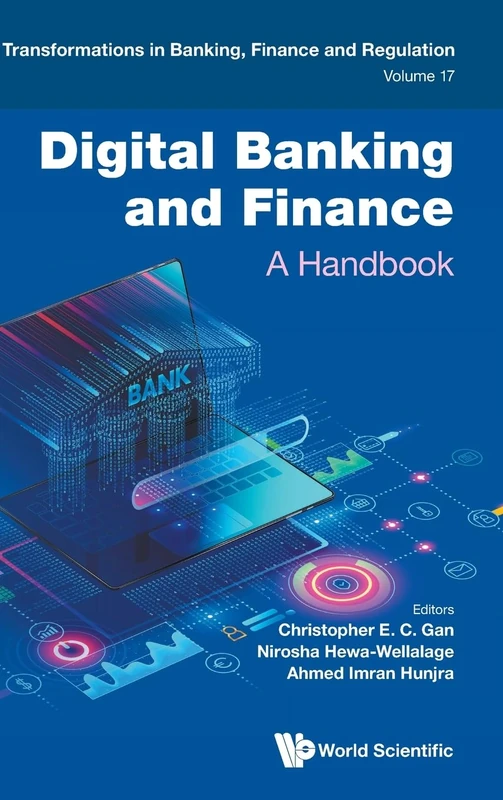
DIGITAL BANKING AND FINANCE: A HANDBOOK: 17 (TRANSFORMATIONS IN BANKING, FINANCE AND REGULATION)
World Scientific Publishing Company