We can't find the internet
Attempting to reconnect
Something went wrong!
Hang in there while we get back on track
£84.80
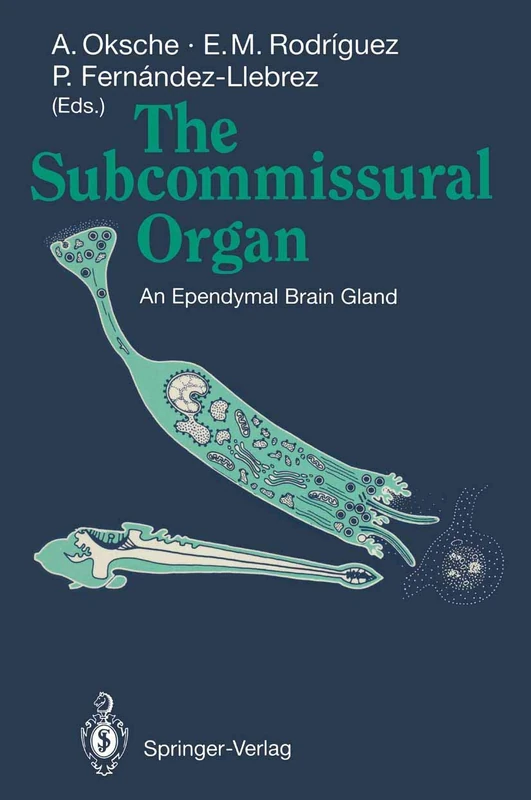
Springer The Subcommissural Organ: An Ependymal Brain Gland
Price data last checked 99 day(s) ago - refreshing...
We'll watch every seller, every day. One email when your price arrives.
This is the usual price. Wait for it to drop, or tell us your number.
£85 today · usual range £0–£0 · best ever £73
NEW HERE?
Amazon shows you one price. We show you all of them.
Tosheroon watches Amazon prices so you don't have to. Every product on Amazon has a price history — we make it visible. Set the price you'd actually pay, and we'll email you the second it gets there. No app, no account, one email.
WHAT'S ON THIS PAGE
when this has been cheap or pricey
where the price is heading next
all-time high & low, recent range
name your number, we'll email you
Price History & Forecast
Grey patches = out of stock. Cheaper = lower on the chart. Hover for exact prices.
Last 632 days • 632 data points (No recent data available)
Price Distribution
Price distribution over 632 days • 6 price levels
Price Analysis
Most common price: £73 (363 days, 57.4%)
Price range: £73 - £90
Price levels: 6 different prices over 632 days
Description
Product Specifications
- Brand
- Springer
- Format
- paperback
- ASIN
- 3642780156
- Domain
- Amazon UK
- Publication Date
- 16 December 2011
- Listed Since
- 20 September 2013
Barcode
No barcode data available
Similar Products You Might Like
Transmitter Molecules in the Brain: Part I: Biochemistry of Transmitter Molecules Part II: Function and Dysfunction: 2 (Basic and Clinical Aspects of Neuroscience, 2)
Springer
Afferent and Intrinsic Organization of Laminated Structures in the Brain: 7th International Neurobiology Meeting: 1 (Experimental Brain Research Series, 1)
Springer

The Pineal Organ: 6 / 7 (Handbuch der mikroskopischen Anatomie des Menschen Handbook of Mikroscopic Anatomy, 6 / 7)
Springer
The Blood-Cerebrospinal Fluid Barrier
CRC Press

Chromogranins: from Cell Biology to Physiology and Biomedicine (UNIPA Springer Series)
Springer

Brain Immune System Signal Molecules in Protection from Aerobic and Anaerobic Infections: 6 (Advances in Neurobiology, 6)
Springer
Pituitary Adenylate Cyclase Activating Polypeptide ― PACAP: 11 (Current Topics in Neurotoxicity, 11)
Springer
Stem Cell Technologies in Neuroscience: 126 (Neuromethods, 126)
Humana