£285.45

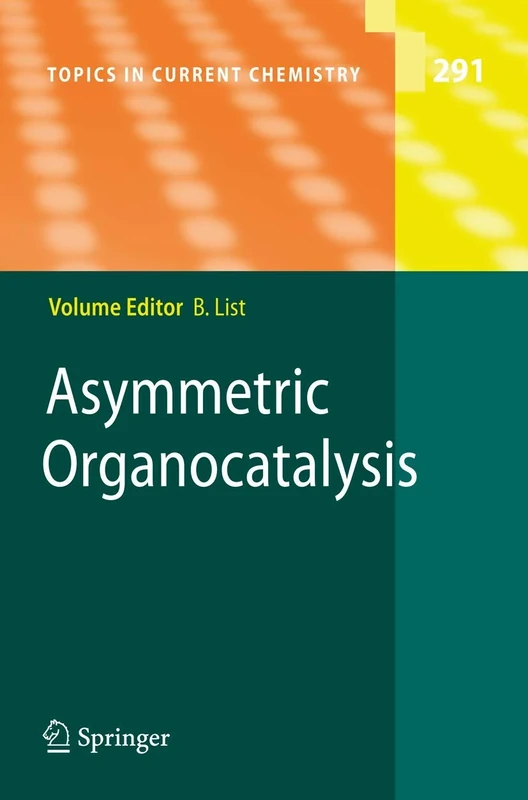
Springer Asymmetric Organocatalysis: 291 (Topics in Current Chemistry, 291)

Price data last checked 153 day(s) ago - refreshing...

View at Amazon

We'll watch every seller, every day. One email when your price arrives.

About as cheap as it gets. The only time it was cheaper was 9 months ago.

£285 today · all-time low £281 (Sep 2025) · usually the usual

NEW HERE?

Amazon shows you one price. We show you all of them.

Tosheroon watches Amazon prices so you don't have to. Every product on Amazon has a price history — we make it visible. Set the price you'd actually pay, and we'll email you the second it gets there. No app, no account, one email.

WHAT'S ON THIS PAGE

↓ Price chart
when this has been cheap or pricey
↓ Forecast
where the price is heading next
↓ Statistics
all-time high & low, recent range
↑ Price alert
name your number, we'll email you

Price History & Forecast

Grey patches = out of stock. Cheaper = lower on the chart. Hover for exact prices.

Last 578 days • 578 data points (No recent data available)

Historical
Generating forecast...
£354.85 £274.00 £291.64 £309.28 £326.92 £344.56 £362.20 10 June 2024 01 November 2024 25 March 2025 16 August 2025 08 January 2026

Price Distribution

Price distribution over 578 days • 7 price levels

Days at Price
Current Price
10 days 111 days · current 6 days 69 days 22 days 42 days 318 days 0 80 159 239 318 £281 £285 £296 £310 £327 £352 £355 Days at Price

Price Analysis

Most common price: £355 (318 days, 55.0%)

Price range: £281 - £355

Price levels: 7 different prices over 578 days

Description

As nucleophiles, simple alkenes are typically so unreactive that only highly active electrophiles, such as carbocations, peroxides, and halogens will react with them. For the generation of carbon-carbon bonds, milder methods will often be required. Fortunately, it is possible to increase the reactivity of alkene-type p-nucleophiles by introducing electron-donating substituents. Substitution of one H with an OH or OR gives an enol or a vinyl ether, which are already much better nucleophiles. Using nitrogen instead of oxygen, one obtains even better nucleophiles, enamines. Enamines are among the most reactive neutral carbon nucleophiles, exhibiting rates that are even comparable to some charged nucleophiles, such as enolates [1, 2]. Most enamines, unfortunately, are sensitive to hydrolysis. The parent enamine, N,N-dimethylvinylamine, has in fact been prepared [3], but appears to be uns- ble. Enamines of cyclic ketones and many aldehydes can readily be isolated, however [4-7]. The instability of enamines might at first appear to diminish the utility of enamines as nucleophiles, but actually this property can be viewed as an added benefit: enamines can be readily and rapidly generated catalytically by using a suitable amine and a carbonyl compound. The condensation of aldehydes or ketones with amines initially affords an imine or iminium ion, which then rapidly loses a proton to afford the corresponding enamine (Scheme 1).

Product Specifications

Format
paperback
Domain
Amazon UK
Publication Date
04 May 2012
Listed Since
11 May 2012

Barcode

No barcode data available