We can't find the internet
Attempting to reconnect
Something went wrong!
Hang in there while we get back on track

£144.22
Springer New Frontiers in Polymer Synthesis: 217 (Advances in Polymer Science, 217)
Price data last checked 95 day(s) ago - refreshing...
We'll watch every seller, every day. One email when your price arrives.
About as cheap as it gets. The only time it was cheaper was 1 year ago.
£144 today · all-time low £139 (May 2025) · usually the usual
NEW HERE?
Amazon shows you one price. We show you all of them.
Tosheroon watches Amazon prices so you don't have to. Every product on Amazon has a price history — we make it visible. Set the price you'd actually pay, and we'll email you the second it gets there. No app, no account, one email.
WHAT'S ON THIS PAGE
when this has been cheap or pricey
where the price is heading next
all-time high & low, recent range
name your number, we'll email you
Price History & Forecast
Grey patches = out of stock. Cheaper = lower on the chart. Hover for exact prices.
Last 636 days • 636 data points (No recent data available)
Price Distribution
Price distribution over 636 days • 5 price levels
Price Analysis
Most common price: £146 (289 days, 45.4%)
Price range: £139 - £146
Price levels: 5 different prices over 636 days
Description
Product Specifications
- Brand
- Springer
- Format
- paperback
- ASIN
- 3642089208
- Domain
- Amazon UK
- Release Date
- 22 November 2010
- Listed Since
- 01 October 2010
Barcode
No barcode data available
Similar Products You Might Like

Springer New Frontiers in Polymer Synthesis 217 - Science Book
Springer

Polyolefins: 50 years after Ziegler and Natta II: Polyolefins by Metallocenes and Other Single-Site Catalysts: 258 (Advances in Polymer Science, 258)
Springer
Polymer Crystallization II: From Chain Microstructure to Processing: 277 (Advances in Polymer Science, 277)
Springer
Polymer Crystallization I: From Chain Microstructure to Processing: 276 (Advances in Polymer Science, 276)
Springer
Polymer Crystallization I: From Chain Microstructure to Processing: 276 (Advances in Polymer Science, 276)
Springer
Microwave-assisted Polymer Synthesis: 274 (Advances in Polymer Science, 274)
Springer
Microwave-assisted Polymer Synthesis: 274 (Advances in Polymer Science, 274)
Springer

Introduction to Polymer Science and Chemistry: A Problem-Solving Approach, Second Edition
CRC Press

Organic-Inorganic Hybrid Nanomaterials: 267 (Advances in Polymer Science, 267)
Springer

Complex Macromolecular Architectures: Synthesis, Characterization, and Self-Assembly
Wiley
Preparative Methods of Polymer Chemistry
Wiley
Polymers
CRC Press

Polymer Mechanochemistry: 369 (Topics in Current Chemistry, 369)
Springer

Polymer Mechanochemistry: 369 (Topics in Current Chemistry, 369)
Springer

Polymer Reaction Engineering of Dispersed Systems: Volume II: 281 (Advances in Polymer Science, 281)
Springer

Principles of Polymer Systems
CRC Press
P3HT Revisited – From Molecular Scale to Solar Cell Devices: 265 (Advances in Polymer Science, 265)
Springer

New Perspectives in Chemistry and Biochemistry
Brand: Nova Science Pub Inc
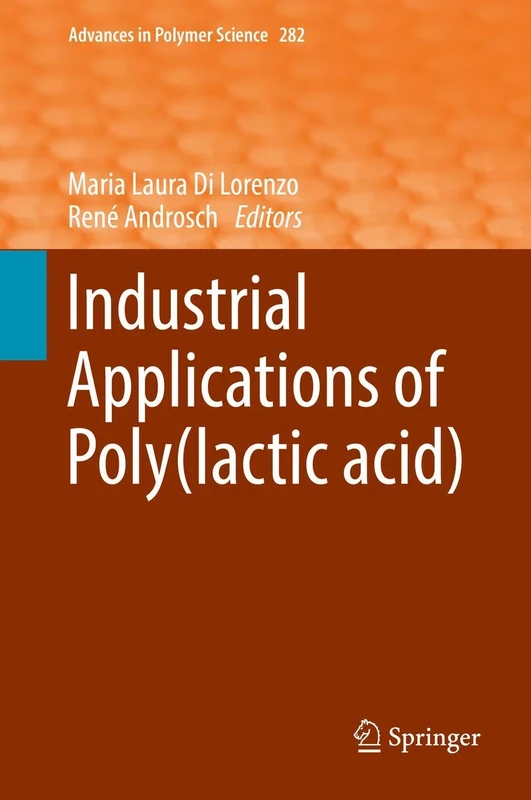
Industrial Applications of Poly(lactic acid): 282 (Advances in Polymer Science, 282)
Springer
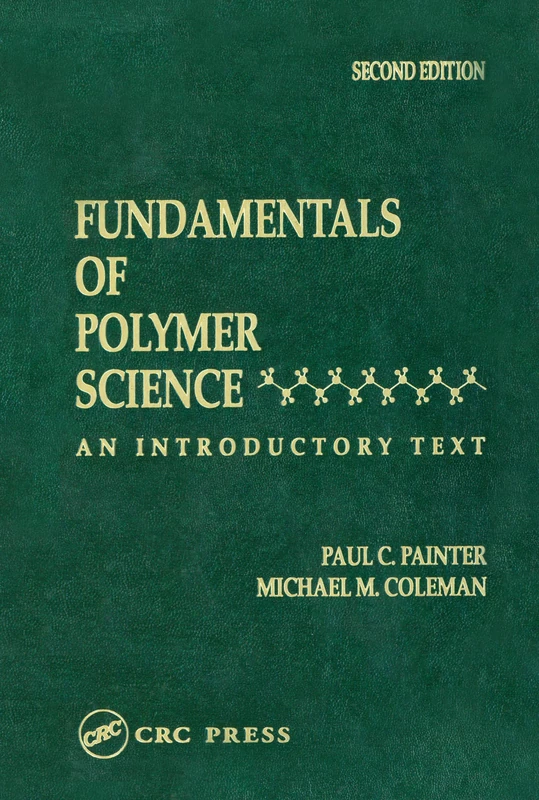
Fundamentals of Polymer Science: An Introductory Text, Second Edition
CRC Press

Fundamentals de Ciencia de Polimeros: Un Texto Introductorio
CRC Press
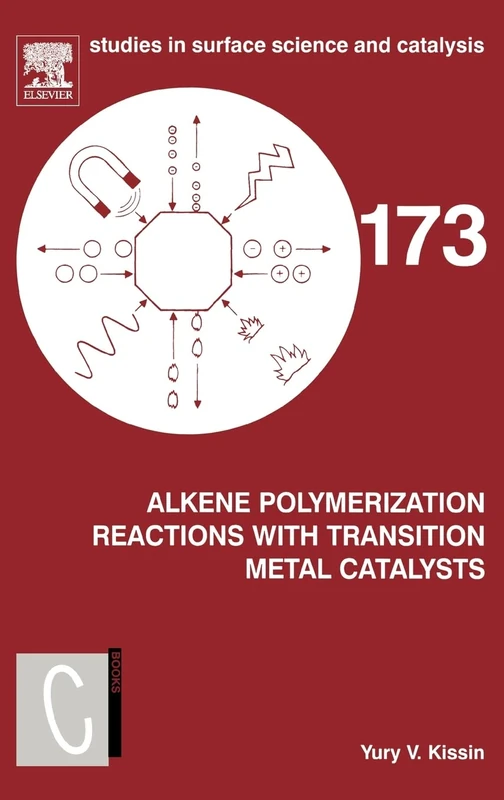
Alkene Polymerization Reactions with Transition Metal Catalysts (Studies in Surface Science and Catalysis): Volume 173
Elsevier

Statistical, Gradient, Block and Graft Copolymers by Controlled/Living Radical Polymerizations: 159 (Advances in Polymer Science, 159)
Springer
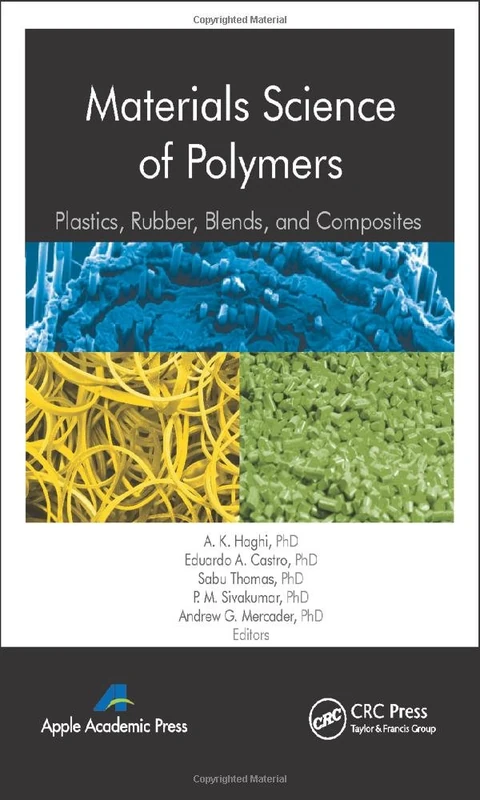
Materials Science of Polymers: Plastics, Rubber, Blends and Composites
CRC Press