We can't find the internet
Attempting to reconnect
Something went wrong
Hang in there while we get back on track
£108.01
It has never been this cheap. We have no record of a lower price.
£108 today · cheaper than every other day in the last 3 months
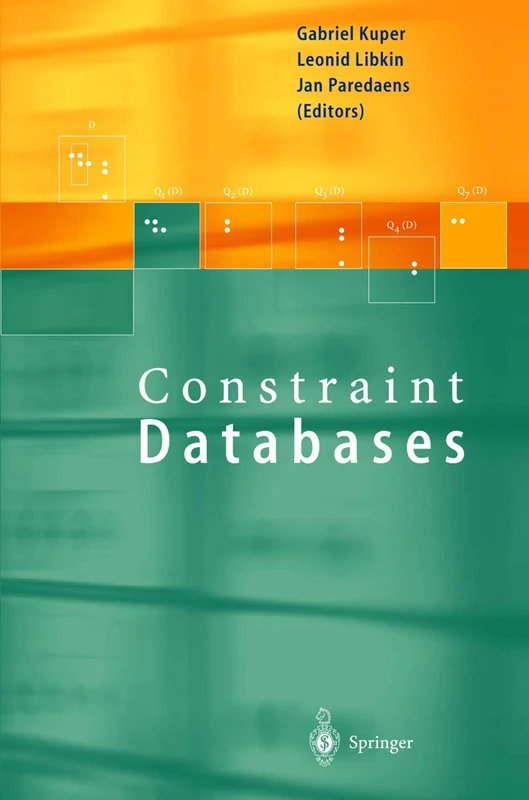
Springer Constraint Databases
We'll watch every seller, every day. One email when your price arrives.
Price History & Forecast
Grey patches = out of stock. Cheaper = lower on the chart. Hover for exact prices.
Last 16 days · 16 data points (no recent data)
NEW HERE?
Amazon shows you one price. We show you all of them.
Tosheroon watches Amazon prices so you don't have to. Every product on Amazon has a price history — we make it visible. Set the price you'd actually pay, and we'll email you the second it gets there. No app, no account, one email.
WHAT'S ON THIS PAGE
when this has been cheap or pricey
where the price is heading next
all-time high & low, recent range
name your number, we'll email you
Price Distribution
Price distribution over 16 days • 1 price levels
Price Analysis
Most common price: £108 (16 days, 100.0%)
Price range: £108 - £108
Price levels: 1 different prices over 16 days
Description
Product Specifications
- Brand
- Springer
- Format
- paperback
- ASIN
- 3642085423
- Domain
- Amazon UK
- Release Date
- 01 December 2010
- Listed Since
- 20 September 2010
Barcode
No barcode data available
Similar Products You Might Like
Constraints and Databases
Springer
Constraints and Databases
Springer
Inductive Databases and Constraint-Based Data Mining
Springer
Handbook of Parallel Constraint Reasoning
Springer

Spatio-Temporal Databases: Flexible Querying and Reasoning
Springer

Constraint-Based Verification
Springer

Foundations of Knowledge Systems: with Applications to Databases and Agents: 13 (Advances in Database Systems, 13)
Springer
Query Processing in Database Systems (Topics in Information Systems)
Springer

R-Trees: Theory and Applications (Advanced Information and Knowledge Processing)
Springer

The Complexity of Valued Constraint Satisfaction Problems (Cognitive Technologies)
Springer

Active Rules in Database Systems (Monographs in Computer Science)
Springer

Reasoning with Rough Sets: Logical Approaches to Granularity-Based Framework: 142 (Intelligent Systems Reference Library, 142)
Springer

Advanced Relational Programming: 371 (Mathematics and Its Applications, 371)
Springer

Indexing Techniques for Advanced Database Systems: 8
Springer
Ontologies and Databases
Springer

Handbook of Spatial Logics
Springer

Rough Sets and Data Mining: Analysis of Imprecise Data
Springer

Information and Database Quality: 25 (Advances in Database Systems, 25)
Springer

Advanced Relational Programming: v. 371 (Mathematics and its Applications)
Springer

Handbook of Big Data Technologies
Springer

Grid and Cloud Database Management
Springer

Fuzzy Databases: Principles and Applications: 5 (International Series in Intelligent Technologies, 5)
Springer

Applications of Logic Databases: 296 (The Springer International Series in Engineering and Computer Science, 296)
Springer
Handbook of Database Systems (CRC Computer and Information Science Series)
Chapman and Hall/CRC