£59.54

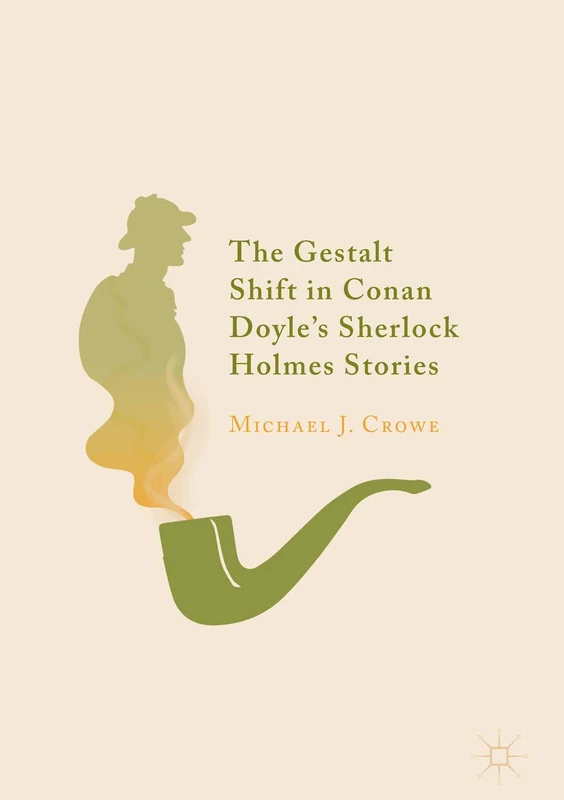
Springer The Gestalt Shift in Conan Doyle's Sherlock Holmes Stories

Price data last checked 15 day(s) ago - will refresh soon

View at Amazon

We'll watch every seller, every day. One email when your price arrives.

It has never been this cheap. We have no record of a lower price.

£60 today · cheaper than every other day in the last 3 months

NEW HERE?

Amazon shows you one price. We show you all of them.

Tosheroon watches Amazon prices so you don't have to. Every product on Amazon has a price history — we make it visible. Set the price you'd actually pay, and we'll email you the second it gets there. No app, no account, one email.

WHAT'S ON THIS PAGE

↓ Price chart
when this has been cheap or pricey
↓ Forecast
where the price is heading next
↓ Statistics
all-time high & low, recent range
↑ Price alert
name your number, we'll email you

Price History & Forecast

Grey patches = out of stock. Cheaper = lower on the chart. Hover for exact prices.

Last 76 days · 76 data points (no recent data)

Historical
Generating forecast…
£59.54 £56.56 £57.75 £58.94 £60.14 £61.33 £62.52 26 April 2026 14 May 2026 02 June 2026 21 June 2026 10 July 2026

Price Distribution

Price distribution over 76 days • 1 price levels

Days at Price
76 days 0 19 38 57 76 £60 Days at Price

Price Analysis

Most common price: £60 (76 days, 100.0%)

Price range: £60 - £60

Price levels: 1 different prices over 76 days

Description

This book analyzes the four novels and fifty-six stories written by Sir Arthur Conan Doyle describing the adventures and discoveries of Sherlock Holmes. Michael J. Crowe suggests that nearly all the Holmes stories exhibit the pattern known as a Gestalt shift, in which suddenly Holmes’s efforts reveal a new perspective on the case, typically identifying the culprit(s) and resolving the case. Drawing on ideas presented by Thomas S. Kuhn in his famous Structure of Scientific Revolutions (1962), Crowe argues that similar to the way that Kuhn applied the idea of a Gestalt shift to the history of science, this approach can be used to reveal the structure of the Holmes stories and possibly be applied to some other areas of fiction. Review “The Gestalt Shift in Conan Doyle’s Sherlock Holmes Stories should appeal to multiple audiences. Sherlock Holmes scholars and members of the general reading public who are Holmes fans may be the primary audience, but those working on science and literature, and historians of science, will also find the book to be of interest. … There is much to learn from Crowe’s book about the role of scientific thinking in the making of one of the most iconic literary figures of the modern world.” (Bernard Lightman, Isis, Vol. 110 (4), 2019) Review  “Wow, Michael Crowe’s book is a great rarity, something new under the Sherlockian Sun.  Critically, his thesis is convincing and far-reaching.  It provides a structure for most of the plots, and it explains why the ‘literary agent’ (Doyle) was able to write so much better than almost all other imitators.  It also provides a structure for understanding many of the better books and movies in the mystery genre.” (Bradley Schaefer, Distinguished Professor and Alumni Professor of Astronomy at Louisiana State University, USA) “The ‘Aha!’ moment when Sherlock Holmes finally puts it all together and the solution clicks into place with perfect clarity. In this fascinating and accessible read, Professor Crowe provides his own ‘Aha!’ presenting Sherlockians a new prism through which to understand Holmes’s genius, case by case. A must-read for fans!” (Barbara Barnett, author of Chasing Zebras: The Unofficial Guide to House, M.D. (2010) and The Apothecary’s Curse (2016)) From the Back Cover This book analyzes the four novels and fifty-six stories written by Sir Arthur Conan Doyle describing the adventures and discoveries of Sherlock Holmes. Michael J. Crowe suggests that nearly all the Holmes stories exhibit the pattern known as a Gestalt shift, in which suddenly Holmes’s efforts reveal a new perspective on the case, typically identifying the culprit(s) and resolving the case. Drawing on ideas presented by Thomas S. Kuhn in his famous Structure of Scientific Revolutions (1962), Crowe argues that similar to the way that Kuhn applied the idea of a Gestalt shift to the history of science, this approach can be used to reveal the structure of the Holmes stories and possibly be applied to some other areas of fiction. About the Author Michael J. Crowe is the Rev. John J. Cavanaugh, C.S.C. Professor Emeritus in the Program of Liberal Studies and Graduate Program in History and Philosophy of Science at the University of Notre Dame, USA. This is the eleventh book he has published and his second book on Sherlock Holmes.

Product Specifications

Format
hardcover
Domain
Amazon UK
Release Date
20 October 2018
Listed Since
10 July 2018

Barcode

No barcode data available