£74.35

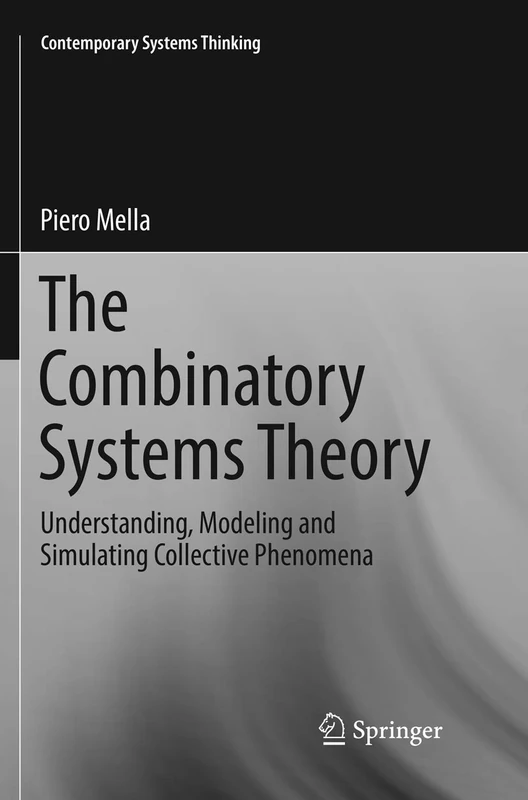
Springer The Combinatory Systems Theory: Understanding, Modeling and Simulating Collective Phenomena (Contemporary Systems Thinking)

Price data checked 5 days ago

View at Amazon

We'll watch every seller, every day. One email when your price arrives.

It has never been this cheap. We have no record of a lower price.

£74 today · cheaper than every other day in the last 3 months

NEW HERE?

Amazon shows you one price. We show you all of them.

Tosheroon watches Amazon prices so you don't have to. Every product on Amazon has a price history — we make it visible. Set the price you'd actually pay, and we'll email you the second it gets there. No app, no account, one email.

WHAT'S ON THIS PAGE

↓ Price chart
when this has been cheap or pricey
↓ Forecast
where the price is heading next
↓ Statistics
all-time high & low, recent range
↑ Price alert
name your number, we'll email you

Price History & Forecast

Grey patches = out of stock. Cheaper = lower on the chart. Hover for exact prices.

Last 86 days • 86 data points (No recent data available)

Historical
Generating forecast...
£76.38 £74.15 £74.63 £75.12 £75.61 £76.10 £76.58 01 March 2026 22 March 2026 12 April 2026 03 May 2026 25 May 2026

Price Distribution

Price distribution over 86 days • 2 price levels

Days at Price
Current Price
12 days · current 74 days 0 19 37 56 74 £74 £76 Days at Price

Price Analysis

Most common price: £76 (74 days, 86.0%)

Price range: £74 - £76

Price levels: 2 different prices over 86 days

Description

This study adopts the logic of Systems Thinking and Control Systems, presenting a simple but complete theory called the Theory of Combinatory Systems. This new theory is able to describe, interpret, explain, simulate and control collective phenomena and their observable effects. Despite specific differences among these phenomena – many of which are “one way", non-repeatable or reproducible – they can all be described or explained, and thus understood, using the model, as simple as it is general, of combinatory systems; that is, systems formed by collectivities, or populations of non-connected and unorganized individuals of some species, which appear to be directed by an invisible hand that guides the analogous actions of similar individuals in order to produce an emerging collective phenomenon. Combinatory Systems function due to the presence of micro control systems which, operating at the individual level, lead to uniform micro behavior by individuals in order to eliminate the (gap) with respect to the objective that is represented – or revealed – by the global information (macro behavior or effect). The book also examines Combinatory Automata, which represent a powerful tool for simulating the most relevant combinatory systems. In stochastic combinatory automata, when both probabilities and periods of transition of state are agent/time/state sensitive, the probabilistic micro behaviors are conditioned by the macro behavior of the entire system, which makes the micro-macro feedback more evident. The Combinatory Systems Theory: Understanding, Modeling and Simulating Collective Phenomena is composed of four main chapters. Chapter 1 presents the basic ideas behind the theory, which are analysed in some detail. Chapter 2 describes the heuristic models of several relevant combinatory systems observable in different environments. Chapter 3, while not making particular use of sophisticated mathematical and statistical tools, presents the Theory of Combinatory Automata and builds models for simulating the operative logic of combinatory systems. Chapter 4 tries to answer three questions: are combinatory systems “systems” in the true sense of the term? Why is this theory able to explain so many and so varied a number of phenomena, even though it is based on a very simple modus operandi? Are combinatory systems different than complex systems? The book has been written with no prerequisite required to read and understand it, in particular math, statistics and computer knowledge. From the Back Cover This study adopts the logic of Systems Thinking and Control Systems, presenting a simple but complete theory called the Theory of Combinatory Systems. This new theory is able to describe, interpret, explain, simulate and control collective phenomena and their observable effects. Despite specific differences among these phenomena – many of which are “one way", non-repeatable or reproducible – they can all be described or explained, and thus understood, using the model, as simple as it is general, of combinatory systems; that is, systems formed by collectivities, or populations of non-connected and unorganized individuals of some species, which appear to be directed by an invisible hand that guides the analogous actions of similar individuals in order to produce an emerging collective phenomenon. Combinatory Systems function due to the presence of micro control systems which, operating at the individual level, lead to uniform micro behavior by individuals in order to eliminate the (gap) with respect to the objective that is represented – or revealed – by the global information (macro behavior or effect). The book also examines Combinatory Automata, which represent a powerful tool for simulating the most relevant combinatory systems. In stochastic combinatory automata, when both probabilities and periods of transition of state are agent/time/state sensitive, the probabilistic micro behaviors are conditioned

Product Specifications

Format
paperback
Domain
Amazon UK
Release Date
08 August 2018
Listed Since
08 August 2018

Barcode

No barcode data available

Similar Products You Might Like

Simulating Complex Systems by Cellular Automata (Understanding Complex Systems)
83% match

Simulating Complex Systems by Cellular Automata (Understanding Complex Systems)

Springer
£76.28 30 May 2026
Control of Complex Systems: Methods and Technology (Applied Information Technology)
83% match

Control of Complex Systems: Methods and Technology (Applied Information Technology)

Springer
£75.25 30 May 2026
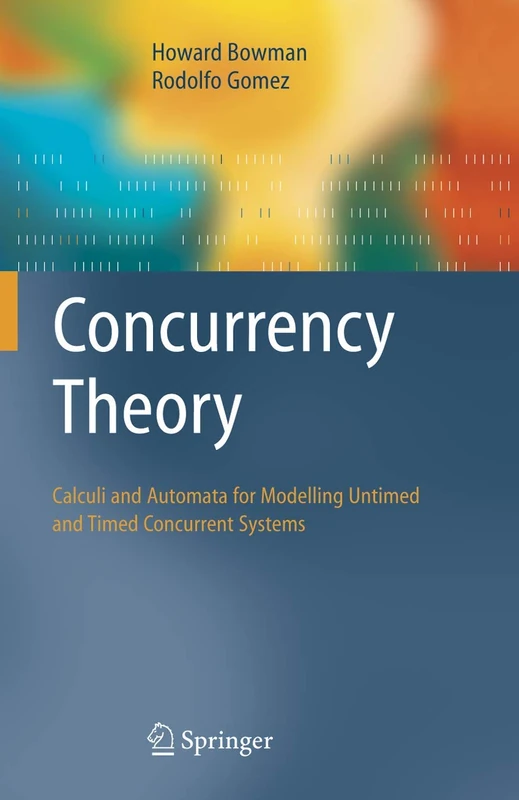
Concurrency Theory: Calculi an Automata for Modelling Untimed and Timed Concurrent Systems
81% match

Concurrency Theory: Calculi an Automata for Modelling Untimed and Timed Concurrent Systems

Springer

£107.98 25 May 2026
Predictive Approaches to Control of Complex Systems: 454 (Studies in Computational Intelligence, 454)
81% match

Predictive Approaches to Control of Complex Systems: 454 (Studies in Computational Intelligence, 454)

Springer

£75.47 24 May 2026
Control of Complex Systems
81% match

Control of Complex Systems

Springer

£110.62 18 May 2026
The Combinatory Systems Theory: A Powerful Theory for Understanding, Modeling and Simulating Collective Phenomena (Progress in IS)
81% match

The Combinatory Systems Theory: A Powerful Theory for Understanding, Modeling and Simulating Collective Phenomena (Progress in IS)

Springer

£114.06 14 May 2026
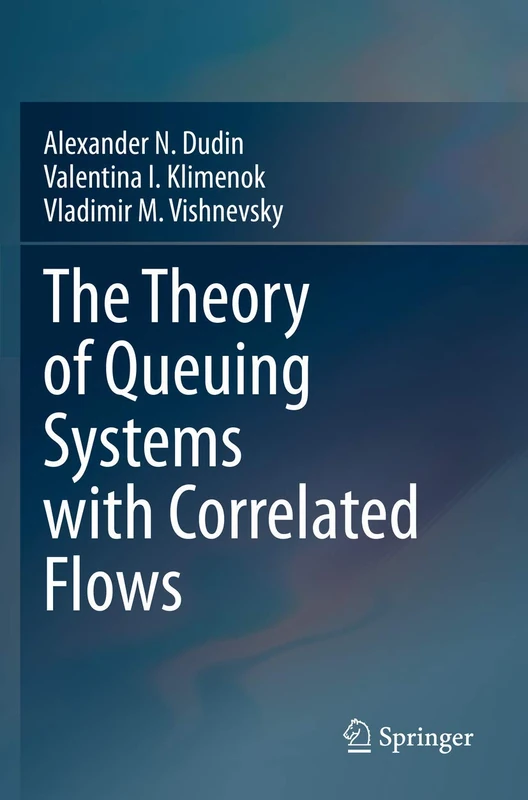
The Theory of Queuing Systems with Correlated Flows
81% match

The Theory of Queuing Systems with Correlated Flows

Springer

£76.38 25 May 2026
Modeling Complex Systems (Graduate Texts in Physics)
81% match

Modeling Complex Systems (Graduate Texts in Physics)

Springer

£48.03 17 May 2026
Efficient Modeling and Control of Large-Scale Systems
81% match

Efficient Modeling and Control of Large-Scale Systems

Springer

£107.98 25 May 2026
Complex Decision Making: Theory and Practice (Understanding Complex Systems)
81% match

Complex Decision Making: Theory and Practice (Understanding Complex Systems)

Springer
£73.85 25 May 2026
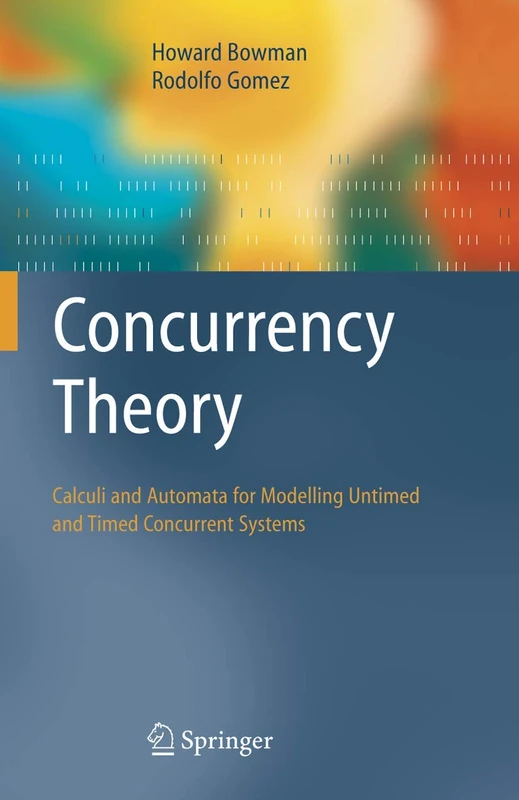
Concurrency Theory: Calculi an Automata for Modelling Untimed and Timed Concurrent Systems
80% match

Concurrency Theory: Calculi an Automata for Modelling Untimed and Timed Concurrent Systems

Springer

£69.50 25 May 2026
Emergent Properties in Natural and Artificial Dynamical Systems (Understanding Complex Systems)
80% match

Emergent Properties in Natural and Artificial Dynamical Systems (Understanding Complex Systems)

Springer
£68.63 25 May 2026
Control Systems Theory with Engineering Applications (Control Engineering)
80% match

Control Systems Theory with Engineering Applications (Control Engineering)

Birkhauser

£107.98 24 May 2026
The Unknown Component Problem: Theory and Applications
80% match

The Unknown Component Problem: Theory and Applications

Springer

£107.98 18 May 2026
A Quest Towards a Mathematical Theory of Living Systems (Modeling and Simulation in Science, Engineering and Technology)
80% match

A Quest Towards a Mathematical Theory of Living Systems (Modeling and Simulation in Science, Engineering and Technology)

Birkhauser

£67.01 24 May 2026
Chaos Modeling and Control Systems Design: 581 (Studies in Computational Intelligence, 581)
80% match

Chaos Modeling and Control Systems Design: 581 (Studies in Computational Intelligence, 581)

Springer

£76.38 24 May 2026
Supervisory Control of Discrete-Event Systems (Communications and Control Engineering)
80% match

Supervisory Control of Discrete-Event Systems (Communications and Control Engineering)

Springer
£124.31 25 May 2026
Advances in State Estimation, Diagnosis and Control of Complex Systems (Springer Theses)
80% match

Advances in State Estimation, Diagnosis and Control of Complex Systems (Springer Theses)

Springer

£107.98 25 May 2026
Complex Engineered Systems: Science Meets Technology (Understanding Complex Systems)
80% match

Complex Engineered Systems: Science Meets Technology (Understanding Complex Systems)

Springer
£76.13 25 May 2026
Mathematical Methods in Robust Control of Discrete-Time Linear Stochastic Systems
80% match

Mathematical Methods in Robust Control of Discrete-Time Linear Stochastic Systems

Springer

£94.19 26 May 2026
Composite Systems Decisions (Decision Engineering)
80% match

Composite Systems Decisions (Decision Engineering)

Springer

£46.02 25 May 2026
Modeling and Control of Logical Discrete Event Systems: 300 (The Springer International Series in Engineering and Computer Science, 300)
80% match

Modeling and Control of Logical Discrete Event Systems: 300 (The Springer International Series in Engineering and Computer Science, 300)

Springer

£80.24 27 May 2026
Managing and Engineering in Complex Situations: 21 (Topics in Safety, Risk, Reliability and Quality, 21)
80% match

Managing and Engineering in Complex Situations: 21 (Topics in Safety, Risk, Reliability and Quality, 21)

Springer

£73.85 25 May 2026
How Nature Works: Complexity in Interdisciplinary Research and Applications: 5 (Emergence, Complexity and Computation, 5)
80% match

How Nature Works: Complexity in Interdisciplinary Research and Applications: 5 (Emergence, Complexity and Computation, 5)

Springer

£107.98 19 May 2026